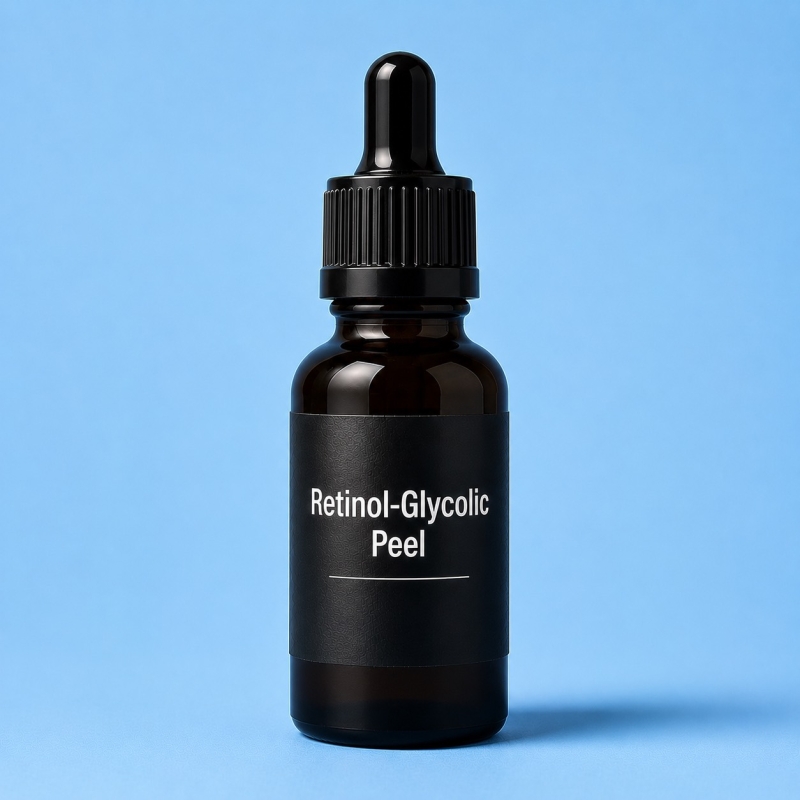
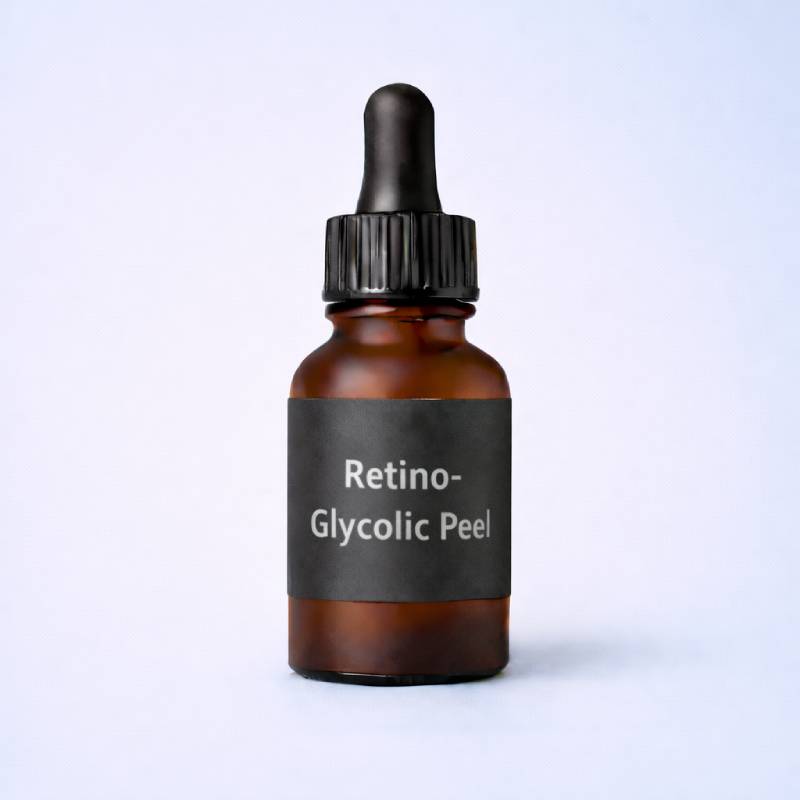
A trial-size format for fine-tuning skin renewal formulas
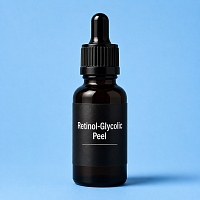
The 10 ml retinol glycolic peel is designed for small-batch testing before a formula moves into larger production runs. This active complex belongs to the Peelings for Skin category, which brings together ingredients for controlled surface renewal, and the compact volume is exactly what home formulators, independent estheticians and small labs need when experimenting with a new combination without committing to a large quantity of raw material.
The primary field of use for this blend is skin care and professional cosmetology, where retinol accelerates cell turnover while glycolic acid loosens the outer keratin layer and helps active ingredients penetrate more effectively. This pairing is widely used in anti-aging serums, uneven tone correctors, treatments for post-acne marks and enlarged pores. Beyond salon procedures, the same complex appears in home-made night creams, targeted spot treatments and intensive resurfacing masks.
When building a formula it helps to think about compatibility: this peel blends smoothly with gentler acid products such as AHA Fruit Complex for a softer exfoliating effect suited to sensitive skin. For deeper professional resurfacing treatments, formulators often pair it with the Complex for microdermabrasion and AHA peeling, and once a trial batch confirms the desired result and production needs to scale up, the Retinol Peel 50 ml offers the same mode of action in a larger volume.
A typical usage rate in a finished formula ranges from one to three percent, with the exact figure depending on skin sensitivity, the intended purpose of the product and the target acid concentration. The complex should be added during the cool phase, at a temperature no higher than forty degrees Celsius, once the main emulsion or gel base has already cooled, since both retinol and glycolic acid are sensitive to prolonged heat exposure.
Storage requires a tightly sealed container kept in a dark, cool place away from direct light and heat sources, as oxidation and overheating reduce the potency of the active compounds. The small volume is also practical because it can be used up within its shelf life without leaving unused stock sitting for months, which matters for reactive acid complexes like this one.
Before moving to larger production, it is worth running a pilot test on a limited batch to check emulsion stability, skin feel and compatibility with other active ingredients in the formula, avoiding unwanted reactions once the recipe is scaled.
Overnight resurfacing spot gel
Distilled water 40 ml
Aloe vera gel 15 ml
Glycerin 3 ml
Retinol glycolic peel 2 ml
Niacinamide powder 1.5 g
Xanthan gum 0.2 g
Preservative 1 ml
Combine the distilled water and aloe vera gel in a clean container and slowly sprinkle in the xanthan gum while whisking to avoid clumping. Once the gel base thickens evenly, blend in the glycerin and let the mixture rest until it reaches room temperature. Add the niacinamide powder, preservative and retinol glycolic peel, stirring gently until fully dissolved and uniform. Transfer the finished gel into a dark glass jar and apply a thin layer to targeted areas in the evening after cleansing, avoiding the eye area.