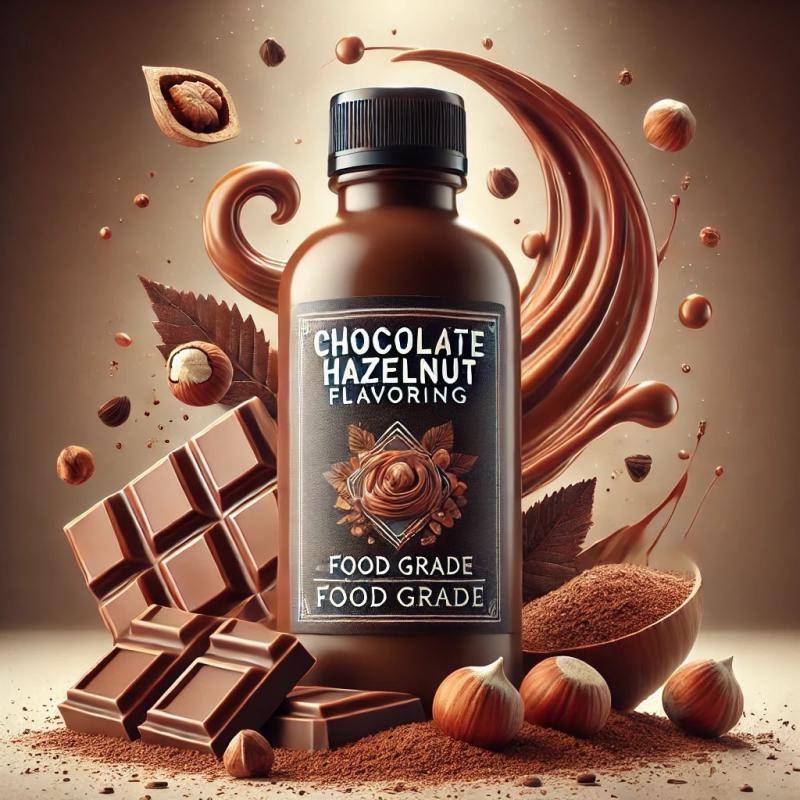
Bringing Rich Cocoa-Hazelnut Character to Large-Scale Confectionery Lines
Chocolate-nut Food Flavoring from Lithuania in a 1 liter volume is built for manufacturers running high-volume production: confectionery plants, full-cycle bakeries, ice cream lines, and dairy beverage facilities. A batch of this size falls under the Food Flavorings section, where concentrates are gathered specifically to give finished products a consistent, recognizable taste without relying on raw cocoa beans or whole nuts, which lowers production costs and simplifies raw material logistics considerably.
The main application of this flavoring is in industrial production of chocolate candies, wafer fillings, creams, glazes, ice cream, milkshakes, protein and snack bars, and nut-accented baked goods. The blend reflects a combination of roasted hazelnut and dark chocolate, making it a natural fit for praline fillings, chocolate spreads, cakes, and cookies with a nutty layer. Manufacturers value this type of concentrate for how well it holds up under heat: the character remains stable even after baking at around 160-180 degrees Celsius or after pasteurizing dairy bases.
For confectionery production, the typical recommended dosage ranges from 1 to 5 grams per kilogram of finished mass, though the exact amount depends on the recipe and the desired flavor intensity, so a small trial batch is worth running before scaling up. It is best introduced during the mixing stage of the fat or sugar base, before heat treatment if the product will be baked, or after the mass has cooled if working with creams and glazes that are sensitive to high temperatures. This approach helps preserve the volatile aromatic compounds and prevents the flavor from fading during processing.
The Chocolate-nut flavoring blends well with other concentrates in the line, giving formulators room to build more complex flavor profiles. Adding a small amount of Creamy Coffee Food Flavoring deepens the flavor with a mocha undertone, which works particularly well in tiramisu-style desserts and coffee bars. Combining it with Wild Berries Food Flavoring is common in desserts and ice cream that pair chocolate richness against a tart berry contrast. For recipes needing a more layered, liqueur-like note, producers often add Amaretto Food Flavoring, which introduces an almond-marzipan character that pairs naturally with the nutty base of the main concentrate.
When working with a 1 liter container, storage conditions matter: keep the container tightly closed, in a cool, dark location away from direct sunlight and heat sources, to avoid oxidation of aromatic compounds and loss of scent intensity over time. After opening a large container, it is advisable to transfer a working portion into a smaller sealed container for daily use on the production floor, reducing air exposure and extending overall stability. A volume like this is particularly suited to conveyor-style manufacturing, where consistency from batch to batch and fewer restocking interruptions are essential.
Beyond confectionery, chocolate-nut blends are widely used in dry beverage mix production, protein bar manufacturing, cookie filling lines on automated equipment, and flavored syrup production for coffee chains and foodservice operations. Its concentrated form means it is used economically even at high production volumes, and good solubility in both fat and water phases makes it versatile across different manufacturing processes.
Chocolate-Nut Filling for Automated Cookie Sandwich Lines
Vegetable fat 3800 g
Powdered sugar 2800 g
Cocoa powder 600 g
Ground hazelnuts 800 g
Soy lecithin 15 g
Chocolate-nut Food Flavoring 14 ml
Melt
the vegetable fat to a liquid state at around 42 degrees Celsius, then
gradually mix in the powdered sugar, cocoa powder, and ground hazelnuts until a
smooth, glossy mass forms with no lumps. Add the lecithin to stabilize the
mixture and continue blending for another five minutes. Once the mass cools to
around 34-36 degrees Celsius, add the flavoring, stir thoroughly, and use
immediately for filling cookies or wafers on the line, since the mixture
thickens quickly once it drops below working temperature.