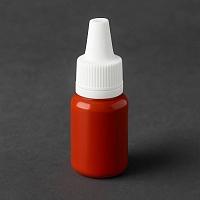
Why Red Liquid Pigment Powers Large-Scale Resin and Wax Production
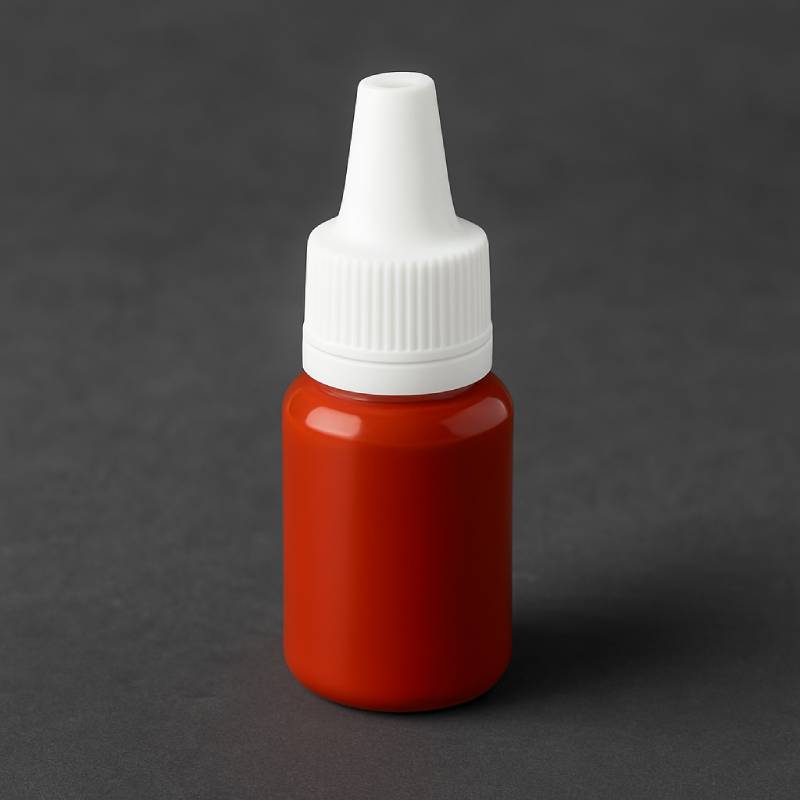
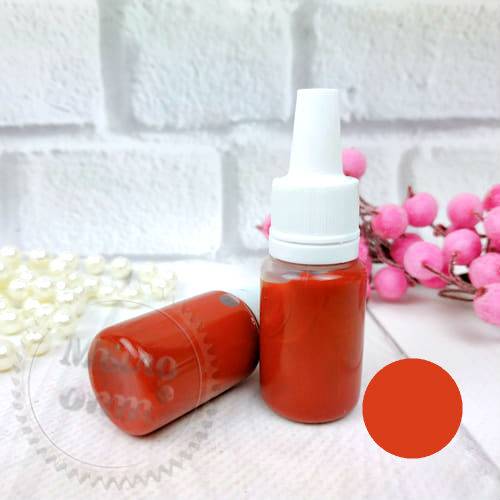
Red liquid pigment supplied in a 1 liter container belongs to the category Pigments Liquid, a line of non-bleeding liquid colorants designed to keep consistent shade across large batches. A liter-sized bottle signals that this pigment is meant for continuous manufacturing lines rather than one-off experiments, where color repeatability and reliable supply matter as much as the shade itself. Find additional shades in the Liquid Pigments Wholesale section for your specific projects.
Globally, the strongest demand for red liquid pigments comes from epoxy resin manufacturing: river tables, jewelry casting, decorative panels, and poured flooring all rely on liquid colorants that disperse instantly without clumping and stay stable through the hardening process. A second major application is candle making, where the pigment is stirred into melted wax as it cools to around 60-70 degrees Celsius, producing an even tone without streaking. The same pigment is also widely used in polymer clay, plaster casting, decorative concrete, household chemical products, and color cosmetics where a deep saturated red is required.
Recommended dosage typically ranges from 0.1 to 3 percent of the total formulation weight, depending on desired intensity. In epoxy work, the pigment is blended in right after mixing resin with hardener, stirred thoroughly to avoid streaks before pouring into the mold. In candle production it is added after the wax has fully melted but before fragrance oil, keeping the temperature under 80 degrees to preserve color stability.
This red pigment blends easily with other shades from the same line to build custom palettes: cooler undertones can be achieved by adding Blue liquid pigment, warm metallic notes come from Pigment pigment liquid Copper, and deeper burgundy or terracotta tones appear when mixed with Chocolate liquid Pigment. This flexibility is particularly useful for factories developing a branded color range across a single product line.
Store the pigment tightly sealed, in a dry area at room temperature, away from direct sunlight and heat sources to prevent premature separation of the colorant. Shake the bottle before use to redistribute any settled particles evenly. The 1 liter format is best suited for workshops running batches of dozens of units and for manufacturers who need a dependable, uninterrupted supply rather than frequent reordering of small bottles.
Decorative Poured Concrete Tile
White cement 600 g
Fine sand 400 g
Water 250 ml
Red liquid pigment 6 ml
Combine the cement and sand thoroughly in a dry container until evenly blended, then dissolve the pigment in the water before slowly pouring the liquid into the dry mix while stirring continuously to prevent color streaking. Pour the resulting mixture into a flat silicone or plastic mold, tap the mold gently on the table to release trapped air bubbles, and smooth the surface with a flat tool. Leave the tile to set undisturbed at room temperature for at least 24 hours before demolding, then allow a further several days for full hardening before handling or sealing.
Frequently asked questions
What dosage works for red liquid pigment in candle wax?
Start with 0.3 percent and add dropwise while stirring the melt at 60-70 degrees. It colors evenly without spotting. The 1 L pack fits batch production runs.
Does the red pigment dissolve in cosmetic bases or just tint them?
It only tints without dissolving. Test small additions up to 5 percent to reach the desired shade. The 1 L size suits ongoing cosmetic manufacturing.
How should the 1 L red pigment be stored for long-term use?
Keep it cool, dry and away from light until December 2041. This maintains color consistency across production batches. Ideal for labs and workshops.
Can red liquid pigment be added to gypsum or decorative concrete?
Yes, disperse gradually for uniform tinting. Adjust from 0.3 percent on a test batch. The pack size supports series output rather than trials.