Bringing clean blue tones into transparent formulations
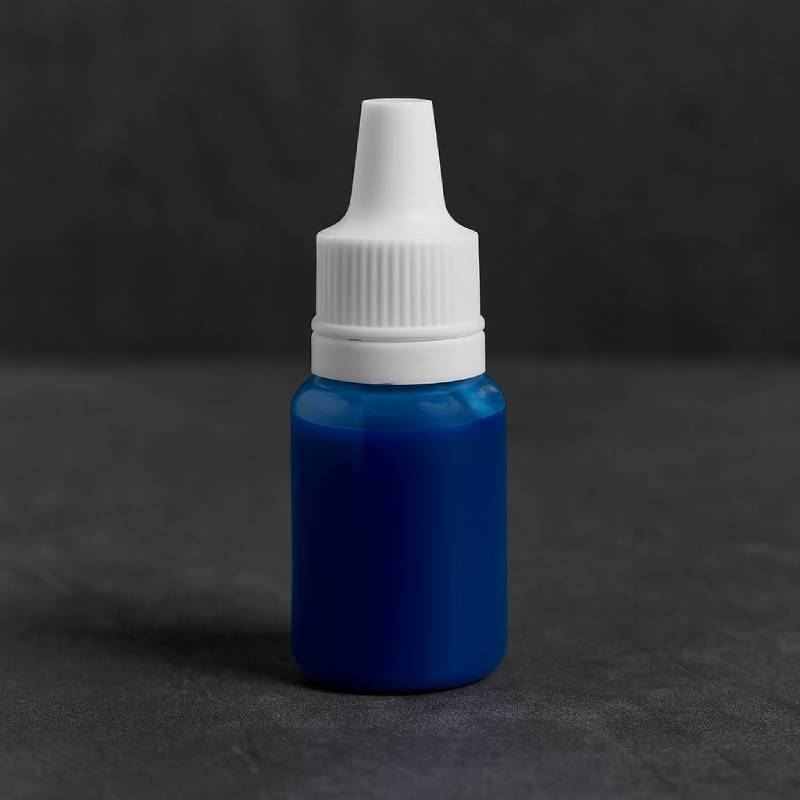
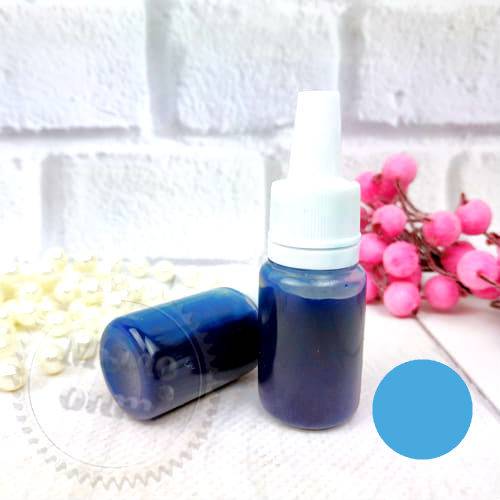
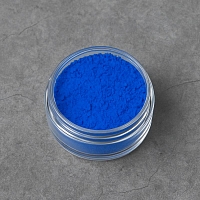
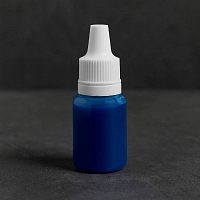
Liquid blue pigment in a compact 10 ml package is formulated to color transparent and semi-transparent bases without losing intensity and without settling at the bottom of the container. This liquid form of colorant is widely used in candle making, in decorative cosmetics, in epoxy resin art projects, and in small-batch production of household chemical products. The item belongs to the Pigments Liquid category, which brings together non-migrating colorants known for stable color performance across different media and processing temperatures.
In candle manufacturing, this blue pigment is introduced into melted wax at around 60-70 degrees Celsius, dispersing evenly and retaining its intensity after the wax solidifies. In decorative cosmetics it is commonly used for tinting gel textures, glosses, and semi-transparent lacquers, since it blends smoothly without forming clumps or streaks. Resin artists favor this pigment because it keeps the finished piece clear rather than cloudy, which matters greatly when casting jewelry or decorative resin objects. In household chemical formulations, small amounts of this pigment are added to washing gels and dishwashing liquids to give the product a distinctive, recognizable shade.
Dosage depends on the desired depth of color and typically ranges from a few drops up to around 1-2 percent of the total product mass. The pigment should be added once the base has cooled to a workable temperature, or right before pouring, to prevent premature breakdown of the colorant from prolonged heat exposure. For richer or more complex color effects, this blue pigment pairs well with other colorants: it works nicely alongside Pigment ULTRAMARINE 10 g for a deeper navy tone, and with Pigment MAGIC VIOLET 10 g when a cool blue-violet transition is desired. For projects seeking a shimmering accent, a touch of Brown Liquid mica pigment 10 ml can add a warm undertone against the cool blue base.
The 10 ml size is intended primarily for home cosmetic making and trial batches, when testing a shade before scaling up production matters most. This volume suits hobbyists, beginners, and small creative studios that do not need to purchase larger quantities of raw material. Store the pigment in a tightly closed container, away from direct sunlight and temperature fluctuations, at room temperature, which helps preserve color stability over an extended period.
Layered blue gel candle
Soy or paraffin wax 250 g
Liquid blue pigment 4-6 drops
Ocean breeze fragrance oil 5 ml
Cotton or wooden wick 1 pc
Melt
the wax over a double boiler until fully liquid, then let it cool to about 65
degrees Celsius. Divide the melted wax into two portions: add 1-2 drops of
pigment to the first for a light shade and the remaining drops to the second
for a deeper tone. Stir the fragrance oil into both portions, pour the darker
layer into a container with a secured wick, and let it set partially for about
10-15 minutes before carefully pouring the lighter layer on top to create a
smooth color gradient. Allow the candle to cure at room temperature for at
least 4 hours before use.
Frequently asked questions
What is the recommended starting dosage for blue liquid pigment in cosmetic gels?
Begin with 0.3% of the blue liquid pigment in cosmetic gels and adjust up to 5% on a test batch. Add drop by drop to achieve the desired shade while the liquid form prevents clumping in translucent bases.
How long is the shelf life of the 10 ml blue liquid pigment under proper storage?
Store the 10 ml blue liquid pigment in a dry cool place in a hermetically closed container away from light. It remains usable until 12.2041, making it practical for cosmetic labs working with small volumes.
Does the blue liquid pigment come with supporting quality documents?
A COA for the blue liquid pigment is available on request. This supports its use in premium cosmetic applications such as gels, glosses and translucent varnishes.
Is the 10 ml pack of blue liquid pigment suitable for trial cosmetic batches?
The 10 ml pack of blue liquid pigment suits trial cosmetic batches and small-scale production. Its liquid consistency colors bases evenly without sediment, allowing precise shade testing before larger runs.