Why bulk green pigment keeps color consistent across large production runs
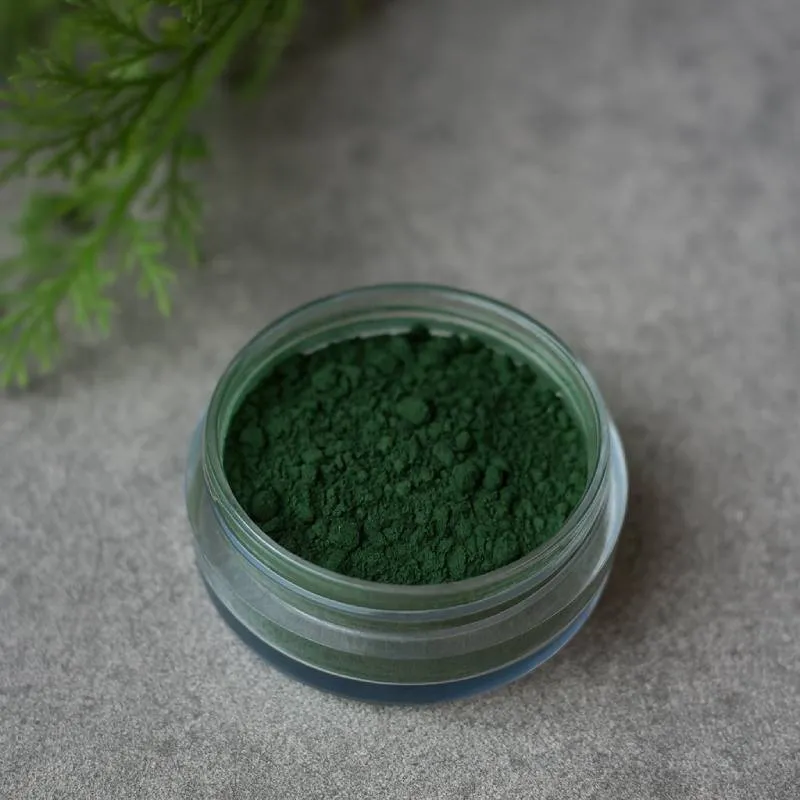
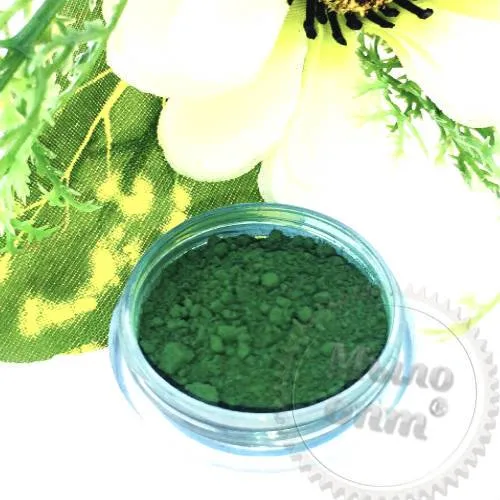
A 1 kg pack of green cosmetic pigment belongs to the broad pigments category, covering dry colorants used across dozens of manufacturing fields, from decorative cosmetics to plastics, construction materials and household chemicals. This kilogram-scale packaging suits workshops and small manufacturing lines that need a reliable, uninterrupted color supply across multiple batches without variation between deliveries. The most common industrial use of green pigment lies in decorative cosmetics such as eyeshadows, eyeliners and mascaras, alongside coloring candle wax, polymer clay, epoxy resin castings and liquid detergents or gels in household chemical production. Discover additional shades within the Pigment Powders Wholesale section.
Because of its strong opacity and excellent resistance to fading under UV exposure, this pigment is also widely applied in coatings, plastics and construction industries for tinting plasters, concrete mixes and molded polymer parts. Unlike water-soluble dyes, it functions as an insoluble dispersion of fine particles, so before adding it to any base it is recommended to pre-mix the powder with a small amount of carrier oil or glycerin into a smooth paste - this step prevents clumping and uneven speckling in the finished product.
Typical dosage ranges from 0.5 to 5 grams per 100 grams of base, depending on the desired shade intensity: minimal amounts produce soft pastel tones, while reaching the upper limit gives a deep emerald result. The pigment should be introduced once the base has cooled to roughly 60-70 degrees Celsius but remains pourable, which avoids thermal degradation of the colorant while still allowing thorough dispersion throughout the mass. In cold-process formulations like gels or lotions, the pigment is pre-dispersed in a carrier and blended in at room temperature.
Green pigment combines well with other colorants, which opens possibilities for layered and gradient visual effects in finished goods. For a cooler, deeper tone with a teal undertone, it pairs effectively with Phthalocyanine green pigment, while bright neon accents in decorative items or craft projects are achieved by blending it with fluorescent light green pigment. For lip products specifically, formulators often turn to the dedicated green lipstick pigment, which offers a softer texture suited for direct skin contact.
Storage requires a tightly sealed container kept in a dry area away from direct sunlight and at stable room temperature, since exposure to moisture can cause the dry powder to clump over time. Under proper storage conditions, the pigment retains its performance characteristics for an extended period, which matters for manufacturers running multiple production cycles from a single kilogram batch.
Green polymer clay charms with a marbled swirl
White polymer clay base 300 g
Green pigment 4 g
Mineral oil 5 ml
Transparent polymer clay 100 g
Glitter fine gold optional 2 g
Knead
the mineral oil into the green pigment until a smooth concentrated paste forms,
then work this paste gradually into the white polymer clay base until an even
emerald shade develops, keeping a small portion of clay uncolored for contrast.
Roll the colored and transparent clays into thin ropes, twist them loosely
together and fold a few times to create a marbled pattern without fully
blending the colors. Shape the marbled clay into desired charm forms, press in
the optional glitter for surface sparkle, then bake according to the clay
manufacturer's recommended temperature and time before allowing pieces to cool
completely on a flat surface.
Frequently asked questions
How to disperse the intense green pigment evenly in a resin batch?
Incorporate the powder slowly while stirring the base until uniform. Begin with a small amount and test adjust on a sample batch. Works in epoxy resin and polymer clay.
What is the recommended storage for the 1 kg green mineral pigment?
Keep in a dry cool place inside a closed container until December 2041. Minor caking is acceptable and does not alter performance. COA supplied on request.
Which production scale benefits from the tree-green pigment in 1 kg pack?
The size fits studio and small-batch makers needing consistent shade and sufficient stock for cosmetics or construction mixes without interruption.
Does the saturated green pigment dissolve in liquid bases?
It does not dissolve but colors the mass as an insoluble dispersion. Distribute particles thoroughly for lightfast results in gels or waxes.