Sourcing and specifications of papain powder
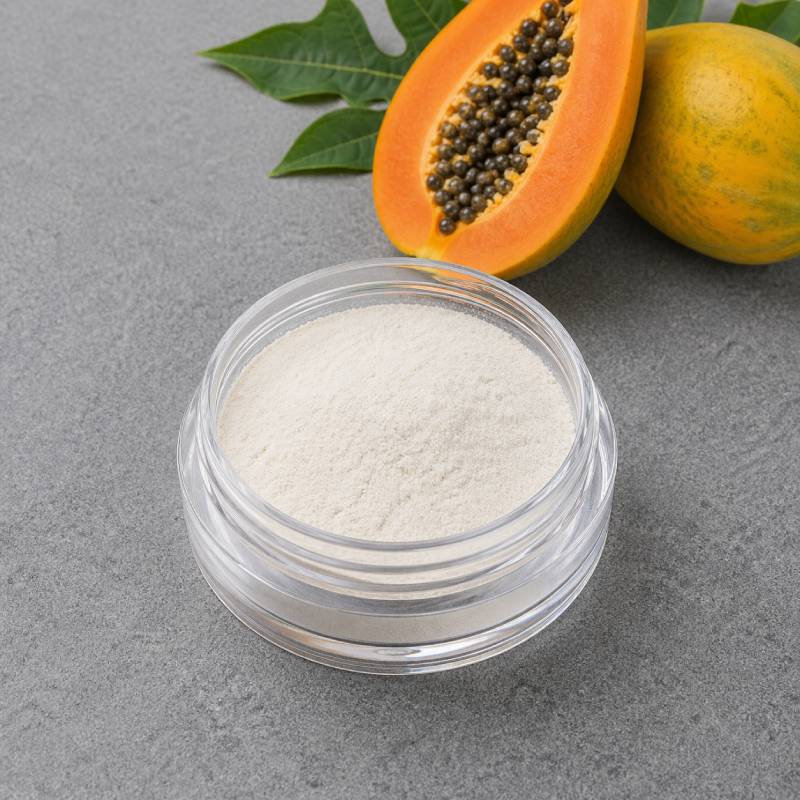
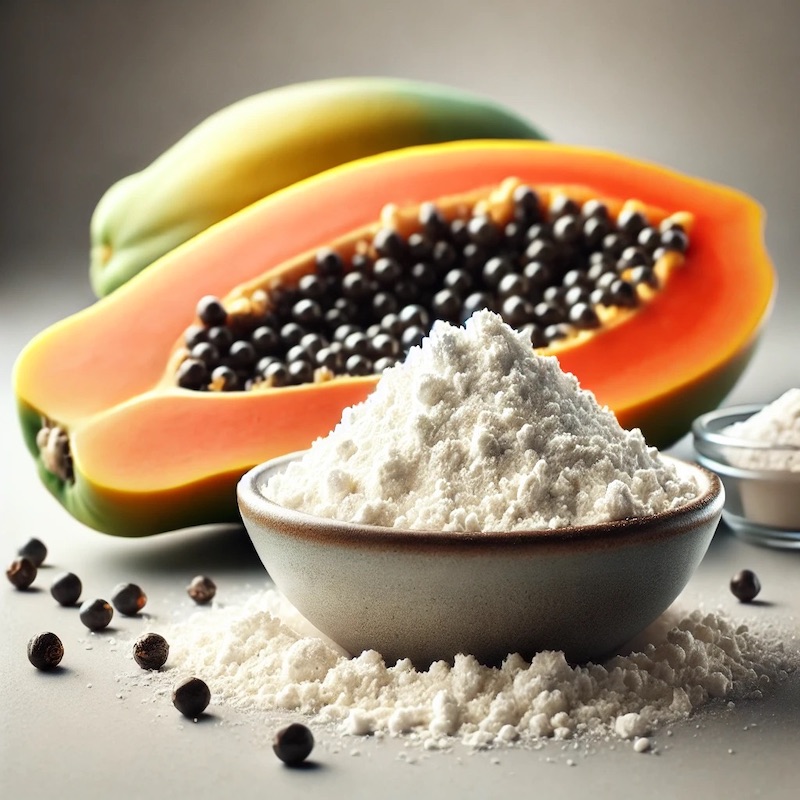
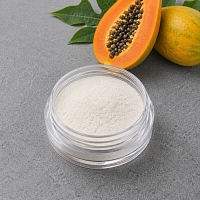
Papain is a proteolytic enzyme obtained from the latex of unripe Carica papaya L. fruits and supplied as a water-soluble powder from Germany in 10 g packs. The material meets the requirements of cosmetic laboratories and dietary supplement manufacturers seeking botanical raw materials. The product appears in the Powdered Extracts and Algae section alongside other dry botanical components.
Technical parameters for industrial use
INCI lists Carica papaya L. with synonyms such as Plant Protease Concentrate and Vegetable Pepsin. Recommended input levels range from 2 to 7 percent. The enzyme is introduced in the cool-down phase below 40 degrees Celsius. Larger volumes are available via the Papain 1 kg listing for scale-up trials.
Papain is supplied as a water-soluble powder from Germany and works well in cool-down phases below 40 degrees Celsius for various cosmetic formulas. See related options among cosmetic peptides or browse the full selection of cosmetic actives. Larger volumes are available in the Papain 1 kg pack while comparable materials include X50 Myocept, 1 gr.
Applications for supplement and food manufacturers
Cosmetic labs incorporate the powder into enzyme peels and body treatments. Supplement and food factories purchase papain as botanical raw material for dietary supplement formulations, beverage clarification in brewing, and meat tenderizing processes. Both private formulators and production sites source the ingredient in retail and wholesale quantities.
Formulation guidelines and solubility
The powder dissolves readily in water. Dosage must not exceed 7 percent. In scalp toners a 3 percent level is typical, while wash powders reach 4-7 percent. A sensitivity test is required before initial use in any batch.
Example formulation for a dietary supplement blend
For a trial supplement drink blend combine 85 g water, 4 g papain, 6 g glycerin and 3 g xanthan gum. Dissolve papain in water at 35 degrees, add glycerin and disperse the gum gradually to achieve light viscosity. The mixture serves as a base for functional beverage prototypes.
Storage conditions and shelf life
Store in a dry cool place inside the original closed container. The hygroscopic powder requires protection from moisture to retain activity. Shelf life extends to November 2028 under proper conditions. Additional powdered materials are listed in the Botanical Extracts section.
Frequently asked questions
What input level is suitable for enzyme peels?
Start at 1 percent and increase up to 10 percent after confirming compatibility through sensitivity testing.
Can papain be added during the heating phase?
No, the enzyme loses activity above 60 degrees, therefore addition occurs only in the cool-down phase at maximum 40 degrees.
Who typically purchases the 10 g pack?
The 10 g size supports R&D batches and small-scale production runs at cosmetic labs and supplement developers.
Is a sensitivity test mandatory?
Yes, a sensitivity test must be performed before first use in any new formulation.