Product Description
Sourcing and specification of Calendula extract concentrate
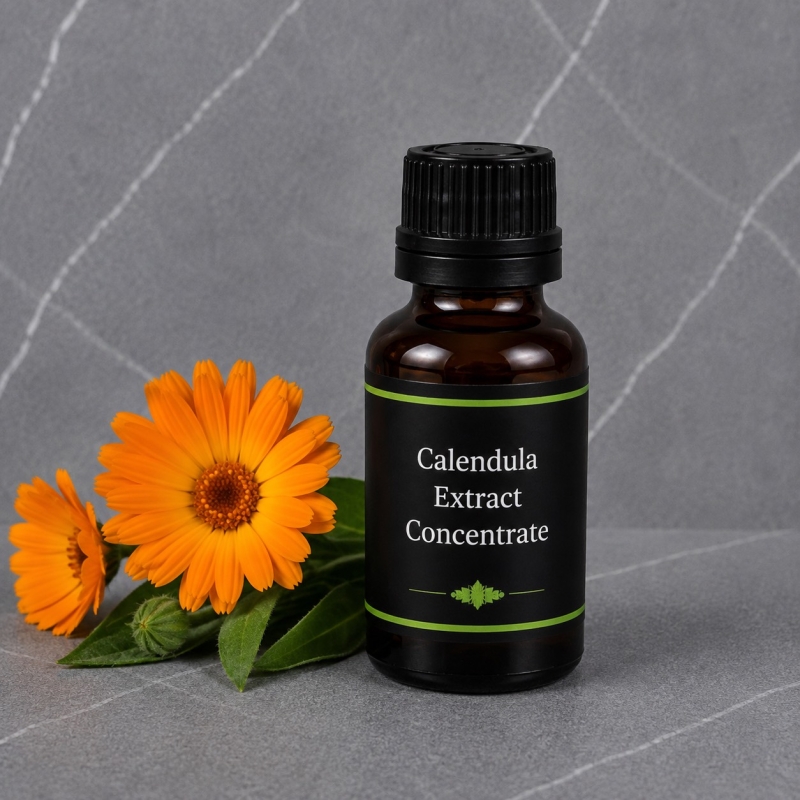
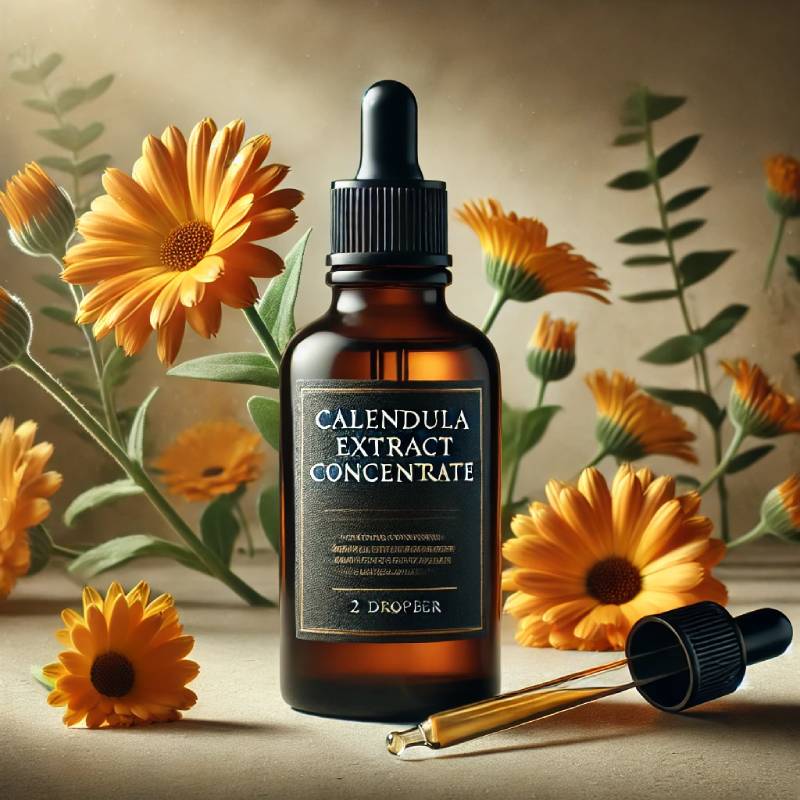
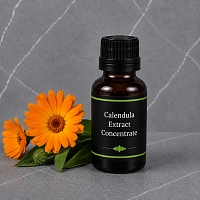
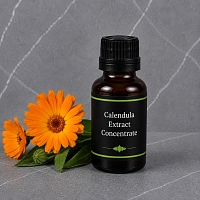
The liquid extract originates from Germany and arrives in 50 ml containers suitable for both laboratory testing and industrial batches. INCI lists it as Calendula officilalis L. Extract with characteristic odor and full water solubility. Extract Concentrates section presents this grade alongside similar botanical materials for B2B buyers.
Technical parameters for formulation work
Recommended input ranges from 0.01 to 2 % in the active phase. The material remains stable until December 2028 when kept in a cool dark place inside a tightly closed container. Large-scale manufacturers appreciate consistent lot-to-lot quality for global supply chains.
Integration into cosmetic laboratory workflows
Formulators add the concentrate to serums, after-shave lotions and body emulsions. It pairs well with other water-soluble actives without altering viscosity. Cosmetic labs often request samples before scaling to production volumes.
Role as raw material for dietary supplement and food manufacturing
Supplement producers and food factories purchase the concentrate as a botanical ingredient for functional beverages and confectionery bases. Private formulators and contract manufacturers worldwide order both retail packs and bulk quantities through the same platform. The product serves as raw material for dietary supplement production. Botanical Extracts category contains additional options for similar applications.
Sample beverage blend formulation
Herbal infusion base - 97.5 %, calendula extract concentrate - 1.5 %, natural sweetener - 1 %. Blend under 35 degrees C, pasteurize gently and fill into dark bottles for extended shelf life.
Logistics and shelf-life considerations
Transport packaging protects the liquid from light exposure. Calendula Extract Concentrate 1 L format supports pilot production runs before committing to larger volumes.
Frequently asked questions
What documentation accompanies each batch?
Each shipment includes specification sheet and country-of-origin statement from Germany.
Can the extract be used above 2 %?
Higher levels may intensify the characteristic odor and should be validated in stability tests.
Is the material suitable for clean-label food projects?
Yes, it serves as a plant-based raw material in food-grade formulations when dosage guidelines are followed.