Sourcing and specification profile
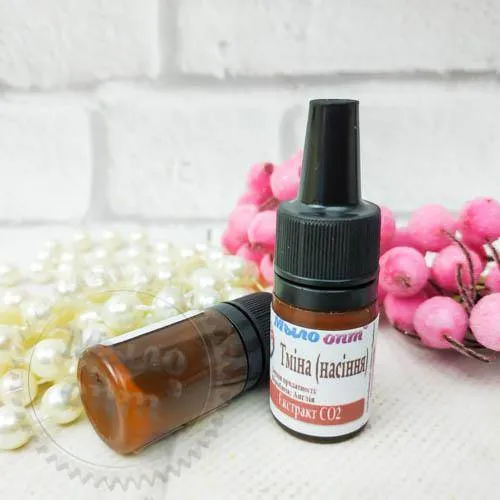
Cumin CO2 Extract is produced in England by supercritical fluid extraction with natural carbon dioxide. The result is an oily liquid free from solvent residues and heavy metals. The 5 g pack suits pilot batches and small-scale production. CO2 Extracts of this grade retain volatile aromatic compounds and lipid fractions of the seed. International buyers value this sourcing route because it delivers consistent quality without chemical solvents and supports traceability from raw seed to finished concentrate.
Compatibility and incorporation parameters
The extract is fat-soluble and added to the active phase of an emulsion at 0.5-2 %. It delivers warm spicy and nutty notes that integrate smoothly into both leave-on and rinse-off systems. It pairs well with other CO2 concentrates such as black cumin or grape seed. The same quality parameters apply to Cumin CO2 Extract (seeds) 100 g, allowing seamless scale-up from laboratory trials to commercial batches without reformulation.
Use in supplements and food manufacturing
Manufacturers of dietary supplements and food factories worldwide source this botanical raw material for flavoring meat products, sauces, spice blends and functional foods. Confectionery and beverage producers also incorporate it as a concentrated flavor component that adds depth without introducing excess moisture. Botanical Extracts in this category serve B2B buyers in the dietary supplements and food sectors who require stable, solvent-free ingredients for clean-label products.
Example formulation for a supplement blend
Functional oil blend: jojoba oil 40 g, grapeseed oil 30 g, cumin CO2 extract 1 g, rosemary CO2 extract 0.5 g, vitamin E 0.5 g. Heat oils to 60 °C, cool to 38 °C, add extracts and vitamin E, mix until uniform and fill into containers. This simple process demonstrates how the extract performs at low inclusion levels while maintaining clarity and stability in oil-based systems.
Storage conditions and shelf life
Store in a cool dark place in tightly closed packaging. This preserves the aromatic and lipid profile until 12.2028. Temperature fluctuations and exposure to light should be avoided to prevent oxidation of the delicate volatile fraction.
Practical considerations for cosmetic labs
Cosmetic laboratories appreciate the extract for its ability to impart a subtle warming sensation in massage oils and body butters. It disperses evenly in anhydrous balms and can be combined with other botanical lipids to create targeted skin-comfort formulas. Because it remains stable at moderate processing temperatures, it fits easily into existing production workflows without additional equipment.
Frequently asked questions
Is the extract suitable for aqueous systems?
No, it is introduced only into oil or emulsion phases due to its fat solubility.
What is the recommended temperature for addition?
Add the extract at 35-40 °C to protect volatile components.
Can it be used in confectionery?
Yes, it serves as a botanical flavor raw material in food industry applications and dietary supplement formulations.