What Makes Low Molecular Weight Hyaluronic Acid Different for Skin Absorption
Low molecular hyaluronic acid belongs to the category of Hyaluronic Acid and Actives for Cosmetic, and this particular fraction is valued for its ability to penetrate deeper skin layers rather than sitting on the surface, which is typical for high molecular weight versions. A smaller molecular size allows the ingredient to bind moisture inside living tissue, support elasticity and take part in regeneration processes at a cellular level. This is why the compound has become a staple in serums, essences, anti-aging creams, sheet masks, facial mists and professional skincare lines used in clinics and beauty studios worldwide.
Global demand for this ingredient is driven primarily by the skincare industry, but it also plays a role in adjacent fields: pharmaceutical manufacturers use similar fractions in eye drops and mucosal moisturizing solutions, while nutraceutical brands include low molecular hyaluronate in beauty drinks and capsules aimed at joint support and internal tissue hydration. Veterinary care and ophthalmology also rely on such fractions thanks to their high bioavailability.
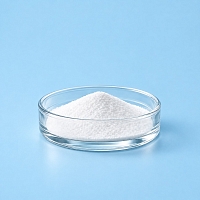
The 50 g package size is designed for small-batch and studio-scale production, giving formulators enough material for consistent serial output of serums, creams and masks in a home lab or a small commercial workshop, as well as room for testing multiple formulations in parallel. The recommended usage rate typically ranges from 0.1 to 2 percent of the total formula weight, depending on the desired texture and hydration intensity. It should be added to the water phase during the final stage of emulsion preparation, at a temperature not exceeding 40-45 degrees Celsius, to prevent the polymer chain from breaking down under heat. The ingredient blends well with glycerin, panthenol and plant hydrosols, and for enhanced deep penetration it is often paired with low molecular hyaluronic acid, 10 g, which works at an even finer molecular level.
Formulas aiming for an instant plumping and smoothing effect often combine this active with Hyaluronic Filler Spheres, which visually fill in surface irregularities while the low molecular fraction delivers long-lasting hydration from within. Premium anti-aging serums may also include sodium hyaluronate oligomers, the smallest available fraction, which reaches even deeper and boosts the overall active complex. Store the raw material in a cool, dry place, tightly sealed and protected from direct sunlight and moisture, since its hygroscopic nature requires careful handling throughout the shelf life.
Hydrating Facial Mist Concentrate
Distilled water 90 g
Glycerin 3 g
Low molecular hyaluronic acid 1 g
Aloe vera liquid extract 4 g
Broad spectrum preservative 1 g
Fragrance or essential oil 1 g
Dissolve the hyaluronic acid in cold distilled water and let it sit for 6-8 hours without heating until fully hydrated. Add glycerin and aloe vera extract, stirring gently until smooth. Warm the mixture to 40 degrees Celsius using a water bath, then add the preservative while stirring continuously. Finish with the fragrance, pour the finished mist into a spray bottle and allow it to cool to room temperature before first use.