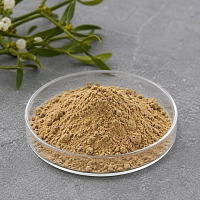
Mistletoe Extract Powder for herbal skin and hair formulations
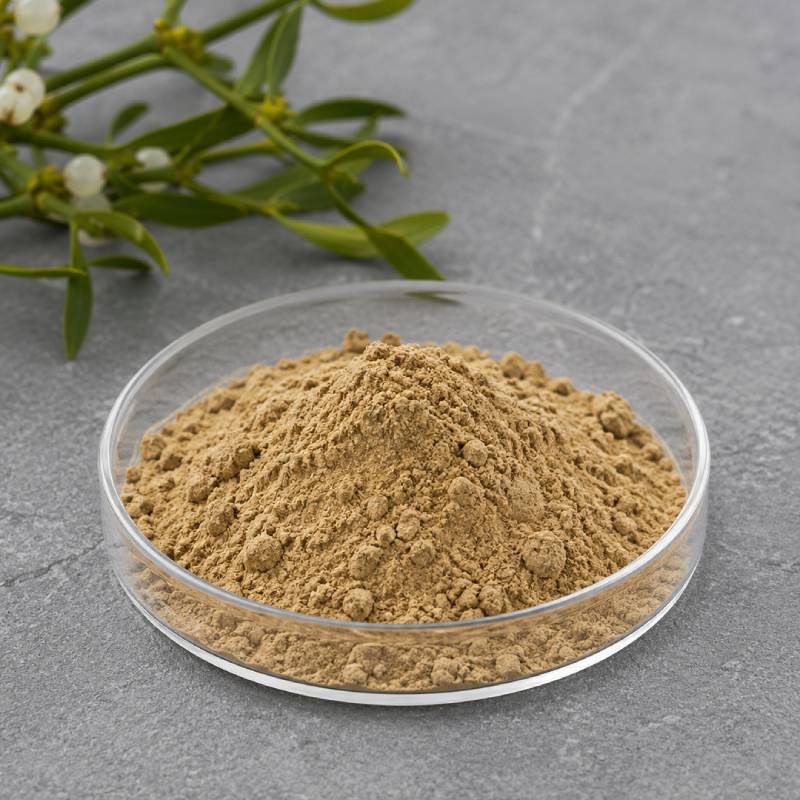
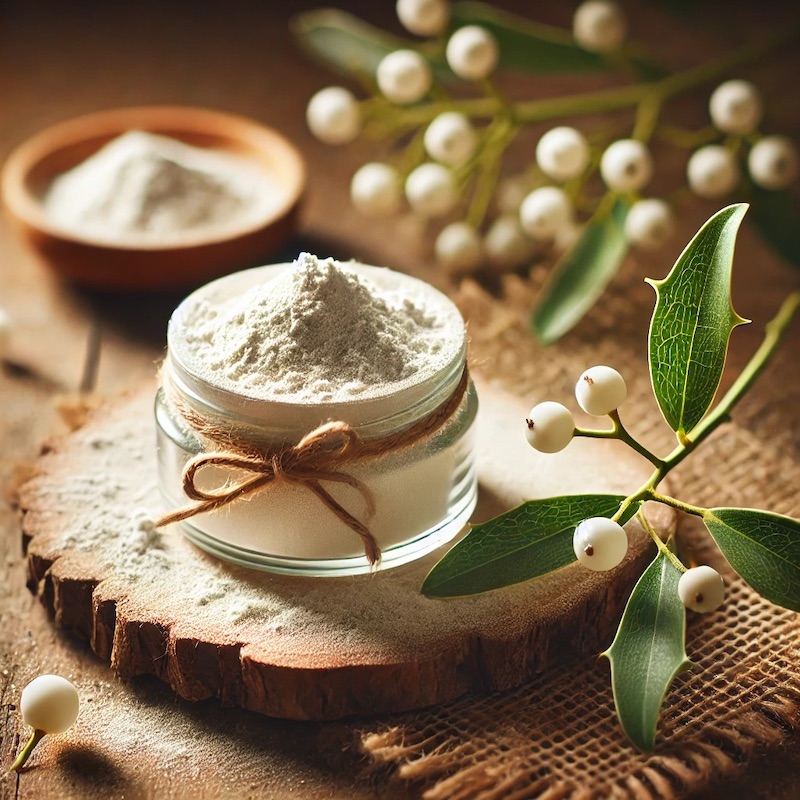
Mistletoe Extract Powder is a botanical raw material for modern cosmetic development across scalp care, hair care, facial products, body treatments, dry masks, and professional powder systems. The ingredient can be incorporated into different formulation concepts, from herbal shampoos and scalp tonics to water-activated SPA powders.
The dry format offers practical advantages for laboratory development and powder blending. It allows formulators to create botanical premixes and combine the extract with selected plant powders, clays, amino acid systems, proteins, and compatible moisturizing ingredients.
Mistletoe Extract Powder can become the central botanical theme of a product or one element within a focused herbal complex. Depending on the formulation concept, it may be combined with Nettle Extract Powder, Rosemary Extract Powder, Burdock Extract Powder, Green Tea Extract Powder, and other compatible cosmetic materials.
Herbal scalp tonics
Mistletoe Extract Powder can be evaluated for lightweight scalp tonics, lotions, and serum-type products.
In botanical scalp formulas, the extract may be combined with Betaine, Glycerin, amino acid complexes, and selected complementary plant extracts.
When developing an aqueous product, the complete formulation should be assessed for clarity, color, uniformity, and storage behavior. Botanical extracts can contribute natural coloration to the base, which should be considered during product design.
For spray products, formulators should also evaluate the finished system for uniformity and compatibility with the selected dispensing format.
A focused botanical complex is generally easier to evaluate technologically than an unnecessarily large mixture of unrelated plant ingredients.
Botanical shampoo concepts
The ingredient can be considered for herbal shampoos and other cleansing products for the hair and scalp.
Mistletoe Extract Powder may be combined with selected botanical extracts, hydrolyzed proteins, and amino acid systems according to the intended product concept.
After incorporation, the complete cleansing system should be checked for viscosity, color, odor, visual uniformity, and stability.
Botanical materials may affect the appearance of transparent bases. Pearlized, creamy, or naturally colored shampoo concepts can therefore provide additional formulation flexibility for products containing several plant-derived materials.
Laboratory testing should always be carried out in the complete surfactant system because electrolytes, fragrances, thickeners, and botanical ingredients may influence the final rheology.
Hair masks and conditioning products
Mistletoe Extract Powder can be used in the development of rinse-off masks and botanical conditioning products.
Potential formulation partners include hydrolyzed proteins, amino acid complexes, botanical oils, and compatible conditioning materials.
A complete hair care collection may include a shampoo, rich mask, and lightweight scalp tonic. The same botanical extract can provide a consistent ingredient story while each product is developed around a different technical base.
In emulsion masks, the incorporation method should follow the requirements of the selected emulsification and conditioning system.
After production, the formula should be evaluated for viscosity, visual uniformity, color stability, odor, and storage behavior.
Facial care formulations
Mistletoe Extract Powder can be considered for botanical gels, toners, masks, serums, and cream formulations.
For lightweight products, potential formulation partners include Betaine, Glycerin, Hyaluronic Acid, and compatible amino acid materials.
In emulsion concepts, the botanical profile can be complemented with Squalane, Jojoba Oil, Grape Seed Oil, and lightweight emollients.
Transparent gel products require careful visual evaluation because naturally colored botanical materials may change the appearance of the base.
For dry facial masks, the extract can be blended with Rice Powder, Oat Powder, Kaolin, fruit fibers, and other compatible botanical powders.
Water-activated powder masks
Mistletoe Extract Powder is particularly suitable for dry cosmetic systems that are mixed with liquid shortly before use.
The extract can be incorporated into bases containing clays, cereal powders, plant fibers, and complementary extract powders.
For better batch uniformity, prepare a concentrated premix by combining the extract with part of the main carrier powder. Gradually blend this premix into the remaining batch.
This technique helps distribute lower-level botanical ingredients throughout a larger powder mass.
During development, evaluate powder flow, color uniformity, wetting behavior, and the texture obtained after mixing with water.
Professional SPA concepts
Mistletoe Extract Powder can support forest botanical, herbal wellness, and modern apothecary-inspired SPA collections.
Professional powder products can be prepared as concentrated dry blends and hydrated immediately before application.
A coordinated SPA range may include a powder mask, body treatment, and complementary cosmetic products developed around the same botanical concept.
The dry mixture should hydrate evenly and form a consistent paste suitable for the intended application method.
The required amount of liquid may vary according to the particle size and absorbency of the complete powder system.
Compatible formulation directions
For scalp and hair products, Mistletoe Extract Powder can be combined with Nettle Extract Powder, Rosemary Extract Powder, Burdock Extract Powder, amino acid complexes, and hydrolyzed proteins.
For facial formulas, it may be paired with Betaine, Glycerin, Hyaluronic Acid, and selected botanical extracts.
For dry cosmetic systems, useful base materials include Kaolin, Green Clay, Rice Powder, Oat Powder, and fruit fibers.
Each combination should be selected according to the technical format and intended product concept rather than simply increasing the number of ingredients.
How to use Mistletoe Extract Powder
For dry cosmetic products, blend the extract thoroughly with the other powder materials. Preparing a premix with part of the carrier can support more uniform distribution.
For aqueous products, conduct a small laboratory trial in the selected base before scaling up.
For shampoos and surfactant systems, evaluate viscosity and appearance again after all ingredients have been incorporated.
For emulsions, select the incorporation stage according to the processing requirements of the complete formulation.
The finished laboratory batch should be assessed for appearance, odor, color consistency, viscosity, and storage stability.
Example forest botanical powder mask
Oat Powder 280 g
Rice Powder 250 g
Kaolin 220 g
Mistletoe Extract Powder 90 g
Pear Fiber 60 g
Green Tea Extract Powder 40 g
Rosemary Extract Powder 30 g
Betaine Powder 20 g
Green Clay 10 g
Total Batch Weight 1000 g
Combine Oat Powder, Rice Powder, and Kaolin in the main mixing vessel.
In a separate dry container, prepare a botanical premix using Mistletoe Extract Powder, Pear Fiber, Green Tea Extract Powder, Rosemary Extract Powder, Betaine Powder, and Green Clay.
Add the botanical premix gradually to the main powder base while mixing continuously. Continue blending until the batch has a uniform appearance.
Before application, combine the required portion of powder with water and mix until a smooth paste is obtained. Adjust the liquid quantity according to the absorbency of the selected commercial raw materials.
Mistletoe Extract Powder provides a versatile botanical direction for scalp care, shampoos, hair masks, facial products, body treatments, and professional dry SPA systems. Its powder format supports the development of concentrated botanical blends and contemporary multi-ingredient herbal cosmetic concepts.