Product Description
Sourcing and specification overview
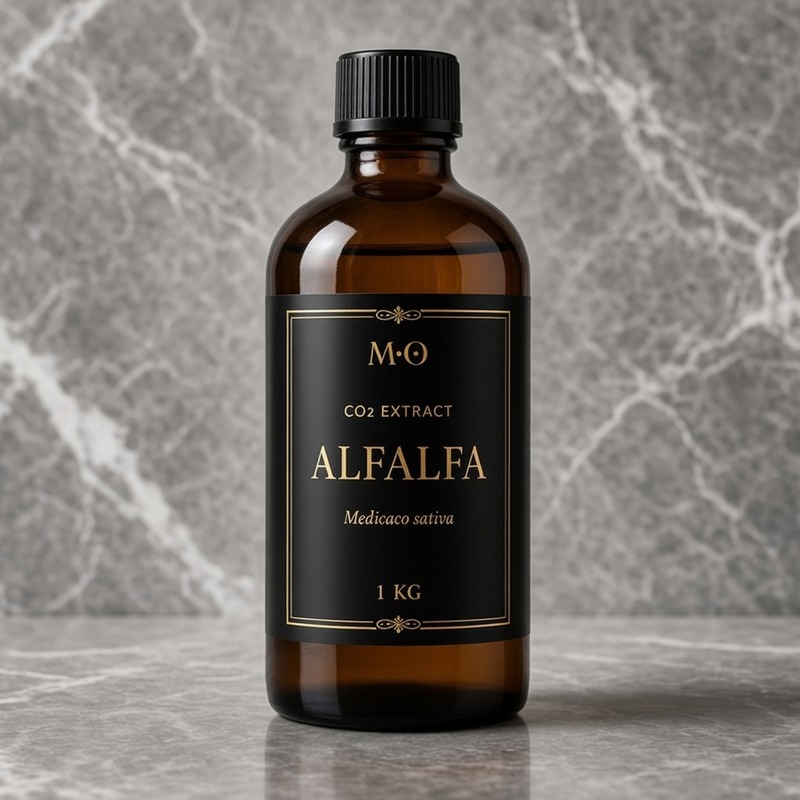
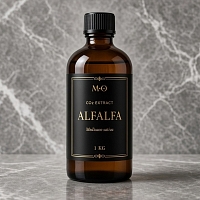
Alfalfa CO2 extract comes from Medicago sativa L. herb via supercritical extraction, yielding an oily mass rich in PUFAs and phytosterols. The 1 kg pack produced in Ukraine meets requirements for consistent B2B supply. CO2 Extracts Wholesale section lists bulk options for manufacturers planning larger volumes.
Technical parameters for formulation
The material integrates at 0,2-2 percent in oil phase below 45 degrees Celsius. It remains stable when stored in sealed containers in a cool dark place for at least two years until 12.2028. Solubility profile favors lipid systems and allows direct addition to anhydrous bases. Extracts Wholesale offers related botanical options for scaling production.
Role in dietary supplement and food manufacturing
Supplement producers and food factories worldwide source the extract as botanical raw material for functional beverages, confectionery bases and nutritional complexes. It contributes plant-derived lipids without altering final taste profiles. Alfalfa CO2 extract 100 g serves for pilot runs before scaling to kilogram quantities.
Integration in cosmetic laboratory work
Labs incorporate the mass into creams, serums and hair conditioners to support skin comfort and improve texture. It blends readily with carrier oils and helps maintain product homogeneity across batches.
Example formulation for a lipid serum
Combine 1,5 percent alfalfa extract with 20 percent jojoba oil, 10 percent squalane and 68,5 percent caprylic triglyceride. Heat oil phase to 40 degrees, add extract and mix until uniform. Package in dark dropper bottles for stability.
Handling and long-term storage
Keep original packaging sealed until use. After opening transfer to light-protected containers to preserve fatty acid integrity over the declared shelf life.
Frequently asked questions
What batch documentation is provided with each shipment?
Each delivery includes specification sheet confirming composition and production origin.
Can the extract be used above 2 percent in food blends?
Formulators adjust levels according to desired lipid contribution and regulatory limits for the target market.
Does the material require special emulsifiers?
In standard oil-in-water systems common emulsifiers suffice at recommended concentrations.
How does temperature affect viscosity during processing?
Moderate warming to 40-45 degrees reduces viscosity for easier pumping and dosing.