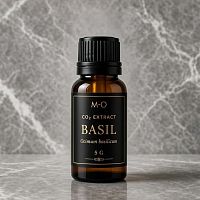
How Basil Essential Oil Shapes Fragrance and Wellness Blends
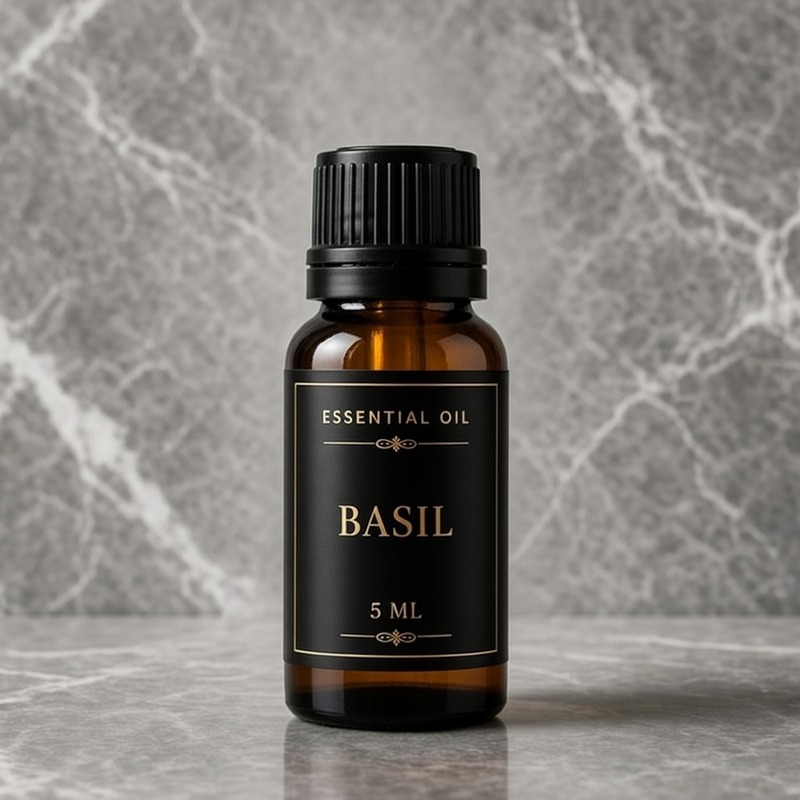
Basil essential oil is obtained through steam distillation of the plant's aerial parts and belongs to the broad category of Essential Oils, which brings together concentrates for fragrance houses, cosmetic manufacturers and household chemical producers. Its herbaceous, slightly sweet and anise-like scent makes it a valued raw material both in niche perfumery and in industrial-scale fragrance compounding for cleaning products. The 5 ml size is well suited for home experimentation, formula testing and small trial batches before moving on to larger production runs.
The most widespread global use of basil essential oil is in niche and artisanal perfumery, where it serves as a top or heart note lending compositions herbal freshness with a subtle spicy edge. The second major application area is body care cosmetics, particularly toning oils, creams and gels designed for invigorating effects. In aromatherapy practice, basil oil is used to support focus and ease tension after physical exertion. Household chemical manufacturers rely on it for fragrancing detergents and candles, where its spicy notes mask the technical base scent effectively. In the food industry, basil essential oil appears in extremely small dosages as a natural flavoring agent for spice blends, though this application requires strict concentration control and falls outside typical home use.
Basil oil blends particularly well with citrus oils, lavender, rosemary and other herbal notes. Combining it with the closely related Sweet Basil Essential Oil produces interesting layered herbal accords, since both oils share depth but differ in subtle nuances of scent. It also pairs nicely with Tarragon Essential Oil, as both belong to the spicy herbal family and reinforce one another within a composition. In cosmetic formulations, basil oil is frequently introduced into toning and firming body blends, which is why it connects naturally with the ready-made Anti-Cellulite Essential Oil Blend, usable as a base for further formula development.
In finished cosmetic products, the recommended dosage of basil essential oil ranges from 0.5 to 2 percent of the total volume, while perfumery compositions may use concentrations up to 3-5 percent depending on the product type. The oil should be added at the final formulation stage, with the base temperature kept below 40 degrees Celsius to prevent evaporation of volatile aromatic compounds and loss of scent intensity. A patch test is recommended before broader use, since concentrated essential oils are never applied undiluted to the skin.
Store basil essential oil in a tightly sealed dark glass bottle, away from direct sunlight and heat sources. Under these conditions the aromatic profile remains stable for an extended period, keeping the concentrate suitable for future formulation work.
Invigorating Body Oil Blend
Grapeseed oil 30 ml
Jojoba oil 10 ml
Basil essential oil 1 ml
Tarragon essential oil 0.5 ml
Combine the grapeseed and jojoba oils in a clean glass container, then add the essential oils drop by drop while stirring gently with a glass rod. Pour the finished blend into a dark glass bottle with a tight cap and use a small amount for massaging tired muscles or invigorating the skin after a workout, warming the oil slightly between the palms before application.