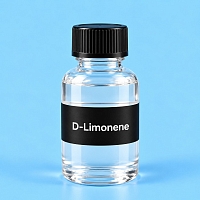
Why orange-derived terpene became a core ingredient in industrial degreasing formulas
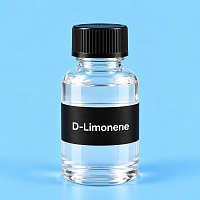
D-Limonene is a natural terpene extracted from orange peel through cold pressing or steam distillation, and it has grown far beyond fragrance use to become one of the most widely traded bio-based solvents worldwide. Manufacturers across cleaning, food, agriculture and cosmetic sectors rely on this ingredient, which is part of our Solvents and humectants selection built for dissolving resins, oils, fragrance oils and active compounds.
The largest global demand for D-Limonene comes from industrial and household cleaning, where it replaces petroleum solvents such as white spirit and acetone in degreasers, adhesive removers, and paint or tar stain removers for metal and plastic surfaces. Its solvency power on grease and resins remains high while offering a lower toxicity profile than classic petrochemical solvents. The second major application is the food and beverage sector, where limonene forms the backbone of citrus flavoring compounds used in soft drinks, confectionery and chewing gum. A third significant field is fragrance and household product scenting, where the orange note delivered by D-Limonene provides a fresh, slightly sweet top accord, alongside agriculture, where it is used as a component in natural insect-repelling formulations for crops and indoor pest control.
Within cosmetic manufacturing, D-Limonene functions as a solvent for essential oils and synthetic fragrance compounds, and it appears in cleansing gels and makeup removers thanks to its ability to penetrate lipid layers on skin and surfaces. It pairs well with other aromatic solvents such as D'Orientine S, commonly blended together to build more complex oriental-leaning fragrance accords. To stabilize limonene in water-based household formulas, producers often turn to the emulsifier Hostaphat KL 340 D, which keeps the mixture clear and prevents separation. It is worth distinguishing the D-isomer from L-Limonene, which carries a sharper pine-lemon character and suits formulas needing that specific scent direction, while the D-form delivers the classic orange top note.
For best results, add D-Limonene at the final formulation stage, at temperatures not exceeding 40 degrees Celsius, since the terpene is volatile and evaporates quickly under heat. Industrial degreasers typically contain between 5 and 25 percent of this ingredient by weight, fragrance compositions limit the top note to 1-5 percent, and food flavoring applications use only trace amounts. Store the raw material in tightly sealed dark glass or metal containers, in a cool place away from air and light exposure, because oxygen contact gradually oxidizes limonene and alters its aromatic profile over time. The 1 liter package suits small-batch and studio-level production runs, allowing formulators to test cleaning or fragrance recipes before scaling to larger industrial volumes.
Citrus surface cleaner concentrate
D-Limonene 80 ml
Distilled water 350 ml
Hostaphat KL 340 D 30 ml
Sodium citrate 10 g
Isopropyl alcohol 40 ml
Dissolve
sodium citrate in warm distilled water, then slowly blend in Hostaphat KL 340 D
while stirring continuously until fully dispersed. Add isopropyl alcohol and
mix thoroughly, then pour D-Limonene in a thin stream while stirring at higher
speed to form a stable, non-separating concentrate. Transfer the finished
mixture into a spray bottle and use it diluted for removing grease, adhesive
residue and oily stains from hard surfaces and industrial equipment.