Worldwide delivery  |  Free delivery in all Ukraine from 1899 UAH
Product catalog
Master classes, recipes, tips
AMIGEL rheology guide: Sclerotium Gum in gels emulsions and suspensions
A comprehensive technical formulation guide dedicated to managing rheology in cosmetics using the natural polysaccharide AMIGEL (Sclerotium Gum). This article explores the physical mechanisms of polymer hydration and network formation for structuring clear gels, light emulsions, and particle-suspending fluids. It covers pre-dispersion in polyols, electrolyte stability, shear rate handling, incompatibility limits, thermal limits, and precise pH controls. Features three complete DIY recipes with step-by-step compounding instructions and cold storage standards.
Natpure Film AP: natural film-forming technology for skin color cosmetics and hair
A comprehensive technical formulation guide dedicated to utilizing the bio-based film former Natpure Film AP (derived from sugar cane) in color cosmetics and hair care. This article breaks down the physical mechanics of flexible film creation, moisture resistance, and pigment adhesion enhancement. It covers aqueous dissolution protocols, compatibility with natural polymers and gums, thermal boundaries, and precise pH controls. Features three complete DIY recipes with step-by-step compounding instructions and storage standards.
ViableCare LipoCare 8: integrating a liposomal ceramide complex into barrier-care formulas
A comprehensive technical formulation guide to designing skin barrier restoration creams and liposomal fluids using ViableCare LipoCare 8. This article breaks down the physiological mechanism of ceramide integration into stratum corneum lipids to stop transepidermal water loss. It details exact processing protocols to protect liposomal structures, low-shear cooling phase entry below thirty degrees Celsius, emulsifier compatibility, and pH boundaries. Features three complete DIY recipes with step-by-step compounding instructions and cold storage standards.
Product Description

Polyglyceryl-3 Polyricinoleate functional characteristics and application in emulsion technologies

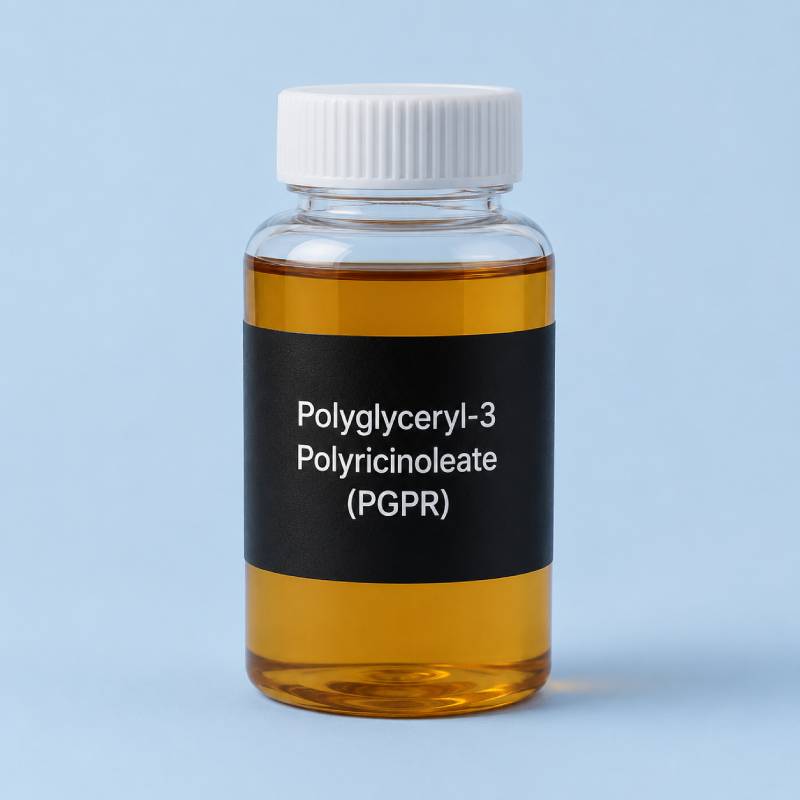
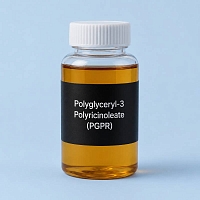
Polyglyceryl-3 Polyricinoleate is a powerful non-ionic emulsifier of biological origin, produced from glycerol and castor oil. This raw material is supplied as a viscous amber liquid with high stability and a specific affinity for hydrophobic systems. The industrial format of a liquid lipophilic emulsifier is highly convenient for manufacturing processes because it allows for cold processing or minimal heating, optimizing energy costs. Manufacturers choose this component for its exceptional ability to hold large volumes of the water phase within water-in-oil emulsions, creating stable structures with high water content. The liquid form is easily pumped and dosed on automated production lines, which reduces packaging waste.

Properties and purpose

The primary purpose of Polyglyceryl-3 Polyricinoleate in production logic is the creation of stable water-in-oil emulsions with excellent texture and fluidity. In cosmetic and food formulation, this component is valued for reducing interfacial tension, which prevents droplet coalescence. Formulators choose this polyester to develop products with high water resistance and rich barrier performance. Why this format is optimal for complex systems is explained by its ability to modify viscosity without altering the baseline organoleptic parameters of the product. Using this raw material allows for the creation of homogeneous compositions with high continuous-phase dispersion, preserving stability against thermal stress during long-term storage in B2B warehouses.

Industrial applications

In the cosmetic industry, Polyglyceryl-3 Polyricinoleate acts as a core base for hydrophobic sunscreens, baby diaper barrier creams, and makeup primers. Professional skin care integrates this emulsifier into formulations for extremely dry skin where strengthening the natural epidermal mantle is required. Body care utilizes this raw material in the manufacturing of hydrophilic massage bars and rich body emulsions. Functional products and the food sector utilize this component under the designation E476 to regulate the yield stress of chocolate masses and the stability of industrial margarines. Nutraceuticals view this raw material as a processing aid for encapsulating fat-soluble vitamins. The component is fully adapted for small-scale manufacturing and Private label projects, guaranteeing easy scaling of serial formulations.

Recipe Reverse protective cream

Sweet almond oil 35 ml Caprylic capric triglycerides 20 ml Polyglyceryl-3 Polyricinoleate 5 ml Purified water 38 ml Magnesium sulfate heptahydrate 1 gram Broad spectrum preservative 1 ml

Polyglyceryl-3 Polyricinoleate delivers technological excellence and structural integrity to complex multi-phase systems within the B2B market segment. Incorporating this emulsifier into large-scale manufacturing ensures product competitiveness while meeting strict global standards for reproducibility and quality control.

Characteristics:
INCI Polyglyceryl-3 Polyricinoleate
Other
Application Applications in various fields Cosmetics Water-in-oil emulsions SPF creams Foundations Primers Lipsticks and lip products Decorative cosmetics BB creams CC creams Concealers Waterproof products Food industry Chocolate Glazes Confectionery masses Fat systems Pharmaceutical industry Emulsion systems Oil suspensions Industrial production Dispersion and emulsion systems
Att brand Denmark
Color product From yellow to amber
Dosage Cosmetics 0.5–5% SPF products 1–5% Lipsticks and decorative cosmetics 0.5–3% Chocolate and glazes 0.1–0.5% Emulsion systems 0.5–5%
Features All information presented on the site is for reference only
Minimum count 1
Name Polyglyceryl-3 Polyricinoleate (PGPR) 1 kg
Other names PGPR Polyglycerol Polyricinoleate E476 W/O Emulsifier
Packaging container for transportation
Properties Nonionic emulsifier and dispersant for water-in-oil systems Widely used in the food and cosmetics industries Ensures the stability of emulsions with a high oil phase Used in decorative cosmetics and SPF products Helps improve the texture and distribution of formulas Helps reduce the viscosity of oil systems Used in the chocolate and confectionery industries Compatible with oils, waxes, and pigments Used in lip care and waterproof products Suitable for modern formulas with a silky texture and smooth finish
Purpose Functional emulsifier for water-in-oil systems Component for chocolate, cosmetic, and SPF formulas Ingredient for stabilizing oil emulsions and pigment dispersions
Solubility oil
View oily liquid
Valid until 12.2028
Add a review
Your score:
Send feedback
Error

Close window
Product added to cart
Total:
Request the price of the product
Fill in the details for the price request
Request a price Request a price