Worldwide delivery  |  Free delivery in all Ukraine from 1899 UAH
Product catalog
Master classes, recipes, tips
AMIGEL rheology guide: Sclerotium Gum in gels emulsions and suspensions
A comprehensive technical formulation guide dedicated to managing rheology in cosmetics using the natural polysaccharide AMIGEL (Sclerotium Gum). This article explores the physical mechanisms of polymer hydration and network formation for structuring clear gels, light emulsions, and particle-suspending fluids. It covers pre-dispersion in polyols, electrolyte stability, shear rate handling, incompatibility limits, thermal limits, and precise pH controls. Features three complete DIY recipes with step-by-step compounding instructions and cold storage standards.
Natpure Film AP: natural film-forming technology for skin color cosmetics and hair
A comprehensive technical formulation guide dedicated to utilizing the bio-based film former Natpure Film AP (derived from sugar cane) in color cosmetics and hair care. This article breaks down the physical mechanics of flexible film creation, moisture resistance, and pigment adhesion enhancement. It covers aqueous dissolution protocols, compatibility with natural polymers and gums, thermal boundaries, and precise pH controls. Features three complete DIY recipes with step-by-step compounding instructions and storage standards.
ViableCare LipoCare 8: integrating a liposomal ceramide complex into barrier-care formulas
A comprehensive technical formulation guide to designing skin barrier restoration creams and liposomal fluids using ViableCare LipoCare 8. This article breaks down the physiological mechanism of ceramide integration into stratum corneum lipids to stop transepidermal water loss. It details exact processing protocols to protect liposomal structures, low-shear cooling phase entry below thirty degrees Celsius, emulsifier compatibility, and pH boundaries. Features three complete DIY recipes with step-by-step compounding instructions and cold storage standards.
Product Description

Iron Oxides: Essential Pigments for Natural and Vibrant Color Cosmetics

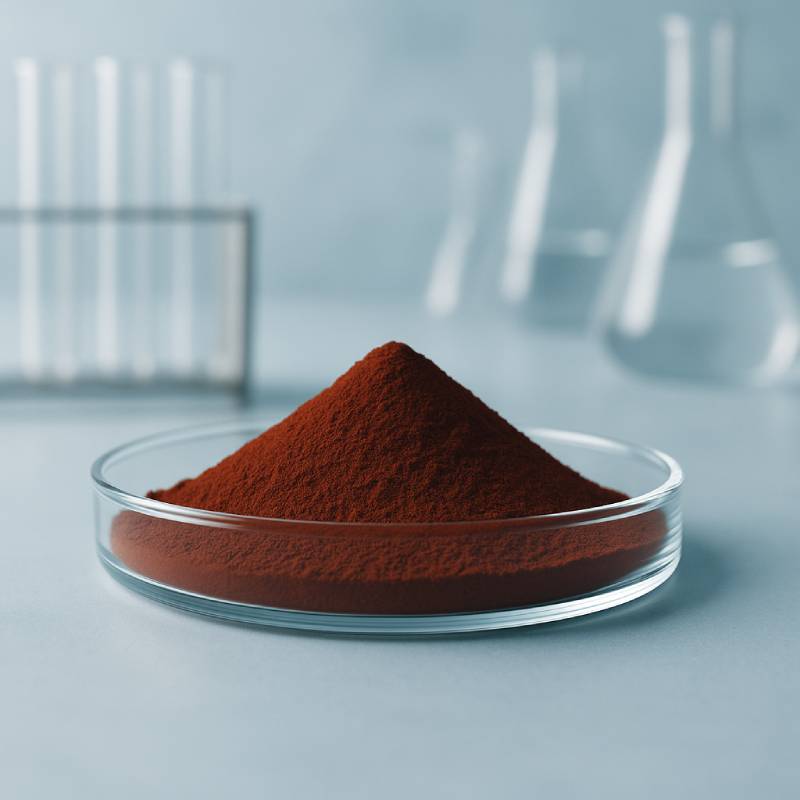
Introducing Iron Oxides (INCI: CI 77491, CI 77492, CI 77499), the indispensable family of natural mineral pigments that form the backbone of almost all color cosmetics worldwide. These highly stable, non-toxic, and non-bleeding pigments are sourced from the earth and purified for cosmetic and food use. Available in fundamental shades—red, yellow, and black—Iron Oxides can be blended to create a vast spectrum of skin tones, shadows, and vibrant colors, ensuring excellent coverage and lightfastness.

Product Description and Key Characteristics

Iron Oxides are inorganic compounds composed primarily of iron and oxygen. They are widely considered the safest color additives for cosmetic use due to their inert nature; they are non-irritating, non-allergenic, and resistant to moisture and oil. They are supplied as fine, matte powders that are insoluble but easily dispersed in oil or silicone phases. Their high purity makes them suitable even for the most sensitive skin types.

Key characteristics and advantages:

  • Stable and Lightfast: Highly resistant to UV radiation and temperature changes, ensuring the color of the final product remains vibrant and does not fade over time.

  • Non-Bleeding: Unlike many organic dyes, Iron Oxides do not migrate or bleed, making them perfect for precise applications like eyeliners and lipsticks.

  • Non-Toxic and Safe: Considered one of the safest pigment classes, they are approved for use in makeup, skincare, and often near the eyes and lips.

  • Matte Finish: Provides a deep, matte color and excellent coverage, ideal for concealing and foundational products.

  • Blendable: The primary shades (Red Iron Oxide, Yellow Iron Oxide, Black Iron Oxide) are easily blended to achieve any desired hue, including precise skin-matching tones.

  • High Opacity: Offers superior coverage and color payoff, especially important in foundations and concealers.

Applications and Usage Areas

Iron Oxides are the essential colorants for nearly every category of color cosmetic, distributed globally due to their safety and performance.

Foundation and Concealer: The core ingredients for tinting foundations, BB creams, CC creams, and concealers, allowing manufacturers to create a full range of natural-looking skin shades.

Eye Makeup: Used extensively in eyeshadows, eyeliners, and mascaras due to their safety near the eyes and their intense, stable matte color.

Lip Products: Key pigments in lipsticks, lip glosses, and lip stains, providing durable and non-migrating color.

Blush and Bronzer: Used to formulate natural-looking blushes, bronzers, and contour powders, adding dimension and warmth to the complexion.

Soaps and Bath Bombs: While specialized colorants are often used, purified Iron Oxides can be incorporated into melt-and-pour soaps and bath bombs for stable, muted earth tones.

Mineral Makeup: The defining pigments in loose mineral makeup, powder foundations, and setting powders, prized for their natural origin and skin compatibility.

Recipe: Custom Mineral Powder Foundation

Create a simple, customized mineral powder foundation using a blend of Iron Oxides for a perfect skin tone match and excellent coverage.

Ingredients:

  • Seventy grams Sericite Mica (Base Powder/Filler)

  • Fifteen grams Titanium Dioxide (White pigment/SPF enhancer)

  • Ten grams Zinc Oxide (White pigment/Soothing agent)

  • One point five grams Yellow Iron Oxide (Primary Yellow tone)

  • Zero point five grams Red Iron Oxide (Warmth/Pink undertone)

  • Zero point five grams Black Iron Oxide (Depth/Neutralizing agent)

  • Seven point five grams Magnesium Stearate (Binder/Slip agent)

Instructions for Preparation:

First Step: Wearing a mask to avoid inhaling fine powders, weigh and combine the Sericite Mica, Titanium Dioxide, and Zinc Oxide in a ceramic or glass bowl.

Second Step: Weigh the three Iron Oxides (Yellow, Red, Black) separately. Start by adding a small amount of the Yellow Iron Oxide to the base mixture.

Third Step: Mix the powders thoroughly using a mini-mixer, mortar and pestle, or a dedicated cosmetic grinder until the color is completely uniform and streak-free.

Fourth Step: Gradually add the Red and Black Iron Oxides in tiny increments, mixing completely after each addition. This is the crucial color matching step—add more red for a warm tone, black for an olive/neutral tone, and yellow for brightness.

Fifth Step: Once the color perfectly matches your desired shade, add the Magnesium Stearate. Mix again until the powder achieves a soft, silky feel.

Sixth Step: Sift the finished mineral foundation through a fine mesh sieve to ensure all pigment agglomerates are broken up and the texture is perfect before packaging.

Recommendations for Application and Storage:

  • Dispersion is Essential: Iron Oxides tend to clump. Use a dedicated grinder or mortar and pestle to ensure all pigments are fully dispersed in the base powders for an even, streak-free color.

  • Customization: Always blend Iron Oxides in small test batches on a white surface and compare the color to your target skin tone. You can adjust the ratio of the three main colors indefinitely.

  • Dosage: The dosage of Iron Oxides can vary widely, but typically ranges from 1% to 10% in foundations, depending on the required coverage and depth of color.

  • Storage: Store the finished powder foundation in an airtight container in a cool, dry place to prevent moisture contamination and maintain its texture.

Characteristics:
INCI Iron Oxides
Other
Application In cosmetics: Mineral decorative cosmetics BB creams, CC creams Powders, bronzers, highlighters Lipsticks, glosses Eyeshadows, eyeliners, pencils Eyebrow shaping products In skincare: Tinted masks Creams with a corrective tint (anti-yellowness, anti-redness) In other industries: Soap and candle coloring Food production (limited, E172 marking) Pharmaceutical tablets and capsules Chemical industry (paints and varnishes, inks) Manufacture of pigmented plastics, rubber, and building materials
Att brand Netherlands
Attention All information presented on the site is for reference only, it is recommended to test for an individual reaction before use.
Color product wide spectrum - from red to brown
Dosage Decorative products: 0.1% to 20% depending on color intensity Creams and toners: 0.1–5% Soaps and candles: 0.01–1% Pharmaceuticals: strictly regulated according to pharmacopoeial standards
Features Mandatory testing for sensitivity and allergic reaction, preliminary application to the bend of the elbow
Name Iron oxide, 1 kg
Other names CI 77491 (red), CI 77492 (yellow), CI 77499 (black), E172 (in the food industry), Red Iron Oxide, Yellow Iron Oxide, Black Iron Oxide
Packaging container for transportation
Packing 1 kg
Properties Intense coloring power Resistance to light, moisture, alkalis, and acids Non-toxic when used in cosmetic-grade dosages Excellent hiding power Compatible with a wide range of bases (water-based, oil-based, silicone-based)
Purpose Iron oxide is a versatile pigment used in cosmetics, decorative products, pharmaceuticals, food additives, paints, textiles, construction, and printing. Its primary purpose is to impart color, durability, and opacity to various formulations. In cosmetics, it is most often used to create foundations, blushes, eyeshadows, powders, lipsticks, and eye and eyebrow pencils.
Solubility insoluble in water and fats
Storage conditions in a cool, dry, dark place
View powder
Valid until 08.2027
Reviews (1) Add a review
Product rating:
  • Date:
    today
    Author:
    Антон, Киев
    Reviews

    Дякую!

    Is the review useful? Yes (0) No (0)
Add a review
Your score:
Send feedback
Error

Close window
Product added to cart
Total:
Request the price of the product
Fill in the details for the price request
Request a price Request a price