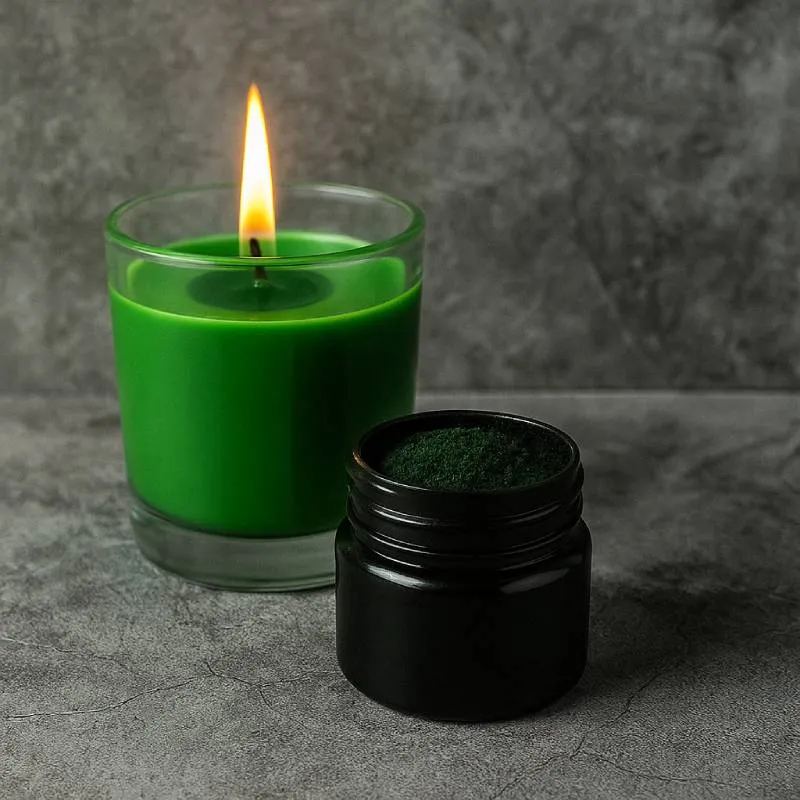
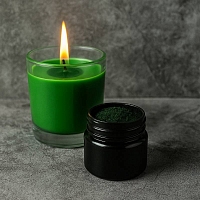
Concentrated Green Pigment Built for Serious Candle Production Runs
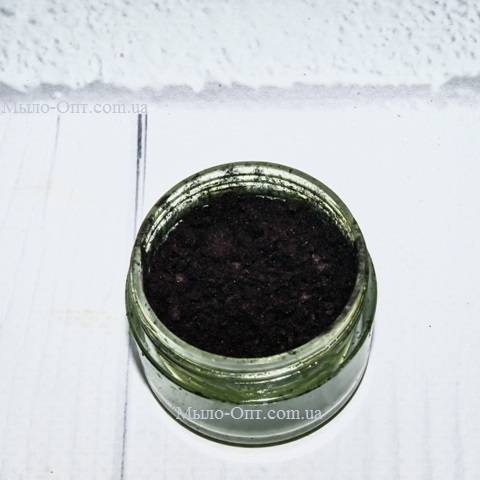
Candle making today spans far beyond hobby crafting into full commercial and studio-scale manufacturing, where the color of a finished piece matters just as much as scent or shape. This green pigment supplied in a 100 gram pack is sized specifically for heavier workloads such as production batches, workshops, or stock intended for retail and gift lines. It belongs to the candle colorants category, which brings together concentrated pigments formulated to work reliably with paraffin, soy, palm, and blended wax bases. Because the pigment is highly concentrated, even a small quantity produces a rich, saturated tone, and precise dosing allows manufacturers to reproduce the same shade consistently across multiple production batches, which is essential once output moves beyond small trial runs.
Green shades are a staple in candles built around botanical, pine, citrus, and herbal themes, as well as seasonal holiday collections. Beyond purely decorative candles, this pigment is widely used in home fragrance jars, wax melts and tea lights, and even in ceremonial or interior decor candle lines. The dye is stirred directly into melted wax at roughly 70 to 85 degrees Celsius, ideally after being pre-dissolved in a small separate portion of hot wax so it disperses evenly without clumping or streaking through the batch. A typical starting dosage runs between 0.1 and 0.5 percent of total wax weight, though the exact figure depends on the depth of color desired and the base wax used, so a small test pour is recommended before committing a large batch.
The pigment blends cleanly with other wax dyes, opening the door to layered tones and custom color transitions. For muted, earthy green shades, a touch of beige wax dye works well mixed in, while a drop of black wax dye can push the tone toward a deep, almost emerald hue. Pairing it alongside crimson purple wax dye is a popular approach for layered or seasonal candles with contrasting color bands.
It is worth remembering that the wax base affects the final result: paraffin tends to produce brighter, more transparent color, soy wax gives a softer, slightly matte finish, and palm wax can mute saturation somewhat due to its own crystalline structure. For this reason, dosage should be fine-tuned experimentally whenever switching to a new batch of raw wax. Store the pigment in its tightly sealed original packaging, away from direct sunlight, in a dry area at room temperature, keeping it away from moisture that could affect how evenly it dissolves later on.
For commercial and line production, consistency of supply matters as much as color depth, and a 100 gram pack lets a manufacturer plan a formula across dozens or hundreds of finished units without frequent reordering, which simplifies purchasing and reduces the risk of shade mismatch between production runs.
Pine Forest Tin Candles
Soy wax 400 g
Palm wax 100 g
Green candle dye 1 g
Pine fragrance oil 15 ml
Wooden wick with base 3 pcs
Melt the wax over a double boiler until fully liquid, then pour a small portion of the hot wax into a separate container and dissolve the green dye in it until fully uniform, before returning this mixture back into the main batch and stirring thoroughly. Once the wax cools to around 60 degrees Celsius, add the fragrance oil and stir for about a minute, then pour into prepared tins fitted with wooden wicks, letting the candles set at room temperature for at least twenty four hours.