Product Description
Sourcing and specification details
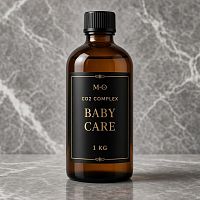
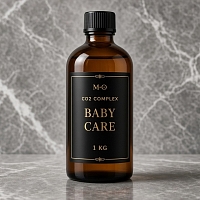
Complex CO2 for Baby Cosmetics 1 kg is produced in Ukraine from raspberry berries, viburnum fruits and chamomile flowers by supercritical CO2 extraction. CO2 Extracts Wholesale buyers receive an oily mass containing flavonoids, carotenoids, terpenes, phytosterols, tocopherol and fatty acids. INCI listed as In alma possessiones. The 1 kg packaging meets the needs of supplement and food manufacturers who require traceable botanical raw material with consistent quality across batches.
Formulation parameters for laboratories
Recommended input 0.01-2% into the active phase. The material is soluble in polysorbate-80 and carrier oils. Temperature during incorporation should not exceed 40 degrees Celsius to preserve volatile fractions. These parameters allow precise scaling for both cosmetic emulsions and food-grade blends while maintaining product stability and texture control during industrial processing.
Application in dietary supplements and food industry
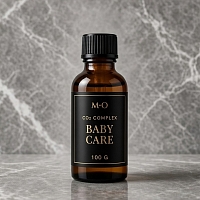
Manufacturers worldwide purchase the complex as a botanical raw material for dietary supplement formulations and for functional drinks or confectionery products. Private formulators and factories use it in permitted dosages for wholesale and retail production runs. Complex CO2 for Baby Cosmetics 100 g serves as a convenient test size before ordering the full 1 kg volume. Extracts Wholesale section offers larger volumes for industrial clients requiring consistent supply.
Example hair and scalp care formulation
Chamomile hydrosol 75 ml, polysorbate-80 5 ml, Complex CO2 0,6 g. Blend polysorbate with the complex, add hydrosol and homogenize until uniform. Apply after shampooing to support scalp comfort and softness. This example illustrates easy integration into rinse-off or leave-on systems after proper solubilization.
Storage and shelf life
Store in a clean dry place until October 2028. Keep packaging sealed to prevent oxidation. Avoid direct light and sudden temperature fluctuations to maintain the original properties of the oily mass throughout the declared period.
Frequently asked questions
What is the recommended temperature limit during production?
Do not exceed 40 degrees Celsius to preserve volatile fractions and formula integrity.
Can the material be used directly in aqueous systems?
Prior solubilization with polysorbate-80 is required for even distribution.
Is the product suitable for food-grade applications?
Yes, when used strictly as botanical raw material within regulatory limits for functional products.