Sourcing and specification details
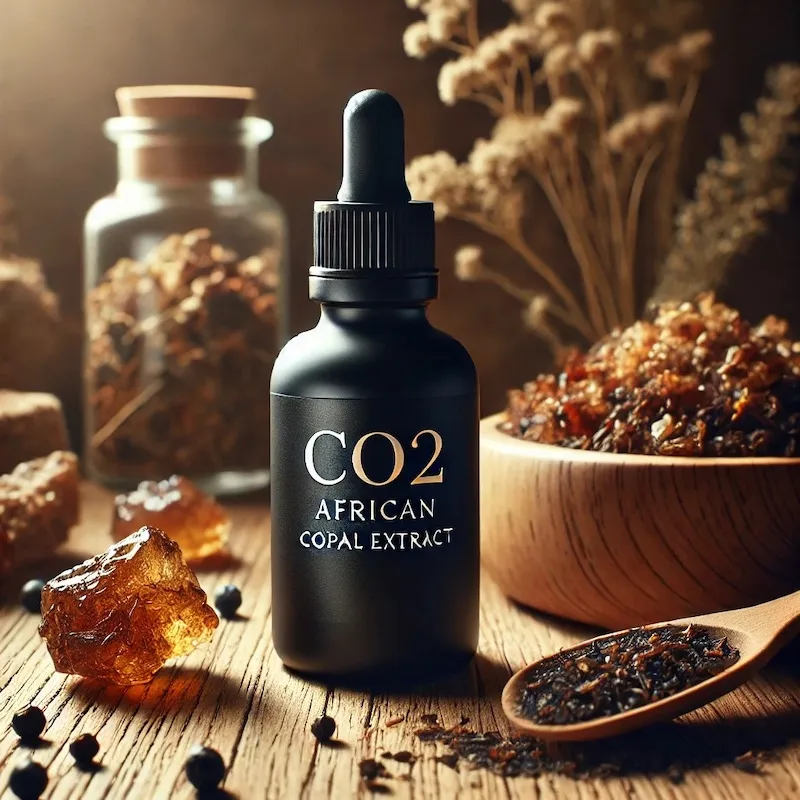
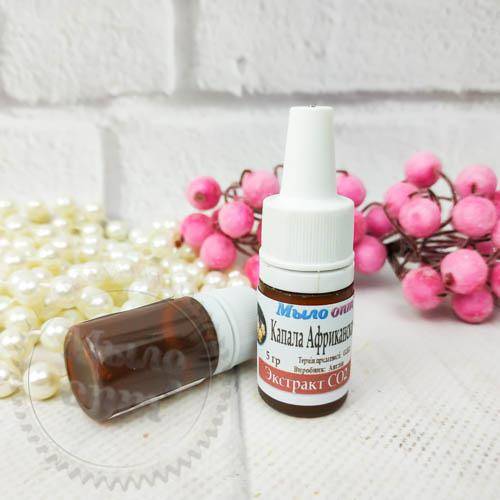
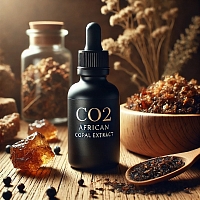
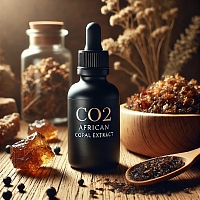
Copal African CO2 Extract 5 g is produced in England via supercritical carbon dioxide extraction from Daniellia Oliveri bark resin. The result is a 100 percent natural oily liquid free of solvents. CO2 Extracts category supplies consistent botanical raw materials for scale production. International buyers appreciate the absence of heavy metals and residual solvents, which meets strict quality requirements for global manufacturing. The 5 g pack size supports precise laboratory testing before committing to bulk quantities from the same source.
Technical properties for formulation
The fat-soluble extract enters the oil phase at temperatures below 45 degrees Celsius. INCI name Daniellia Oliveri (African Copal) Bark CO2 Extract. Pack size 5 g suits laboratory trials before larger orders. Formulators value the material for its uniform consistency that integrates smoothly into oil-based systems without altering viscosity. Sourcing teams often request this grade for projects requiring traceable botanical inputs from verified origins.
Use in dietary supplements and food manufacturing
Supplement producers and food factories incorporate the material as a botanical ingredient in functional blends, beverages and confectionery. Copal African CO2 Extract 100 g supports pilot to commercial transition. Manufacturers add it to carrier oils for capsule filling and to confectionery masses for aromatic depth. The same extract serves both dietary supplement lines and food industry applications where food-grade botanical raw materials are required.
Cosmetic laboratory applications
In serums, balms and hair care the input ranges from 0,1 to 0,5 percent. The resinous note adds depth to premium lines while remaining within cosmetic guidelines. Laboratories test compatibility with various oil phases and waxes to develop stable finished products. This approach allows cosmetic brands to create differentiated textures and subtle background aromas in their ranges.
Example supplement blend formulation
Carrier oil blend 92 g, Copal African CO2 Extract 0,25 g, mixed tocopherols 0,3 g, lecithin 7,45 g. Combine extract with lecithin at 40 degrees, disperse into carrier oil, add antioxidant and bottle. This model formulation illustrates typical ratios used by supplement manufacturers. Scaling the recipe maintains the same temperature controls and phase order for consistent results across batches.
Storage recommendations
Keep in tightly closed containers in a cool dark place until 12.2028. Botanical Extracts retain profile when protected from heat and light. Proper storage conditions preserve the volatile fractions that define the material's character over its entire shelf life. Procurement teams routinely specify these parameters in supplier agreements to ensure batch-to-batch stability.
Frequently asked questions
What is the recommended dosage in confectionery?
Food-grade use ranges from 0,05 to 0,2 percent depending on desired aromatic intensity in finished goods.
Can the extract be added to alcohol-based toners?
Yes, at 0,1-0,3 percent after cooling the base below 40 degrees Celsius for optimal volatility retention.
Is the material suitable for capsule filling?
Yes, it disperses evenly in oil carriers used for softgel and hard capsule dietary supplement production.
How does packaging size affect procurement?
The 5 g unit enables initial compatibility checks while the 100 g option bridges to production volumes without changing material quality or origin.