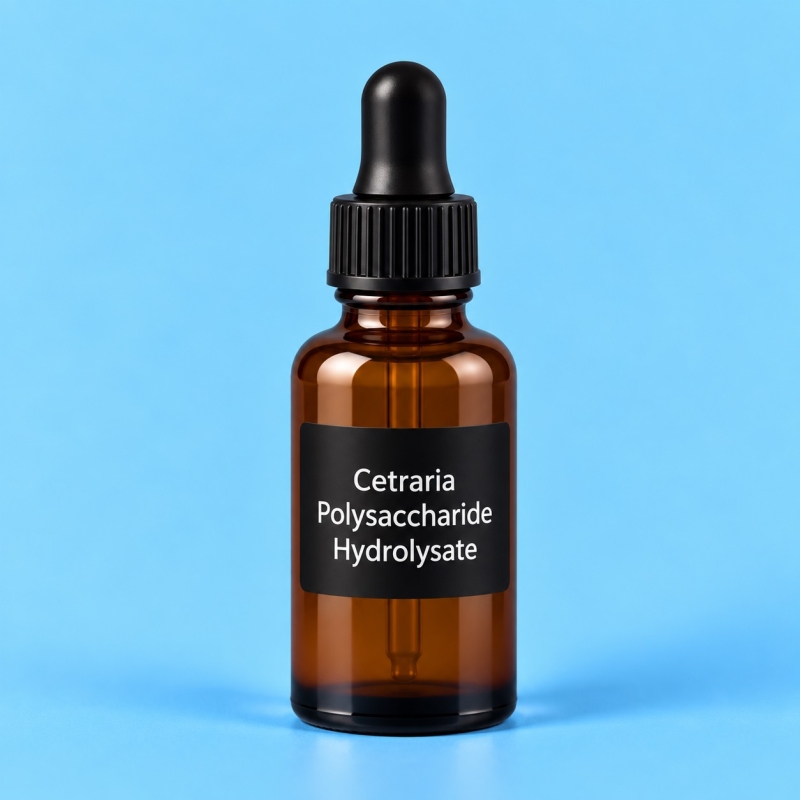
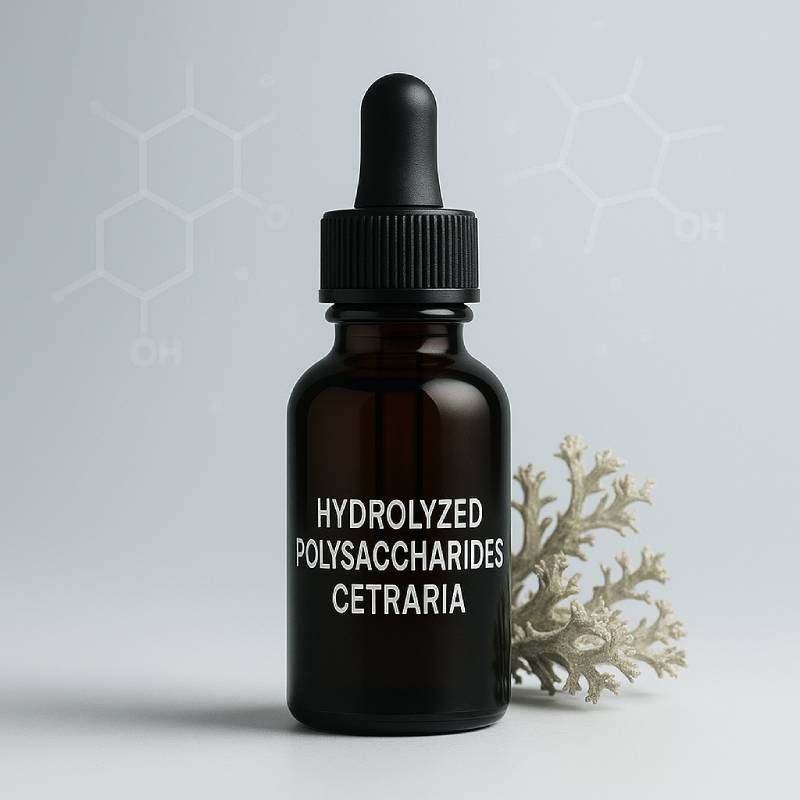
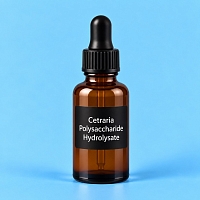
Cetraria Polysaccharide Hydrolysate 50 ml (Cetraria Islandica Hydrolysate) is obtained from Iceland moss and dosed at 1-5% in skin and hair formulas; buy wholesale with shipping from Ukraine.
Product specifications and handling
The ingredient appears as a liquid with a characteristic odor. It shows full solubility in water at any concentration and a pH range of 5.0-6.5. Retail pack, 50 ml, is produced in Italy and meets requirements for laboratory and small-scale manufacturing.
Storage and shelf life conditions
Keep in a cool, dark place in a tightly closed container until 10.2028. Avoid moisture after opening. The product suits small production batches and laboratory testing where precise dosing matters.
Formulation applications for B2B
Use 2-3% in rinse-off hair care, 3-5% in modeling gels, and 4% in shampoo bases. The hydrolysate integrates in the cool-down phase below 40 degrees to maintain functional properties.
Example serum formulation
Distilled water 88%, Cetraria Polysaccharide Hydrolysate 5%, Glycerin 4%, Thickener 2%, Preservative 1%. Percentages total 100%.
Compatibility with other actives
The component works well with plant-derived complexes in leave-in sprays and after-shave lotions. Active Complexes section lists similar film-forming ingredients for combined use.
Wholesale pack recommendations
For larger volumes consider the 1 L option. Cetraria Polysaccharide Hydrolysate 1 L supports consistent batch production. Active Complexes for Cosmetics Wholesale offers options for factories.
Additional guidance for formulators
Formulators often start with lower percentages and increase gradually to achieve the target texture and performance. This approach ensures the hydrolysate integrates smoothly without affecting viscosity or the stability of the final product. It performs reliably across water-based systems and pairs effectively with common thickeners and conditioning agents used in professional lines. Wholesale buyers appreciate the consistent quality that allows scaling from pilot batches to full production runs while maintaining the same sensory profile. Proper documentation of input levels helps optimize costs and meet specific formulation targets for different skin and hair types.
Frequently asked questions
What is the recommended input for toners?
Start with 1% and adjust according to desired viscosity.
Does the product require heat during incorporation?
No, add after cooling to preserve activity.
Is it suitable for sensitive skin bases?
Yes, it supports comfortable feel in such formulas.
How to test compatibility?
Perform a preliminary elbow test as indicated.