What Makes High Molecular Weight Hyaluronic Acid a Surface Hydration Powerhouse
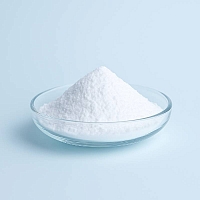
High molecular weight hyaluronic acid in a 50 gram package is aimed at studio-scale and small-batch production of serums, creams and professional skincare lines. Because of its large molecular size, this fraction does not penetrate deep into the skin but stays on the surface, forming a thin film that traps moisture and delivers an instant smoothing effect. This is why the ingredient belongs to the Hyaluronic Acid and Actives for Cosmetic
category, which brings together different molecular fractions for comprehensive hydration strategies.
The leading field of application is skincare: serums, day and night creams, emulsions, facial masks, body lotions, after-shave formulas and products for sensitive skin. Beyond cosmetic manufacturing, the substance is widely used in pharmaceutical and nutraceutical production, as an ingredient in capsules and beauty drinks that support tissue elasticity, and in veterinary formulas for joint support in animals. In the food industry hyaluronate appears less often, mostly in functional beauty beverages. It is rarely used in household chemistry, but it is in demand for hair masks and cuticle products, where it forms a protective layer and reduces moisture loss.
A key feature of the high molecular weight form is that it does not deliver the same deep hydration as low molecular fractions, but instead creates a pronounced surface lifting effect and reduces transepidermal water loss. To achieve a fuller hydration profile, formulators often pair this active with smaller molecules: adding Low Molecular Weight Hyaluronic Acid for penetration into deeper epidermal layers, or using low molecular hyaluronic acid to enhance the delivery of active ingredients. For a lightweight texture and fast absorption, manufacturers also turn to HyActive hyaluronic acid 10-20 kDa, which works on a cellular level.
The ingredient should be introduced into the water phase during the cooling stage, at a temperature not exceeding 40 degrees Celsius, to avoid breaking down the polymer chains. The typical working concentration ranges from 0.1 to 1 percent in the finished formula, depending on the desired texture and viscosity. Before use, the powder is pre-dissolved in distilled or deionized water at room temperature and left to fully swell for several hours, or overnight, until a smooth, lump-free gel forms. The raw material should be stored in a dry, cool place, in tightly sealed packaging, protected from direct sunlight and moisture, which helps preserve its activity throughout the stated shelf life.
Studio-batch hydrating gel serum
High molecular weight hyaluronic acid 5 g
Distilled water 480 ml
Vegetable glycerin 15 ml
Panthenol 5 ml
Aloe vera extract 10 ml
Broad spectrum preservative 5 ml
Slowly
sprinkle the hyaluronic acid powder into cold distilled water in a thin stream
while stirring continuously to avoid clumping, then let it swell for at least
eight hours at room temperature until a smooth transparent gel forms. In a
separate container combine the glycerin, panthenol and aloe vera extract,
gently fold this mixture into the gel base and blend at low speed until fully
uniform. Finally add the preservative, adjust the mixture to the desired
consistency and pour into clean dispenser bottles, letting the finished serum
rest for a full day before use to allow the structure to stabilize.