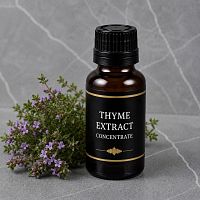
Sourcing and specification of Thyme CO2 Extract
Thymus serpyllum L. herb is sourced from Ukraine and processed into an oily mass via CO2 extraction. The extract retains a full spectrum of terpenoids such as thymol, thymoquinone, cymol, linalool and bisabolol along with squalene and selected fatty acids. CO2 Extracts of this origin are chosen by supplement and food manufacturers for consistent quality and absence of solvent residues. The 5 g pack supports both laboratory testing and small-scale production runs.
Composition details and formulation value
The profile includes palmitic, oleic, linolenic, linoleic and stearic acids that contribute to emulsion stability and improved sensory characteristics. Full solubility in oils and lipids allows straightforward addition during the oil phase without additional processing aids. These attributes make the ingredient suitable for scale-up from pilot batches to industrial volumes in cosmetic and nutritional applications. CO2 Extracts Wholesale options are popular with larger operations.
Applications across cosmetics and food sectors
Contract manufacturers incorporate the extract into creams, serums and body care items where it supports skin comfort and hair texture. Botanical Extracts are also ordered by dietary supplement producers and confectionery plants for functional blends and flavored products. Both private formulators and large factories source the ingredient worldwide in wholesale and retail volumes, using it as a versatile botanical raw material for multiple product categories.
Dosage and processing parameters
Input level ranges from 0.01 to 2 % according to the final product type. Addition occurs in the oil phase at temperatures not exceeding 40 °C to preserve volatile components and achieve uniform distribution. This controlled incorporation helps maintain formulation integrity throughout the declared shelf life.
Example serum formulation
Oil phase 28 %, water phase 67 %, emulsifier 4 %, CO2 extract 0,9 %, preservative 0,1 %. Components are blended at controlled temperature, homogenized and filled into transport containers. The resulting serum exhibits stable viscosity and a mild herbal note suitable for daily use.
Storage and shelf life
Keep in closed packaging in a cool, light-protected place. Shelf life extends to 12.2028 under recommended conditions, ensuring retention of the original oily mass properties for at least two years.
Frequently asked questions
What is the INCI name?
The INCI designation is Thymus serpyllum.
Is the extract suitable for dietary supplements?
Yes, it is used as botanical raw material in supplement and food formulations.
At what temperature should it be added?
Add to the oil phase at or below 40 °C.
What packaging is used for the 5 g size?
The product is supplied in transport-grade containers.