What Makes Neroli a Core Ingredient in Perfumery and Skincare Production
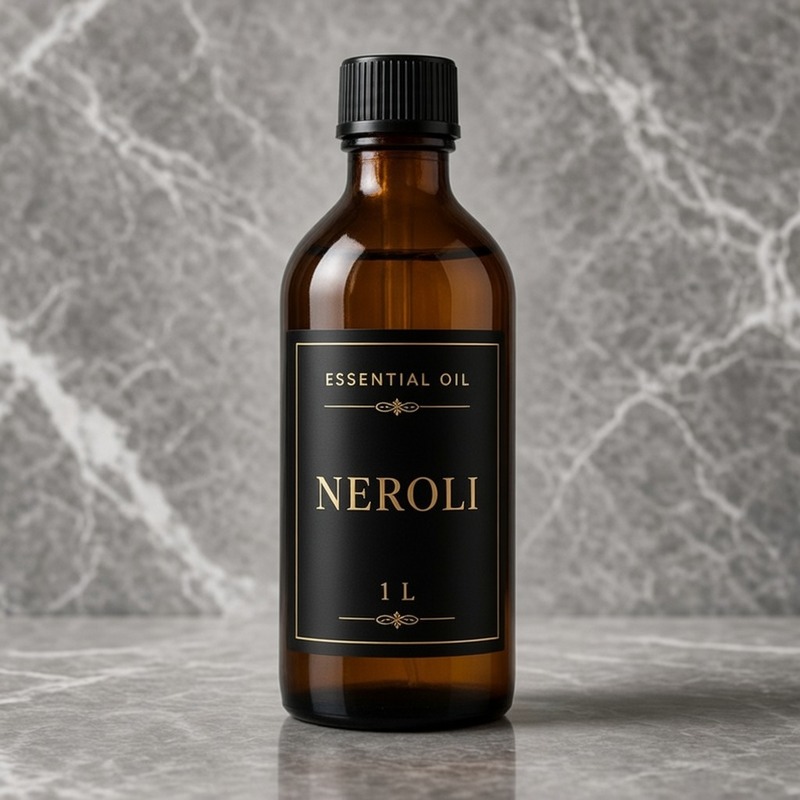
Neroli essential oil is steam distilled from the blossoms of the bitter orange tree, and this origin is exactly why it holds a special place among raw materials used in perfumery and cosmetic manufacturing. The one liter format is built for production lines, perfume houses, formulation labs and small manufactories that need a reliable volume of raw material without frequent reordering. This oil belongs to the Essential Oils section, where botanical concentrates for various manufacturing tasks are gathered together.
The leading global application of neroli is fine fragrance. It is used in floral, chypre and oriental compositions, prized for a complex character that unfolds gradually and lingers on skin for hours. Perfumers typically introduce it at the heart note stage, pairing it with citrus tops and woody bases. A common blending partner in such compositions is Lemon Essential Oil, which adds brightness and lifts the floral core of the fragrance.
Neroli essential oil belongs to the Natural Essential Oils Wholesale category and comes in one-liter packs for production use. The concentrate is steam distilled and valued for its layered scent in fragrance work.
In cosmetic manufacturing, neroli is formulated into products for mature and sensitive skin, including creams, serums, toners and body lotions. The oil is added at the cooling stage of an emulsion, at temperatures not exceeding forty degrees Celsius, to preserve its volatile aromatic compounds. Typical dosage in finished formulas ranges from 0.3 to 1 ml per 100 g of base, depending on the desired fragrance intensity and functional role. For industrial production, the liter packaging is convenient because it allows precise batch planning without running short of raw material mid cycle.
Another significant use is in spa products and massage blends, where neroli is combined with carrier oils and other essential oils to create relaxing compositions. An interesting contrast comes from pairing it with sharper, uplifting notes such as Pine Essential Oil, which brings forest freshness and balances the sweet floral tone of neroli. Equally popular is a combination with calming herbal notes, particularly Melissa essential oil, which reinforces the soothing effect in aromatherapy blends.
The food industry also uses neroli, though in smaller quantities, as a flavoring agent in confectionery, liqueurs and beverages where a natural floral note is required. Precise dosing and sourcing from a reliable supplier are essential here, since the concentration of active aromatic compounds in the oil is quite high.
The oil should be stored in tightly sealed dark glass containers, away from direct light, at temperatures between five and twenty degrees Celsius. When storage conditions are respected, the liter package retains its declared characteristics over a long period, making it practical for production stock planning across several months.
Neroli Massage Blend for Studio Spa Treatments
Sweet almond oil 700 ml
Jojoba oil 250 ml
Neroli essential oil 25 ml
Vitamin E oil 15 ml
Grapeseed oil 10 ml
Combine
the sweet almond oil, jojoba oil and grapeseed oil in a clean mixing container
and stir gently until fully blended. Add the vitamin E oil and mix again, then
slowly incorporate the neroli essential oil while stirring at low speed to
avoid excessive evaporation of aromatic compounds. Transfer the finished blend
into dark glass bottles and let it rest for a few hours at room temperature
before packaging for spa or studio use.
The INCI designation used in documentation is Citrus aurantium var. Amara.
FAQ
At which stage and temperature should neroli essential oil be added?
Add the oil at the cool-down phase below 40 °C. Exact temperature guidance appears in the product specification available on request.
What is the minimum wholesale batch and available pack sizes for neroli essential oil?
The listed pack is 1 liter. Minimum order quantity and further options are stated in the specification sheet.
Does the odor of neroli essential oil vary between harvests?
Natural variation occurs between lots.
How does neroli essential oil dissolve in oils, alcohol and water?
It is soluble in oil, ether and alcohol. In water-based systems a solubilizer is required; recommended ratios are listed in the specification.