Kenya Myrrh Essential Oil for Cosmetic, Fragrance and Aromatic Applications
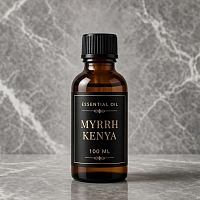
Kenya Myrrh Essential Oil is obtained through the distillation of aromatic resin collected from Commiphora trees native to East Africa. This precious essential oil is highly valued within the global cosmetic and fragrance industries due to its distinctive resinous aroma, complex natural composition and versatility across multiple product categories. Myrrh has remained an important aromatic material for centuries and continues to be widely used by manufacturers of cosmetics, perfumes, soaps and home fragrance products.
The oil contains naturally occurring terpenes, sesquiterpenes, furanosesquiterpenes and resin-derived aromatic compounds that contribute to its characteristic fragrance profile. Components commonly associated with myrrh essential oil include curzerene, furanodienes, limonene, pinene and other naturally occurring aromatic molecules that help create its rich and sophisticated scent.
Fragrance Profile and Industry Uses
Kenya Myrrh Essential Oil is known for its deep resinous aroma featuring woody, balsamic and subtly spicy nuances. The opening notes present dry resin accords with gentle earthy undertones. As the fragrance develops, warm woody facets become more prominent, while the base reveals a long-lasting balsamic character with a distinctive oriental signature.
Within perfumery, myrrh is primarily used as a base note material. It blends exceptionally well with frankincense, patchouli, sandalwood, cedarwood, vetiver, benzoin, labdanum, rose, jasmine, neroli and various citrus oils. It is especially appreciated in oriental, woody, amber and resin-inspired fragrance compositions.
In cosmetic manufacturing, Kenya Myrrh Essential Oil is incorporated into creams, balms, facial oils, body oils, masks and aromatic beauty products. Its concentrated aroma allows formulators to create distinctive fragrance profiles using relatively small quantities of the ingredient.
Soap makers frequently select myrrh essential oil for premium artisan soap formulations. The resinous aroma remains noticeable in the finished product and pairs beautifully with woody, spicy and citrus fragrance themes.
The candle industry utilizes myrrh essential oil in scented candles, wax melts, aroma sachets and home fragrance products. Its warm and complex aroma contributes depth and sophistication to aromatic compositions designed for interior environments.
For fragrance developers, myrrh offers outstanding blending flexibility. It combines particularly well with sweet orange, mandarin, bergamot, vanilla, cinnamon, clove, frankincense and sandalwood, making it suitable for creating rich multidimensional fragrance accords.
Kenya Myrrh Essential Oil is also highly compatible with vegetable oils, natural waxes, cosmetic esters, oil macerates and numerous other ingredients used in cosmetic and personal care formulations. This versatility supports its continued popularity among manufacturers of natural beauty products.
The global market for resin-derived aromatic ingredients continues to grow as consumers increasingly appreciate sophisticated fragrance profiles. Myrrh remains one of the most recognized and respected essential oils due to its timeless aroma and broad range of formulation possibilities.
Aromatic Massage Oil Formula
Jojoba Oil - 30 ml
Sweet Almond Oil - 35 ml
Macadamia Oil - 20 ml
Kenya Myrrh Essential Oil - 7 drops
Frankincense Essential Oil - 6 drops
Bergamot Essential Oil - 8 drops
Vitamin E - 1 g
Combine the carrier oils in a clean container and mix until uniform. Add the essential oils and Vitamin E, then blend thoroughly until a homogeneous composition is achieved.
The finished massage oil develops a silky texture and a rich woody-resinous fragrance profile. Myrrh creates a warm and deep aromatic foundation, while bergamot and frankincense contribute fresh and elegant nuances, resulting in a balanced and sophisticated aromatic composition.