-
 Absolutes
-
 Active Complexes
-
 Actives & Peptides
-
 Amino Acids & Proteins
-
 Food Flavors
-
 Ayurvedic Ingredients & Herbs
-
 Vitamins & Coenzymes
-
 Chocolate Making Supplies
-
 Thickeners & Gelling Agents
-
 Hydrosols & Floral Waters
-
 Hydrolyzed Proteins
-
 Fragrance Ingredients
-
 Nutraceutical Ingredients
-
 Acids, Salts, Alcohols & Alkalis
-
 Preservatives & Antioxidants
-
 Cosmetic Ingredients
-
 Colorants, Micas & Glitters
-
 Masks, Scrubs & Botanicals
-
 Oils & Butters
-
 Candle Making Supplies
-
 Melt and Pour Soap Bases
-
 Cream, Lotion & Hair Care Bases
-
 Fragrance Oils & Industrial Aromatics
-
 Cleansing Agents & Surfactants
-
 Peeling Actives & Acids
-
 Cosmetic Powders
-
 Solvents & Humectants
-
 Silicones & Conditioning Agents
-
 Bottles, Jars & Vials
-
 Silicone & Plastic Molds, Tools
-
 Botanical Extracts
-
 Cosmetic Emollients
-
 Emulsifiers
-
 Essential Oils


Pearl Ex Pearl metal imitation in decor

 Add to cart


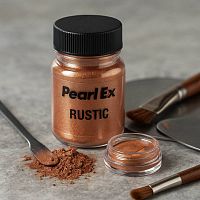


Mica based color powders for polymer clay and mixed media
Pearl Ex pigments are fine mica based powders that create metallic, pearlescent and interference color effects on a wide range of surfaces. Each shade reflects light differently depending on particle size and the base material it sits on, which lets the same jar produce several distinct looks. The powders are sold loose and blend easily with clear mediums, clays and coatings without altering their working properties.
These pigments are used to add metal like sheen and shimmer to polymer clay, resin castings, paint, ink, varnish and other decorative coatings, both for hobby projects and small scale production runs. They work particularly well layered over pale or translucent bases, where the pearl or interference effect reads most clearly. For clay based work, the powders pair naturally with sculpting materials such as Fimo Effect polymer clay and Fimo Air Natural polymer clay, dusted onto raw pieces before baking or air drying to build up depth and dimension.
Beyond clay work, the same powders are dusted onto candles, mixed into nail art top coats, brushed onto paper crafts, or stirred into small batch coatings where a metallic or pearlescent finish is needed without switching to a liquid pigment system.
Finish types and how shades differ
Within the Pearl Ex range, the difference between jars comes down to two things: particle size and the underlying color base. Fine particle shades give a smooth satin sheen, while coarser grinds scatter light unevenly and read as a glittery sparkle rather than a soft glow. A silver tone such as Pearl Ex Silver 663 reflects light in a flat, mirror like way, whereas a tone like Pearl Ex Antique Bronze 660 carries a warmer, aged undertone suited to vintage looking finishes.
A separate group of shades relies on interference rather than straight metallic reflection, shifting color depending on the viewing angle. Pigment Pearl Ex Red-blue 680 is a duo tone example of this, appearing red or blue depending on the light and angle it is viewed from, an effect that plain metallic powders cannot reproduce. Pearlescent whites and creams sit at the softer end of the scale, giving a nacre like glow rather than sparkle, and gold family shades such as High quality pigments Pearl Pearl Ex Pearl (USA) imitation metal, Aztec gold 658 lean toward a deep, warm brightness.
Choosing a shade and pairing it in a formula
The right choice depends less on the name of the color and more on what the base material or coating looks like once the powder is applied. Dark or saturated bases mute a light dusting of pigment, so pale, translucent or clear coatings tend to show the pearl and interference effects most clearly. Coarser particle sizes suit larger surfaces where a bold shimmer is wanted, while finer grinds are easier to control on small details or thin coats.
Because the powders are inert and do not react with the medium they are mixed into, they combine with clear resins, varnishes, inks, nail top coats and wax based coatings without changing cure time or texture. In clay work they are typically dusted onto raw pieces or blended into a small amount of translucent clay before shaping, then set through baking or air drying depending on the base material used.
Sourcing, packaging and storage
The pigments sold in this section are sourced from the United States, and are supplied as dry loose powder rather than pre-mixed paste or liquid, which keeps them shelf stable and easy to portion for small test batches. For anyone testing a shade before committing to a full jar, sampler sizes are available, including High quality pigments Pearl Pearl Ex Pearl (USA) imitation metal, pearl 650, sample, Pigment Pearl Ex (USA) metal imitation, Aztec gold 658, probe, and Pigment Pearl Ex (USA) metal imitation, Aztec gold 658, sampler 3 g.
Keep jars sealed, dry and away from direct sunlight, since moisture is the main risk to a fine mica powder rather than heat or age. Stored this way, an opened jar keeps its color and shine for repeated small projects over time. Pigment work like this often sits alongside broader clay and mixed media supplies, such as the shaping compounds found under Polymer clay Fimo Classic, where a dusted pigment finish is often the final step after the piece is shaped.
FAQ
What is the difference between pearl and interference mica powders?
Pearl shades contain a mica base coated to reflect a soft, consistent glow across most surfaces, while interference powders shift color depending on viewing angle and lighting, showing one hue and a contrasting undertone. Interference powders read best over dark or black backgrounds.
Can these mica powders be mixed with resin or varnish?
Yes, the powders disperse into clear resin, varnish and similar coatings without changing curing time or working consistency. Start with a small amount and stir thoroughly, since a little powder covers a large surface area once dispersed.
How should mica pigment powders be stored?
Keep jars sealed, dry and away from direct sunlight to prevent clumping and preserve the reflective particles. Loose powder is lightweight and can scatter easily, so store containers upright and handle them over a tray or covered work surface.
Do these powders work on surfaces other than polymer clay?
Yes, the same mica particles dust well onto candles, paper, nail art top coats and small batch coatings, and blend into paint or ink. The finish depends more on the base surface and layering than on any single intended use.
Recommendations
Pick a shade based on the base surface and lighting it will sit under, since pearl tones stay consistent while interference powders shift color at different angles. For layered or translucent projects, test a small dusting first to judge coverage before committing a full batch. To place an order or ask about available shades and packaging sizes, reach out by email and the team will confirm details before dispatch.



