-
 Absolutes
-
 Active Complexes
-
 Actives & Peptides
-
 Amino Acids & Proteins
-
 Food Flavors
-
 Ayurvedic Ingredients & Herbs
-
 Vitamins & Coenzymes
-
 Chocolate Making Supplies
-
 Thickeners & Gelling Agents
-
 Hydrosols & Floral Waters
-
 Hydrolyzed Proteins
-
 Fragrance Ingredients
-
 Nutraceutical Ingredients
-
 Acids, Salts, Alcohols & Alkalis
-
 Preservatives & Antioxidants
-
 Cosmetic Ingredients
-
 Colorants, Micas & Glitters
-
 Masks, Scrubs & Botanicals
-
 Oils & Butters
-
 Candle Making Supplies
-
 Melt and Pour Soap Bases
-
 Cream, Lotion & Hair Care Bases
-
 Fragrance Oils & Industrial Aromatics
-
 Cleansing Agents & Surfactants
-
 Peeling Actives & Acids
-
 Cosmetic Powders
-
 Solvents & Humectants
-
 Silicones & Conditioning Agents
-
 Bottles, Jars & Vials
-
 Silicone & Plastic Molds, Tools
-
 Botanical Extracts
-
 Cosmetic Emollients
-
 Emulsifiers
-
 Essential Oils


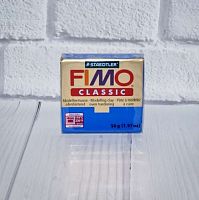
Polymer clay Fimo Classic
 Add to cart

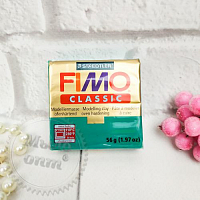
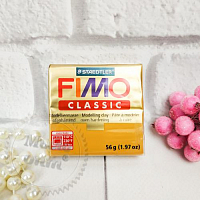
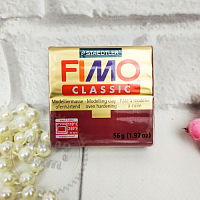
Oven bake modeling clay for figures charms and jewelry blanks
Fimo Classic is an oven hardening polymer clay used for sculpting figures, charms, jewelry blanks, buttons and decorative accents. It comes in a wide color range and stays workable at room temperature until baked, which lets a maker build detailed shapes without the material drying out mid project.
The clay suits both hobby modeling at home and small batch production of decorative pieces, since a single block can be cut, blended and layered many times before curing. Colors mix cleanly into custom shades, so a workshop can match a specific palette instead of relying only on factory tones, and finished pieces can later be sealed, sanded or paired with wire and findings for jewelry assembly.
For makers who prefer a softer air drying option without an oven step, Fimo Air Natural is worth comparing, while those after built in shimmer or metallic finishes often look at Fimo Effect.
Shades and how the color range is built
Fimo Classic ships as individual blocks in solid colors, which makes it easy to build a specific palette instead of buying a fixed set. Polymer clay FIMO Classic, ultramarine and Polymer clay FIMO Classic, blue-green sit close enough on the color wheel to blend into a smooth gradient, while earthy tones like Polymer clay FIMO Classic, terracotta and Polymer clay FIMO Classic, ocher cover skin tones, wood texture and natural surfaces for sculpted figures. A deeper accent shade such as Polymer clay FIMO Classic, bordeaux works well for small details, shading and contrast lines on charms or jewelry blanks. Because each block is a pure pigment rather than a pre-mixed set, a workshop can keep a stable house palette across repeat production runs.
Choosing the right block and pairing it with other clay lines
The main choice inside this range comes down to firmness and finish. Classic is firmer at room temperature, holds crisp edges and fine sculpted lines well, which suits figures, miniature details and jewelry blanks that need to keep their shape while being handled before baking. If a project needs less kneading effort or is aimed at softer, quicker hand modeling, Polymer clay Fimo Soft or the ready assembled Polymer clay Fimo Soft set are worth comparing side by side. Colors from this line can also be combined with translucent or pearl finishes from other ranges to build layered effects, marbling or gradient blends within a single piece, since all of these clays cure the same way in a home oven.
Origin and storage conditions
These blocks are manufactured in Germany, a detail that matters for buyers who want a consistent formulation across repeat orders rather than mixed batches from different sources. Unbaked clay should be kept away from direct heat and sunlight, wrapped or boxed so blocks do not pick up dust, and separated by color where possible since pigments can transfer between soft blocks in storage. Kept this way, an unopened block stays workable for a long time before it ever reaches the oven, which is useful for workshops that buy larger quantities to cover several projects at once instead of restocking a single color repeatedly.
FAQ
Is Fimo Classic the same as air dry clay
No, Fimo Classic requires oven baking to harden permanently, while air dry clay cures at room temperature. Fimo Classic gives a sturdier, more detailed result for figures and jewelry blanks, and stays workable much longer before curing than an air drying alternative.
How long does Fimo Classic stay soft before baking
An unbaked block stays workable indefinitely at normal room temperature, since it only hardens under oven heat. This allows a maker to build up layers, blend shades or set a project aside and return to it later without the clay drying out or losing detail.
Can different Fimo Classic colors be mixed together
Yes, individual blocks blend smoothly into custom shades, which is why many workshops buy separate colors rather than a fixed set. Mixing lets a maker match a specific palette for figures, charms or jewelry blanks instead of relying only on factory tones.
What can Fimo Classic pieces be used for after baking
Baked pieces can be sanded, sealed, drilled or combined with wire and findings, which makes them suitable for charms, buttons, decorative accents and jewelry blanks. The cured clay holds fine detail well, so it also works for small sculptural figures and display pieces.
Recommendations
When choosing a block, think about the final piece first: solid factory shades work well for simple figures and blanks, while a broader color set pays off if you plan to mix custom tones for jewelry or detailed charms. Order the quantity that matches your project size rather than guessing, and keep unused blocks away from heat and dust before baking. Reach out by email to check current colors and place an order.



