Specification and handling
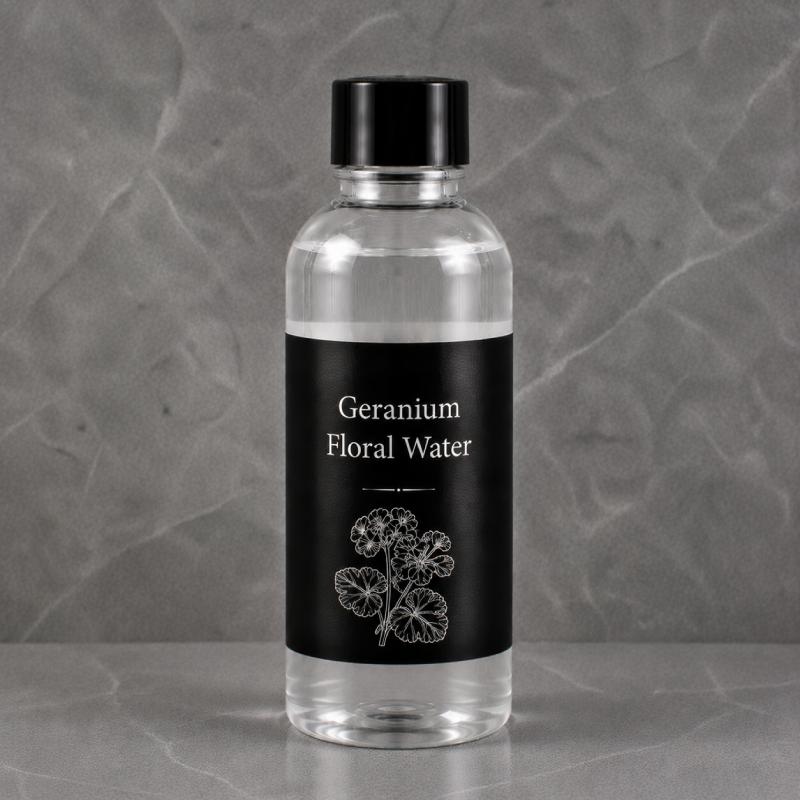
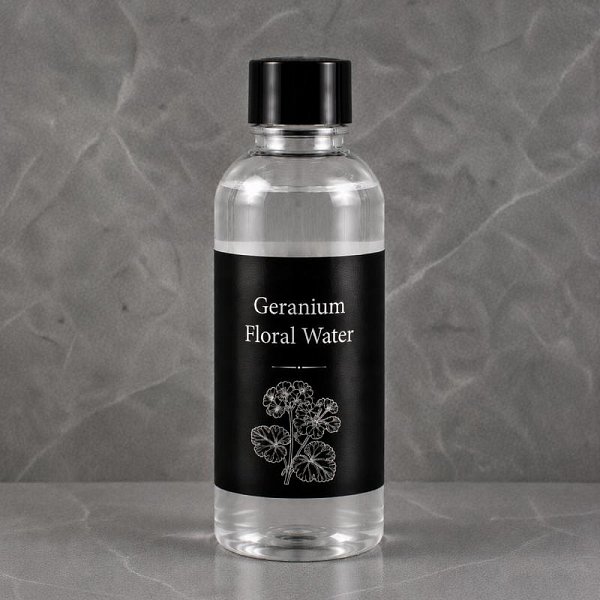
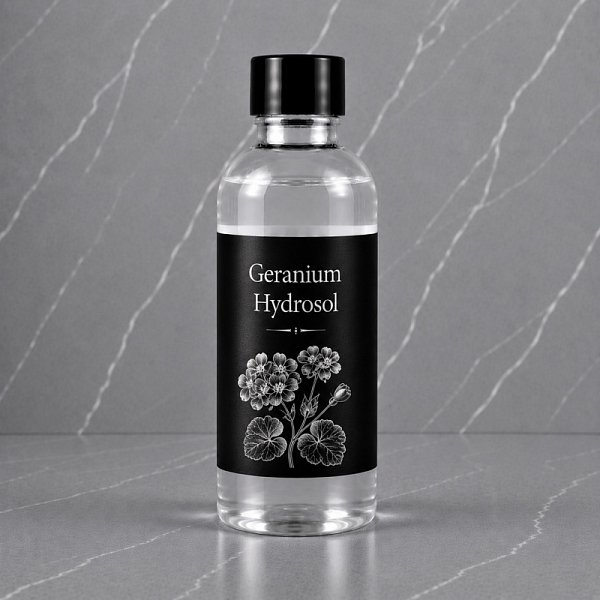
Geranium Floral Water 100 ml is a clear liquid obtained by distillation of geranium leaves. INCI: Pelargonium Graveolens Flower Water. Country of production: Ukraine. pH 5.4, water-soluble. OWN SECTION: Hydrosols & Floral Waters Appearance and aroma: floral scent. The product remains stable when stored correctly and suits retail packs as well as small production runs. Distillation preserves the natural floral profile of the raw material for consistent formulas.
Storage conditions
Store in a dark cool place away from moisture, sunlight and heat sources. Shelf life until 12.2028.
Input percentage and phase
Recommended 1-100% in the water phase of emulsions, checked by elbow sensitivity test. Compatible with glycerin and panthenol. Suitable for creams, lotions and rinses. section: Hydrosols Bulk
Example emulsion formulation
Geranium Floral Water 55%. Distilled water 35%. Emulsifying wax 6%. Jojoba oil 3%. Glycerin 1%. Total 100%.
Applications in production batches
Suitable for toners, mists, creams and hair rinses in small production batches. product: Geranium Floral Water 1 L Supports even moisture distribution on skin surface in final products. The liquid integrates without residue in finished emulsions.
Additional formulation notes
Can be used in multiple water-based systems including light lotions and post-cleansing mists. Temperature during incorporation stays below 40 degrees to maintain stability. Batches benefit from sealed containers that protect the floral character over time. Testing small prototypes helps confirm performance in each new recipe.
Additional uses in mists and conditioners
Can be incorporated into body mists or hair conditioners after cooling the mixture. In wholesale batches temperature and container integrity are monitored. The hydrosol integrates easily into water systems without altering viscosity.
Practical tips for small-scale production
Measure the hydrosol precisely before blending to avoid over-dilution in final mixes. Combine with compatible humectants early in the cool-down phase. Monitor clarity after mixing to ensure no separation occurs. Record batch temperatures for consistent results across multiple runs. Adjust percentages gradually when scaling recipes upward.
Frequently asked questions
What phase is used in creams?
Water phase after cooling below 40 °C.
Is it suitable for hair rinses?
Yes, as a base for post-wash rinses.
How to test compatibility?
Perform an elbow patch test prior to formulation.
Can it be used in wholesale production?
Yes, for batches of emulsions and masks.