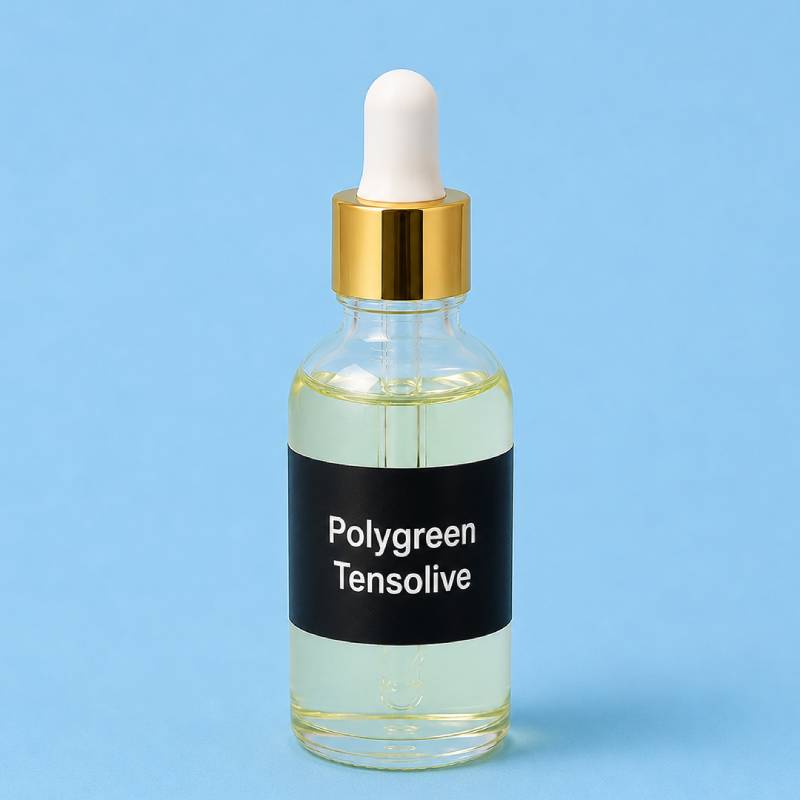
Polygreen Tensolive as a versatile amphoteric surfactant for personal care formulation
Polygreen Tensolive is an amphoteric surfactant identified by the INCI name Olivamidopropyl Betaine. Its lipophilic portion is derived from olive oil fatty acid fractions, while its betaine functionality makes the ingredient useful as a co-surfactant in modern cleansing systems. The material is primarily relevant to hair care, facial cleansing, body cleansing and selected emulsion applications where cleansing, foam modification, viscosity development and conditioning characteristics need to be balanced within one formulation.
For a formulator, the main value of Polygreen Tensolive is not based on a single isolated claim. It is the way the ingredient can contribute to a complete surfactant architecture. Performance in a finished shampoo or cleanser depends on the primary surfactants, total active surfactant matter, electrolytes, polymers, fragrance, botanical ingredients, processing conditions and final pH. A technically sound formula therefore treats Olivamidopropyl Betaine as one functional part of a complete system.
Designing balanced surfactant systems
A cleansing formula is rarely optimized by simply increasing or decreasing one surfactant. The ratio between primary and secondary surfactants influences foam character, cleansing profile, viscosity and sensory properties during rinsing.
Polygreen Tensolive can be incorporated into mixed systems containing compatible anionic and nonionic surfactants. In anionic systems, amphoteric surfactants are commonly used to modify foam structure and assist viscosity development. The actual result must be established experimentally because surfactant blends respond differently to salt, fragrance and polymeric thickeners.
This makes the ingredient relevant to formulators who need to build differentiated products from a flexible raw material platform. One surfactant blend can be adjusted for a clear shampoo, a body wash or a hand cleanser by changing the active matter, rheology system and supporting ingredients. Each finished product still requires separate stability and performance assessment.
Hair cleansing and professional salon formats
Hair care is a central application area for Olivamidopropyl Betaine. The ingredient can be considered for daily shampoos, salon cleansing products, shampoos for long hair, cleansing formulas for color-treated hair and multifunctional hair and body products.
In shampoo development, the ingredient may be combined with amino acid surfactants, sulfosuccinates, glucosides or other suitable surfactants according to the intended positioning of the formula. Supporting ingredients may include hydrolyzed proteins, humectants, amino acids, compatible cationic polymers and botanical extracts.
A formulator should distinguish between surfactant function and the overall conditioning performance of a shampoo. Improved wet feel or combability can result from the combined contribution of the surfactant blend, deposition polymers, proteins and other conditioning materials. The complete formula should therefore be evaluated on wet hair, during rinsing and after drying.
For salon-oriented products, foam volume alone is not a sufficient quality parameter. Foam density, spreading over wet hair, rinse speed, wet combing, dry feel and product behavior in different water conditions are also relevant. Testing under realistic use conditions provides more meaningful information than evaluating a diluted surfactant solution in isolation.
Facial cleansers and rinse-off skin care
Polygreen Tensolive can be used in foaming facial gels, cleansing lotions, mousse cleansers and other rinse-off products. These applications require careful control of total surfactant concentration and the relationship between cleansing efficiency and after-feel.
A facial cleanser may combine the amphoteric surfactant with a mild primary cleansing agent, humectants and selected water-soluble functional ingredients. Glycerin, betaine, polysaccharides and appropriate botanical extracts can be considered when they are compatible with the desired clarity and preservation strategy.
A clear cleanser requires particular attention to fragrance, oils and botanical materials. A raw material that is individually water-compatible may still alter clarity when introduced into a complex micellar system. Fragrance solubilization should therefore be tested in the final base rather than assumed from performance in plain water.
Foaming pump cleansers present another formulation challenge. Their viscosity requirements differ from those of conventional gels, and excessive thickening can interfere with pump operation. Packaging compatibility should be considered during development rather than after the formula has been finalized.
Body wash, hand cleansing and spa product concepts
Body cleansing provides a broad field for formulation with Polygreen Tensolive. The ingredient may be incorporated into shower gels, creamy body washes, hand cleansers and professional spa cleansing products.
For a body wash, the formulator can combine the surfactant system with humectants, selected extracts and rheology modifiers. A spa-oriented range may use coordinated fragrances and botanical concepts while maintaining a common cleansing technology.
Hand cleansing formulas need to consider frequent-use sensory properties, pump compatibility and viscosity stability. Decorative ingredients should not compromise dispensing performance or remain unevenly suspended.
Product presentation should reflect the complete formula. A clear gel benefits from visual clarity, controlled bubble release and consistent viscosity. An opaque or pearlescent product requires uniform appearance and stability of the optical effect throughout storage.
Rheology engineering and salt response
Viscosity development is one of the most important technical areas in surfactant formulation. Mixed surfactant systems may respond to sodium chloride, but the response curve must be established experimentally. Salt should be added gradually because viscosity can increase up to an optimum point and then decrease when additional electrolyte is introduced.
Polymeric rheology modifiers offer another approach. Cellulose derivatives require correct dispersion and hydration. Carbomer-based systems require appropriate processing and careful consideration of electrolyte compatibility. Natural gums can provide body but may create a different sensory profile and visual appearance.
Fragrance should be incorporated before final viscosity adjustment whenever the formula design permits. Fragrance materials and solubilizers can change micellar organization and shift the final viscosity. A batch that appears correctly thickened before fragrance addition may behave differently after the fragrance system is incorporated.
Compatibility with functional ingredients
Olivamidopropyl Betaine can be used in formulations containing a variety of supporting cosmetic ingredients. In hair care, these may include hydrolyzed proteins, amino acid blends, conditioning polymers and selected botanical extracts. In body cleansing, humectants and polysaccharides can support the intended sensory profile.
The number of functional additives should remain technically justified. Loading a cleanser with many extracts can increase preservation complexity, affect odor and color stability and create compatibility issues without necessarily improving the formulation.
Oil addition also requires control. High lipid loads can suppress foam or create turbidity in systems designed to remain transparent. If an oil-enriched cleanser is required, the solubilization strategy and surfactant balance should be developed specifically for that format.
Product line development and manufacturing consistency
A practical use of Polygreen Tensolive is the development of a coordinated cleansing collection. A brand may build a daily shampoo, facial cleansing gel and body wash around related surfactant technology while changing the supporting ingredients and sensory profile for each application.
This approach can simplify raw material management for small manufacturers and formulation studios. However, each product still needs an individual specification. The shampoo may require a different active surfactant level and conditioning system from the facial cleanser, while the body wash may require a different viscosity and fragrance load.
Manufacturing records should document water temperature, ingredient addition order, mixing speed and resting time before viscosity measurement. Surfactant systems may continue to equilibrate after production, so immediate viscosity readings should not be the only basis for batch approval.
Scale-up also requires attention to aeration. A mixing process that works well in a laboratory beaker may introduce excessive air in a production vessel. Impeller position and mixing intensity should be adjusted to achieve uniform distribution without generating persistent foam.
Low-foam creamy facial cleansing lotion 1000 g
Purified water 681 g
Polygreen Tensolive 80 g
Sodium cocoyl glycinate 90 g
Lauryl glucoside 45 g
Glycerin 35 g
Propanediol 25 g
Hydrolyzed rice protein 12 g
Aloe extract water soluble 10 g
Sodium PCA 8 g
Preservative 8 g
Fragrance 2 g
Hydroxyethylcellulose 3 g
Prepared citric acid solution 1 g
Total batch weight: 1000 g
Premix the hydroxyethylcellulose with glycerin until the powder is evenly dispersed. Charge the purified water into the main vessel and slowly add the premix under controlled agitation. Allow sufficient time for complete hydration before introducing the surfactants.
Add sodium cocoyl glycinate gradually and mix until uniform. Introduce Polygreen Tensolive slowly, followed by lauryl glucoside. Maintain gentle mixing to minimize foam formation.
Add propanediol, sodium PCA and the hydrolyzed rice protein. Incorporate the water-soluble aloe extract only after confirming compatibility with the surfactant base. Continue mixing until the batch is homogeneous.
Add the selected preservative according to its technical processing requirements, followed by the fragrance. Adjust acidity with the prepared citric acid solution while monitoring the formula instrumentally. The amount stated in the formula is a formulation starting point for this example and does not replace actual pH measurement.
Allow the batch to rest so entrained air can escape. Recheck appearance, homogeneity, viscosity and pH after equilibration before filling.
Quality control for finished cleansing products
A finished product containing Polygreen Tensolive should be evaluated as a complete formulation. Relevant control parameters include pH, viscosity, homogeneity, odor stability, foam behavior and physical stability under the selected test protocol.
Packaging tests are equally important. Pump output, closure compatibility and dispensing behavior should be evaluated with the final formula because changes in viscosity can affect consumer use.
Preservation must be designed for the complete product. Preservatives present in a supplied raw material, when applicable to a specific commercial grade, should not be assumed to protect the entire finished batch. Water activity, botanical additions, manufacturing hygiene, packaging and the selected preservation system all contribute to microbiological control.
Polygreen Tensolive offers formulators a practical amphoteric co-surfactant option for shampoos, facial cleansers, body washes and other rinse-off personal care systems. Its most effective use comes from systematic formulation work: balancing the surfactant blend, controlling rheology, selecting compatible supporting ingredients and validating the complete finished product through appropriate stability and quality testing.