The North African clay behind spa rituals and modern skincare labs
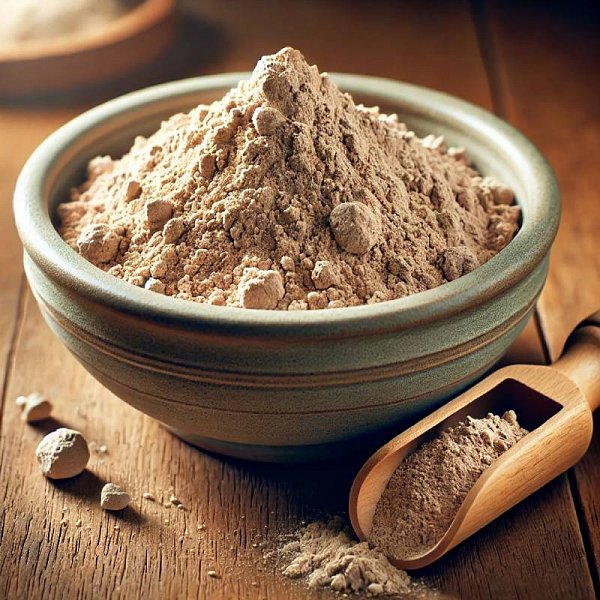
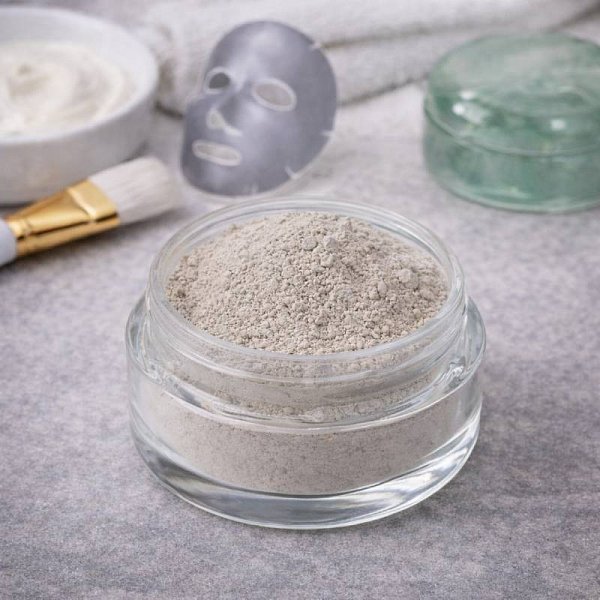
Moroccan Rhassoul Clay has been mined in the foothills of the Atlas Mountains for centuries and traditionally used in Moroccan hammams to cleanse skin and hair. Today this mineral has moved far beyond regional spa culture and become a staple raw material for skincare and haircare manufacturers worldwide, valued for its gentle cleansing action and mild texture. The 1 kg pack size suits small studio production lines and workshops scaling up from home experiments to steady batch manufacturing, giving formulators enough volume to run consistent product runs without frequent reordering. This item belongs to the Cosmetic Clay category, which brings together minerals with different absorption levels and mechanical effects on skin.
What sets rhassoul apart is its ability to bind excess sebum and impurities without stripping the skin, which is why formulators often reach for it in products designed for sensitive or reactive skin types. Compared with other minerals in the range, rhassoul offers a noticeably milder action: for a more intensive detoxifying effect, manufacturers pair it with Black Clay, while for a stimulating, circulation-boosting finish they add Red Clay to the blend. Combining these minerals allows brands to build multifunctional masks that balance cleansing with nourishment.
In skincare, rhassoul is used in face and body masks, cream and powder hair products, where it acts as a natural thickener and partly replaces surfactants in shampoo bars and liquids. In the spa and wellness industry it appears in body wraps, scalp treatments and toning rinses. Beyond cosmetics, the clay is also found in natural detox formulations and certain household cleaning recipes thanks to its strong absorbing capacity.
During formulation, rhassoul powder is typically introduced at the cold or warm stage, mixed with water, a hydrosol or a carrier oil into a paste right before use, since the prepared paste does not keep well over time. A common dosage for face masks is 15 to 30 grams of powder per single-use portion, while for shampoos and gentle scrubs it ranges between 5 and 10 percent of the total batch weight. Water used for mixing should not exceed 40 degrees Celsius to preserve the mineral structure. For scrub formulations, rhassoul pairs well with a coarser mechanical exfoliant such as Diatomaceous Earth, which boosts polishing action without harsh friction.
Store the powder in a tightly sealed container, in a dry place away from direct sunlight and at room temperature, keeping it away from moisture that could cause clumping and reduce its technological properties. Under proper storage conditions the raw material remains stable for an extended period, which makes planning production batches easier.
Detoxifying facial paste with rhassoul
Rhassoul clay 35 g
Warm water 80 ml
Aloe vera gel 20 ml
Sweet almond oil 8 ml
Honey 5 ml
Pour the clay powder into a non-metal bowl and gradually add warm water, stirring with a wooden or silicone spatula until you get a smooth, lump-free paste. Mix in the aloe vera gel, almond oil and honey until fully combined. Apply a thin layer to cleansed skin, leave for 10 to 12 minutes until it starts to tighten slightly, then rinse off with warm water. Prepare a fresh batch before each use, as the mixed paste is not meant for storage.