Product Description
Sourcing and specification details
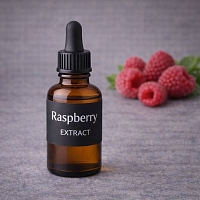
Raspberry CO2 Extract originates from England and is obtained through supercritical fluid extraction with natural carbon dioxide. CO2 Extracts retain flavonoids, polyunsaturated fatty acids, terpenes, tocopherol and phytosterols without solvent residues. The product is supplied as an oily liquid in 5 g packs meeting INCI Rubus idaeus L. CO2 Extract and is valued by laboratories for its purity and consistency in small-scale testing.
Technical parameters for manufacturers
The extract is fat-soluble and incorporated at 0.1-2% into the active phase. It integrates well into emulsions and remains stable under standard processing temperatures. Cosmetic laboratories and dietary supplement producers worldwide source this botanical raw material for formulations of functional foods, beverages and nutritional products. Raspberry CO2 Extract 100 g supports scaling from initial trials to larger production runs.
Integration into cosmetic and supplement lines
Buyers apply the ingredient in creams, serums, hair balms and body emulsions. It supports skin comfort and elasticity in topical products. Factories use it as a reliable component in both cosmetic bases and food-grade blends where natural botanical notes are required. Raspberry CO2 Extract 1 kg offers practical volumes for ongoing manufacturing needs across international markets.
Example dietary supplement blend
A sample blend contains 0.5% extract, 20% carrier oil, 5% lecithin and botanical powders to 100%. The extract is dispersed in the oil phase before encapsulation or powder mixing to ensure even distribution in the final nutritional product.
Global supply and packaging
The material arrives in transport-grade containers suitable for international shipping. Factories in the food and supplement sectors value consistent quality from England for clean-label recipes and repeatable batch performance.
Storage recommendations
Keep in a cool dark place in a tightly closed container until December 2028 to maintain compositional integrity across supply chains and multiple production cycles.
Frequently asked questions
What is the recommended dosage range?
0.1-2% in the active phase depending on the final product type.
Is the extract suitable for food industry use?
Yes, it serves as botanical raw material in beverages, confectionery and dietary supplements.
How should it be introduced into emulsions?
Add to the lipid phase at temperatures below 40 degrees Celsius.