Sourcing and specification profile
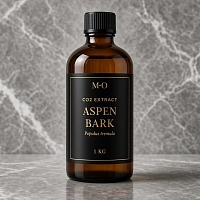
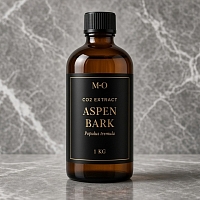
Aspen bark CO2 extract originates from Czechia and arrives as a viscous liquid with a characteristic odor. CO2 Extracts Wholesale provides consistent lots suitable for scale-up. The 1 kg packaging meets transport requirements for international buyers. Laboratories and production sites worldwide source this material to ensure traceability from raw botanical to finished concentrate without additional processing steps.
Technical parameters for formulation
The extract dissolves in polysorbate-80, carrier oils and triglycerides. Recommended input levels range from 0.05 % in toners to 0.5-1 % in richer balms. Addition occurs in the cool-down phase below 45 °C. Formulators value the predictable solubility profile that allows direct addition into lipid phases without pre-dispersion equipment in most cases.
Integration in cosmetic laboratories
Formulators incorporate the ingredient into serums, masks and body products to nourish dry skin and support skin barrier comfort. Solubility behavior allows even distribution within oil phases without additional heating steps. Cosmetic labs often combine it with other botanical CO2 extracts to achieve balanced sensory profiles in final emulsions while maintaining stability across different pH ranges typical for leave-on products.
Role in dietary supplements and food manufacturing
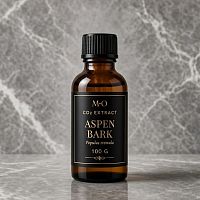
Supplement and confectionery producers purchase the material as a botanical raw ingredient for functional blends, beverages and fortified foods. Aspen Bark CO2 Extract 100 g serves as a convenient pilot size before bulk ordering. Manufacturers appreciate the concentrated form that reduces handling volumes during compounding of dry mixes and liquid nutritional products on industrial lines.
Solubility and phase behavior details
Because the extract is fully miscible with common triglyceride carriers it integrates smoothly into both anhydrous balms and water-in-oil systems. Pilot batches demonstrate that concentrations up to one percent remain stable after three months of accelerated aging at elevated temperatures without visible separation or color shift.
Example supplement blend
A dry drink premix contains 88 % maltodextrin, 7 % acerola powder, 3 % aspen bark CO2 extract and 2 % natural citrus flavor. All components are blended under low humidity and packed in 500 g foil sachets for further dilution. Production teams scale this prototype by replacing maltodextrin with rice flour or inulin depending on target market preferences for fiber content in finished beverages.
Storage guidelines
Keep the liquid in a cool dry location inside sealed containers until June 2028. Minor caking does not affect performance. Extracts Wholesale lots are prepared for extended transit times. Temperature excursions during shipping up to 35 °C for short periods have shown no measurable impact on peroxide values or sensory attributes in stability records.
Frequently asked questions
What is the maximum processing temperature?
Do not exceed 45 °C during incorporation to maintain the original properties of the extract. Higher temperatures may lead to gradual loss of volatile fractions that contribute to the characteristic odor profile expected by quality control teams.
Is the material compatible with lipophilic actives?
Yes, it mixes readily with most oil-soluble ingredients after laboratory compatibility testing. Standard protocols include visual inspection and centrifugation after 48 hours at 40 °C to confirm absence of phase separation.
Can it be used in confectionery coatings?
The extract functions as a botanical raw material in chocolate and filling recipes at food production sites. Typical usage remains below 0.3 % to avoid any impact on crystallization behavior of cocoa butter during tempering stages.