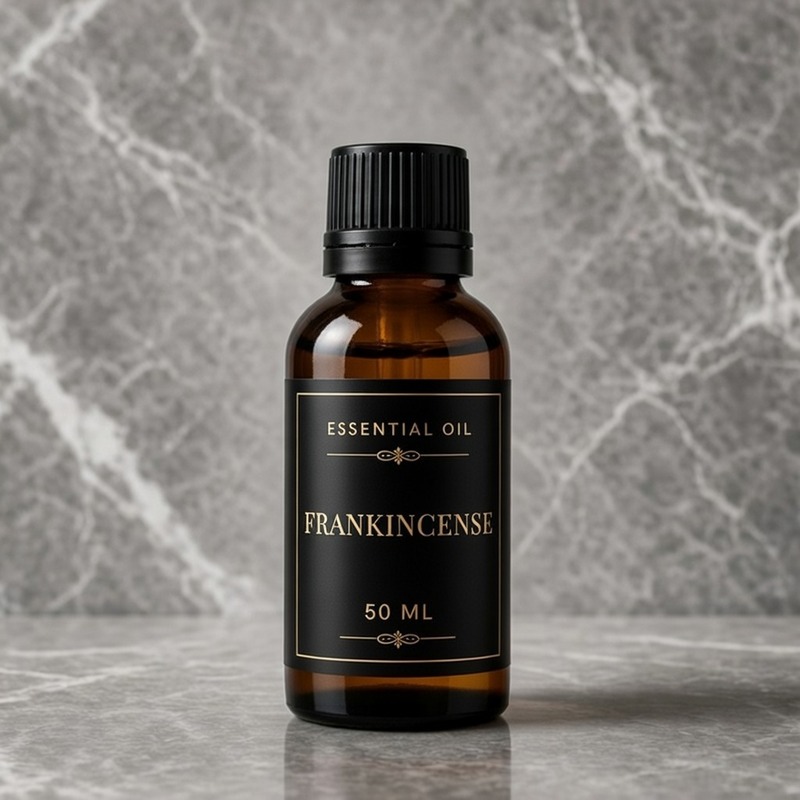
Frankincense Essential Oil for Fragrance and Personal Care Formulation
Frankincense Essential Oil is a volatile aromatic material distilled from the resin of Boswellia trees. Commercial grades may be produced from Boswellia carterii, Boswellia sacra, Boswellia frereana, Boswellia serrata, or related species. The exact botanical source should be taken from the supplier documentation because species and origin influence both odor and chemical profile.
The product belongs in the Essential Oils category. Its main commercial applications include fine fragrance, home fragrance, candle making, soap, body care, massage products, beard care, incense-inspired blends, and spa formulations.
Frankincense oil typically has a resinous, dry, woody, balsamic aroma with fresh terpenic, citrus, peppery, or softly smoky nuances. Some origins smell bright and lemon-like, while others are deeper and warmer. Published analyses confirm that the volatile composition can vary significantly according to Boswellia species, geographical origin, and extraction conditions.
Fine Fragrance Applications
In perfumery, Frankincense Essential Oil is used in woody, oriental, amber, resinous, spiritual, and gender-neutral compositions. It can connect sparkling citrus top notes with heavier woods and balsams while giving the fragrance a dry incense character.
It blends well with myrrh, cedarwood, sandalwood, patchouli, vetiver, labdanum, benzoin, rose, lavender, geranium, bergamot, lemon, sweet orange, cardamom, and black pepper. Small amounts may add lift and diffusion, while higher levels create a more prominent resinous theme.
Alcohol-based perfume trials should be checked for clarity, sediment, and odor stability after maturation. Natural essential oils may behave differently from synthetic fragrance concentrates in cold storage.
Candles and Home Fragrance
Frankincense is widely used in candles, wax melts, reed diffusers, room sprays, aromatic sachets, and incense-style home fragrance products. It is particularly suitable for warm evening scents, winter collections, meditation themes, luxury spa concepts, and woody interior fragrances.
For candles, formulators often combine it with fragrance oils or more persistent essential oils to improve hot throw. The recommended level depends on the wax, wick, container, and total fragrance load.
In reed diffusers, the oil should be evaluated for solubility in the selected diffuser base. A clear mixture at room temperature may become cloudy under cooler conditions, making stability testing important.
Soap and Bath Products
Frankincense Essential Oil gives soap a warm, refined, resinous scent. It works well in cold-process soap, melt-and-pour bases, liquid soap, bath salts, shower oils, and bath concentrates.
Its aroma can be paired with cedarwood and patchouli for a dark woody profile or with orange and bergamot for a brighter resin-citrus blend. Scent retention should be tested because processing conditions can alter the balance of volatile notes.
Skin and Body Care
The oil may be incorporated into body oils, massage blends, balms, hand creams, beard oils, aftershave products, and oil-based facial formulas. In finished cosmetics, its primary role is fragrance and sensory positioning.
Frankincense essential oil should not be presented as identical to Boswellia resin extract. Steam-distilled oil contains volatile aromatic compounds, while resin extracts contain a different range of heavier constituents. Claims associated with one material should not automatically be applied to the other.
Appearance and Solubility
The material is commonly a clear, mobile liquid ranging from colorless to pale yellow. Natural variation in shade and aroma may occur between batches.
Frankincense Essential Oil is insoluble in water. It is compatible with carrier oils, alcohol, and other oil-soluble fragrance materials. A suitable solubilizer is required for clear water-based sprays, toners, and gels.
Suggested Use Levels
Facial and body emulsions 0.05-0.5%
Body and massage oils 0.2-1%
Balms and beard products 0.1-0.8%
Soap 0.3-1.5%
Candles 0.5-3%
Fine fragrance concentrates 0.2-5%
Home fragrance according to base compatibility
Final use levels must be determined from the supplier documents, product type, application area, fragrance composition, and finished-formula safety assessment. Essential oils are concentrated materials and require controlled dosing.
Formulation Guidance
Add the oil during cool-down below 40°C whenever possible. Pre-blend it with carrier oils for anhydrous products. In water-based formulas, first disperse it in an appropriate solubilizer before adding it to the main batch.
Evaluate odor stability, clarity, viscosity, preservative compatibility, and packaging interaction before commercial production. Store the raw material in a tightly closed, light-resistant container away from heat and direct sunlight.
Frankincense Citrus Diffuser Concentrate
Frankincense Essential Oil 35%
Sweet Orange Essential Oil 30%
Cedarwood Essential Oil 15%
Bergamot Essential Oil 10%
Patchouli Essential Oil 5%
Myrrh Essential Oil 5%
Combine the oils in an amber glass bottle and allow the blend to mature for several days. Use the mixture as an aromatic concentrate in a compatible diffuser base after completing clarity, evaporation, and scent-performance testing.