-
 Absolutes
-
 Active Complexes
-
 Actives & Peptides
-
 Amino Acids & Proteins
-
 Food Flavors
-
 Ayurvedic Ingredients & Herbs
-
 Vitamins & Coenzymes
-
 Chocolate Making Supplies
-
 Thickeners & Gelling Agents
-
 Hydrosols & Floral Waters
-
 Hydrolyzed Proteins
-
 Fragrance Ingredients
-
 Nutraceutical Ingredients
-
 Acids, Salts, Alcohols & Alkalis
-
 Preservatives & Antioxidants
-
 Cosmetic Ingredients
-
 Colorants, Micas & Glitters
-
 Masks, Scrubs & Botanicals
-
 Oils & Butters
-
 Candle Making Supplies
-
 Melt and Pour Soap Bases
-
 Cream, Lotion & Hair Care Bases
-
 Fragrance Oils & Industrial Aromatics
-
 Cleansing Agents & Surfactants
-
 Peeling Actives & Acids
-
 Cosmetic Powders
-
 Solvents & Humectants
-
 Silicones & Conditioning Agents
-
 Bottles, Jars & Vials
-
 Silicone & Plastic Molds, Tools
-
 Botanical Extracts
-
 Cosmetic Emollients
-
 Emulsifiers
-
 Essential Oils


Australian Merino Wool 18-21 Micron

 Add to cart


 Subscribe
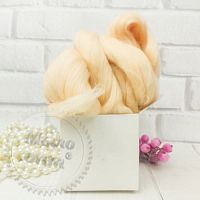
Fine merino fiber for soft-touch felted projects
This section offers Australian merino wool combed top in the 18-21 micron range, one of the finer grades used in felting. The fiber comes carded and ready for immediate use, with a soft handle and fine crimp that makes it easy to layer, blend, and shape by hand.
Crafters use this grade for wet felting and needle felting alike, building fine details, smooth outer layers, and soft textures on figures, flat panels, and decorative pieces. The same fiber also works well for surface finishing on soap bars, giving them a felted wool cover alongside other common uses like ornaments, candle wraps, and holiday decorations.
For a slightly coarser handle with more structure, the Australian merino wool 23 micron section is worth comparing, along with Australian Merino 24 micron for projects that need firmer felt.
Grade variations and how they differ
Within this fine merino range, the fiber is sorted mainly by micron count and staple length, which affects how it drapes and how much detail it holds. Finer batches sit closer to 18 microns and produce a silky surface with minimal prickle, while the upper end near 21 microns keeps enough body for shaping edges and raised details. Dye lots can vary slightly in shade depth, so it helps to check a small sample before committing to a large batch for a matching set of pieces.
Color-specific small-batch options such as Bergschaf Wool Earth, 25 g, Bergschaf Cinnamon Wool, 25g, and Bergschaf Wool Pistachio, 25 g sit alongside the merino top as an alternative texture, with a springier crimp suited to accent layers and small figures rather than broad flat panels.
Choosing a grade and pairing it in a project
The right pick depends on the finish you want. For smooth outer layers on a felted figure, a flat panel, or a decorative wrap, the finer end of this range gives a soft, even surface that takes color and light well. For pieces that need more structure underneath a soft top layer, a coarser core fiber paired with this merino as a finishing layer often works better than one grade alone.
This same fine top also gives a felted cover for soap bars, sitting next to ornaments, candle wraps, and holiday pieces as one of several common uses rather than a single specialty application. Shades such as Bergschaf Ireland wool, 25 g, Wool Bergschaf Pumpkin, 25 g, Bergschaf Wool Cobalt, 25 g, and Bergschaf Wool Storm, 25 g pair well for shading and blending highlights into a base color built from this merino top.
Origin and storage
The merino top offered here is sourced from Italy, a common origin point for finely combed felting fiber. Keep it in a dry, sealed container away from direct light to protect the crimp and prevent the fiber from matting before use. For a firmer handle in the same broader family, the Felting wool Ukraine section is a practical place to compare locally sourced options against this imported grade.
FAQ
What micron range does this merino wool fall into
This grade sits in the 18 to 21 micron range, on the finer end of merino fiber used for felting. The lower numbers mean a softer handle and less prickle against skin, which is why crafters pick it for detailed work and smooth outer layers on figures, panels, and soap surface wraps.
Is this wool better for wet felting or needle felting
It works for both. The fine crimp and soft handle make it easy to blend and shape with a felting needle for detailed pieces, while the same fiber felts down smoothly with soap and water for flat panels, wraps, and covers on rounder shapes.
How is this grade different from 23 micron or 24 micron merino
The 18-21 micron fiber has a finer, silkier surface with less texture, suited to delicate detail and soft covers. Moving up to 23 or 24 micron gives more body and a firmer felt, which holds shape better on larger or sturdier projects.
How should this wool top be stored between projects
Keep the combed top in a dry, sealed bag or container away from direct sunlight and moisture to preserve loft and prevent matting. Avoid compressing it under heavy items for long periods, since this can flatten the crimp and make later felting less even.
Recommendations
Pick this fine merino grade when a project calls for a soft handle, minimal prickle, and enough detail to shape smooth curves or thin outer layers, whether that means a felted figure, a decorative panel, or a soft wool wrap on a soap bar. For coarser structure, compare it against the 23 or 24 micron options before ordering. Reach out by email with your intended project and typical batch size, and we can help match the right fiber grade to it.



