Origin and supply chain details
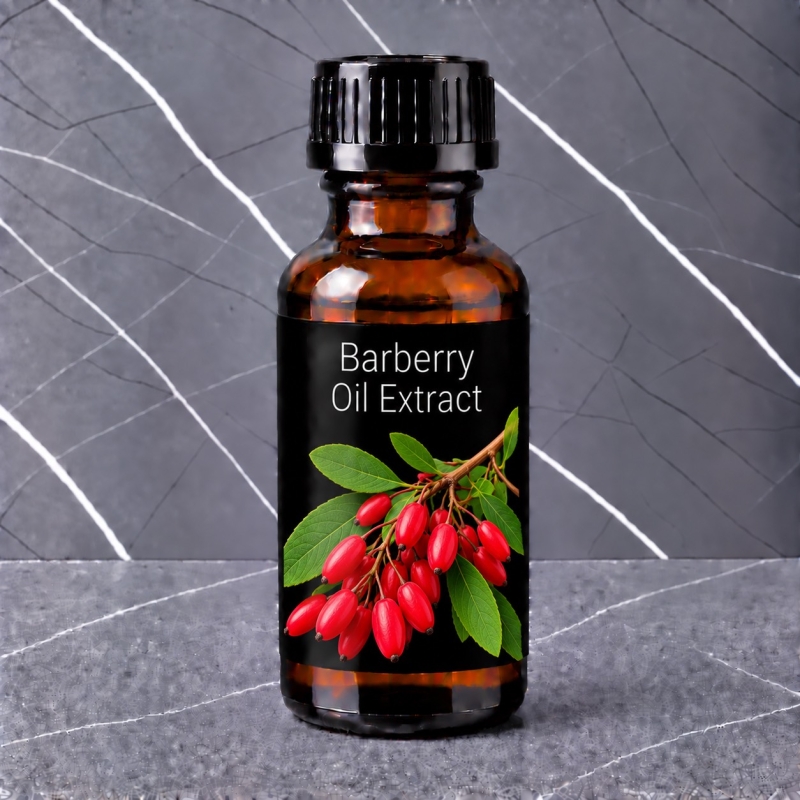
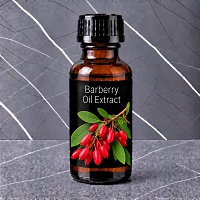
Barberry oil extract originates from France where root and bark material undergo oil-based maceration at controlled temperatures between 50 and 60 degrees Celsius for 36 to 72 hours. The resulting oily liquid carries the INCI designation Berberia Oil Extract and arrives in one-litre containers suitable for industrial and laboratory use. Oil Extracts Wholesale provides consistent supply for manufacturers requiring repeatable quality across multiple production cycles.
Physical parameters and processing limits
The fat-soluble extract appears as a yellowish oily fluid. Recommended input levels range from 0.05 to 2 percent in the active phase with a strict upper temperature limit of 40 degrees Celsius to protect sensitive plant constituents. Shelf life reaches December 2028 when kept in a tightly closed container away from light and heat sources.
Role in cosmetic laboratory workflows
Cosmetic development teams incorporate the extract into emulsions, serums and leave-on treatments to achieve refined surface appearance and balanced oil control. It disperses evenly when combined with carrier oils during the oil-phase preparation stage. Compatibility extends to natural waxes and thickeners commonly used in professional formulas.
Utilisation by supplement and food producers
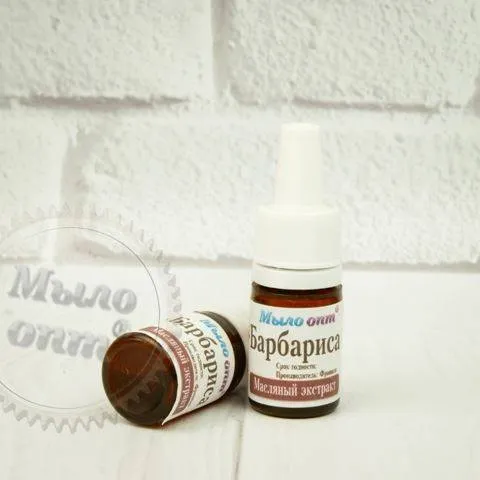
Manufacturers of dietary supplements and functional foods purchase the extract as botanical raw material for beverage bases and confectionery blends. Both large factories and smaller formulation teams source it in wholesale quantities to maintain stable ingredient profiles across product lines. Barberry oil extract, 5 ml serves pilot testing before full-scale implementation.
Sample laboratory-scale emulsion
Grape seed oil 60 g, barberry oil extract 4 g, vegetable emulsifier 8 g, distilled water 120 g, glycerin 5 g. Combine the oil phase containing the extract and heat to 40 degrees Celsius, match the aqueous phase temperature, homogenise until uniform then cool to room temperature.
Storage recommendations for bulk stock
Containers must remain sealed to minimise oxidation. Transfer remaining volume to smaller vessels after initial opening to limit air exposure while preserving activity until the printed expiry date.
Additional formulation considerations
The extract integrates without altering viscosity when added at recommended percentages. Formulators often pair it with complementary oil-soluble actives to fine-tune sensory attributes of the finished product. Extracts Wholesale lists further options for multi-component botanical systems.
Frequently asked questions
What container type protects stock during transport?
Standard shipping containers shield contents from light and moisture throughout transit.
Does the extract require special handling equipment?
Standard mixing vessels and controlled heating equipment suffice for incorporation at specified temperatures.
Can it be tested in beverage prototypes?
Yes, the material functions as raw botanical input in drink and supplement development when dosed correctly.
How does batch consistency compare across orders?
Each litre lot maintains identical physical characteristics supporting reproducible results from one purchase to the next.