A comprehensive technical formulation guide dedicated to managing rheology in cosmetics using the natural polysaccharide AMIGEL (Sclerotium Gum). This article explores the physical mechanisms of polymer hydration and network formation for structuring clear gels, light emulsions, and particle-suspending fluids. It covers pre-dispersion in polyols, electrolyte stability, shear rate handling, incompatibility limits, thermal limits, and precise pH controls. Features three complete DIY recipes with step-by-step compounding instructions and cold storage standards.
A comprehensive technical formulation guide dedicated to utilizing the bio-based film former Natpure Film AP (derived from sugar cane) in color cosmetics and hair care. This article breaks down the physical mechanics of flexible film creation, moisture resistance, and pigment adhesion enhancement. It covers aqueous dissolution protocols, compatibility with natural polymers and gums, thermal boundaries, and precise pH controls. Features three complete DIY recipes with step-by-step compounding instructions and storage standards.
A comprehensive technical formulation guide to designing skin barrier restoration creams and liposomal fluids using ViableCare LipoCare 8. This article breaks down the physiological mechanism of ceramide integration into stratum corneum lipids to stop transepidermal water loss. It details exact processing protocols to protect liposomal structures, low-shear cooling phase entry below thirty degrees Celsius, emulsifier compatibility, and pH boundaries. Features three complete DIY recipes with step-by-step compounding instructions and cold storage standards.
White Thyme Essential Oil: A Gentle Herb for Skin and Hair Care
White thyme essential oil, derived from the Thymus vulgaris CT linalool chemotype (CT stands for chemotype, indicating a specific chemical composition within the same species), is a gentler alternative to red thyme essential oil. While both come from the same plant, white thyme is distinguished by its higher linalool content and lower thymol content, resulting in a milder aroma and reduced potential for skin irritation. This makes it a more suitable option for cosmetic applications, particularly for sensitive skin.
Why Choose White Thyme Essential Oil for Cosmetics?
Gentle Antimicrobial Properties: While less potent than red thyme, white thyme still offers antimicrobial benefits due to its linalool content. This can be helpful in formulations targeting acne-prone skin or scalp issues.
Anti-inflammatory and Soothing Effects: Linalool is known for its anti-inflammatory and calming properties, making white thyme useful for soothing irritated skin and reducing redness.
Antioxidant Activity: White thyme contains antioxidants that can help protect skin from free radical damage, contributing to anti-aging effects.
Pleasant Aroma: White thyme has a sweet, herbaceous, and slightly floral aroma that is generally well-liked and blends well with other essential oils.
Suitable for Sensitive Skin (with proper dilution): Due to its lower thymol content, white thyme is less likely to cause skin irritation compared to red thyme, making it a better choice for sensitive skin types.
Applications of White Thyme Essential Oil in Cosmetics:
White thyme essential oil can be incorporated into various cosmetic formulations:
Skincare:
Acne-Prone Skin Products: Its antimicrobial properties can be beneficial in cleansers, toners, and spot treatments for acne.
Soothing Creams and Lotions: Its anti-inflammatory effects make it suitable for formulations designed to calm irritated or sensitive skin.
Facial Oils and Serums: It can be added to facial oils and serums for its antioxidant and soothing properties.
Hair Care:
Scalp Treatments: Its antimicrobial and anti-inflammatory properties can be helpful for addressing scalp issues like dandruff or itchiness.
Hair Rinses and Conditioners: It can be added to hair rinses and conditioners to promote scalp health and add shine.
Detailed Breakdown of Cosmetic Applications:
Facial Cleansers and Toners: It can be used in low concentrations in cleansers and toners designed for acne-prone or sensitive skin.
Creams and Lotions: It can be added to creams and lotions to soothe irritation, reduce redness, and provide antioxidant protection.
Facial Oils and Serums: When diluted with carrier oils like jojoba or rosehip oil, it can create a soothing and antioxidant-rich facial treatment.
Scalp Treatments: Blended with carrier oils like coconut or argan oil, it can be massaged into the scalp to address dandruff and itchiness.
Hair Rinses and Conditioners: Adding a few drops to a final hair rinse or conditioner can promote scalp health and add shine.
Cosmetic Recipe: Soothing Facial Oil for Sensitive Skin
Ingredients:
30 ml Sweet Almond Oil (carrier oil)
15 ml Calendula Infused Oil (carrier oil, for added soothing)
2-3 drops White Thyme Essential Oil
2 drops German Chamomile Essential Oil (for added anti-inflammatory benefits)
Instructions:
Combine the sweet almond oil and calendula infused oil in a dark glass bottle.
Add the white thyme and German chamomile essential oils.
Gently swirl to mix.
Recommendations for Use:
Dilution is Essential: White thyme essential oil, like all essential oils, must be properly diluted before topical application. A safe dilution for facial use is typically 0.5-1%. For body use, a slightly higher dilution (up to 2%) may be appropriate.
Patch Test: Always perform a patch test before using any new essential oil, even if it is considered gentle.
Pregnancy and Breastfeeding: It is generally recommended to avoid using essential oils during pregnancy and breastfeeding unless under the guidance of a qualified aromatherapist or healthcare professional.
Storage: Store white thyme essential oil in a dark glass bottle in a cool, dark place to prevent oxidation and degradation.
Worldwide Delivery: We deliver worldwide.
And also go to the Blog from Мыло Опт, where we share useful information about creating the right natural cosmetics
Characteristics:
INCI
Thymus Vulgaris Essential Oil
Other
Application
Cosmetology: Tonics and lotions: For oily and problematic skin. Shampoos and hair masks: Suitable for scalp care, reduces oiliness, helps fight dandruff. Creams and serums: For mature and aging skin care. Pharmaceuticals: Included in natural ointments and creams for the treatment of inflammation and irritation. Aromatherapy: Relieves mental and physical stress, improves concentration. Household chemicals: Used in natural cleaning products due to its antiseptic properties.
Aroma
Intense, herbaceous, with woody and slightly spicy notes
Cosmetics: 0.5–1% of total product weight. Aromatherapy: 1–2 drops in a diffuser or bath. Shampoos and conditioners: 0.5–1% to reduce oiliness and combat dandruff.
Features
All information presented on the site is for reference only
Minimum count
1
Name
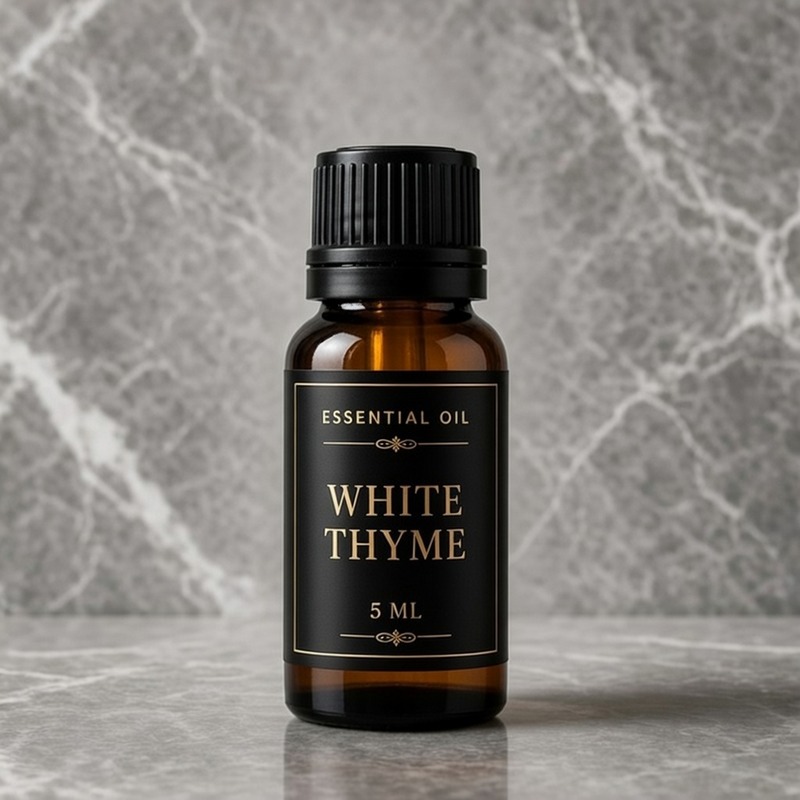
White Thyme Essential Oil, 5 ml
Packaging
container for transportation
Packing
5 ml
Properties
Antiseptic: Kills bacteria, preventing inflammation and infection. Anti-inflammatory: Reduces redness and irritation of the skin. Toning: Tightens pores, improves skin texture and tone. Antioxidant: Helps slow down skin aging by preventing cell destruction. Stimulating: Enhances microcirculation, improving skin nutrition.
Purpose
White thyme essential oil is a natural antiseptic and stimulant. Ideal for skin care, hair care and aromatherapy. White thyme essential oil has pronounced antiseptic, tonic and anti-inflammatory properties. Suitable for problem and mature skin care, oily hair. Effective in aromatherapy to relieve stress and increase concentration. Care for oily and problem skin. Strengthening hair and scalp. Antiseptic component for cosmetics and household products.