Worldwide delivery  |  Free delivery in all Ukraine from 1899 UAH
Product catalog
Master classes, recipes, tips
AMIGEL rheology guide: Sclerotium Gum in gels emulsions and suspensions
A comprehensive technical formulation guide dedicated to managing rheology in cosmetics using the natural polysaccharide AMIGEL (Sclerotium Gum). This article explores the physical mechanisms of polymer hydration and network formation for structuring clear gels, light emulsions, and particle-suspending fluids. It covers pre-dispersion in polyols, electrolyte stability, shear rate handling, incompatibility limits, thermal limits, and precise pH controls. Features three complete DIY recipes with step-by-step compounding instructions and cold storage standards.
Natpure Film AP: natural film-forming technology for skin color cosmetics and hair
A comprehensive technical formulation guide dedicated to utilizing the bio-based film former Natpure Film AP (derived from sugar cane) in color cosmetics and hair care. This article breaks down the physical mechanics of flexible film creation, moisture resistance, and pigment adhesion enhancement. It covers aqueous dissolution protocols, compatibility with natural polymers and gums, thermal boundaries, and precise pH controls. Features three complete DIY recipes with step-by-step compounding instructions and storage standards.
ViableCare LipoCare 8: integrating a liposomal ceramide complex into barrier-care formulas
A comprehensive technical formulation guide to designing skin barrier restoration creams and liposomal fluids using ViableCare LipoCare 8. This article breaks down the physiological mechanism of ceramide integration into stratum corneum lipids to stop transepidermal water loss. It details exact processing protocols to protect liposomal structures, low-shear cooling phase entry below thirty degrees Celsius, emulsifier compatibility, and pH boundaries. Features three complete DIY recipes with step-by-step compounding instructions and cold storage standards.
Product Description

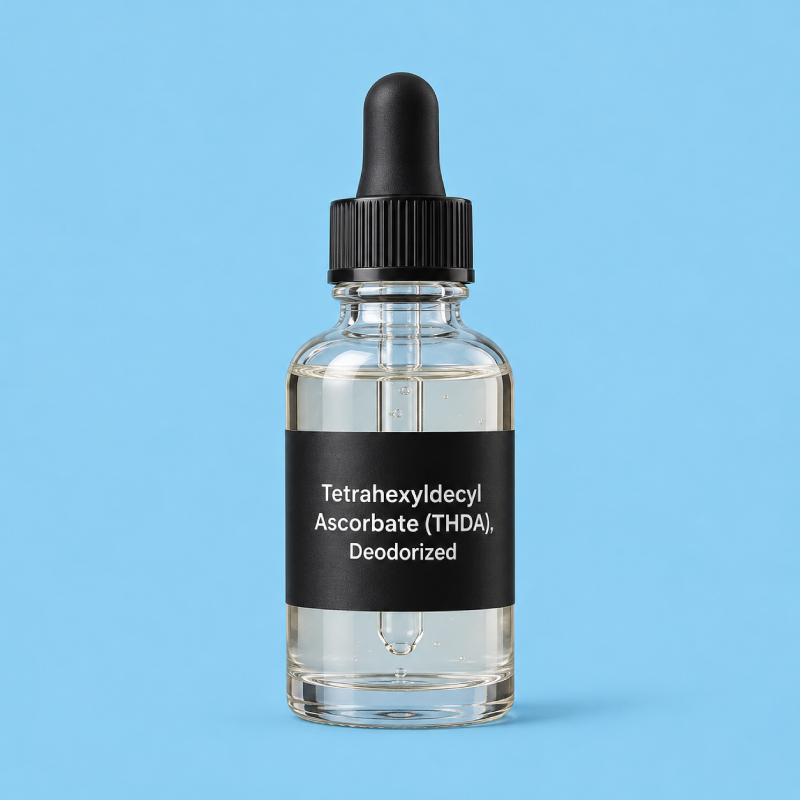
Tetrahexyldecyl Ascorbate, widely known in the global personal care market as THDA, represents one of the most stable, potent, and skin-friendly derivatives of Vitamin C available to modern cosmetic chemists. Unlike traditional L-Ascorbic Acid, which readily degrades in aqueous environments, undergoes rapid oxidation, and often causes epidermal irritation due to low pH requirements, THDA is a fully esterified lipid-soluble molecule with exceptional stability against oxygen, light, and elevated temperatures. The specialized deodorized grade eliminates undesirable baseline organoleptic notes, ensuring that sophisticated facial creams, delicate serums, and clear cosmetic oils retain their pristine sensory characteristics without requiring heavy masking fragrances.

Upon topical application, this advanced lipidic derivative penetrates the lipophilic intercellular spaces of the stratum corneum with remarkable efficiency. Once inside the epidermal layers, intracellular enzymes convert THDA into free ascorbic acid, unleashing its bioactive potential directly where skin repair occurs. Rich in skin-restorative esterified fractions, functional lipidic molecules, and powerful antioxidant complexes, THDA effectively neutralizes reactive oxygen species, shields cellular structures from photo-aging, and stimulates natural collagen synthesis to restore firmness and density. Furthermore, its targeted enzyme-inhibiting action curbs excessive melanin synthesis, noticeably lightening hyperpigmentation, dark spots, and uneven tone without compromising the cutaneous moisture barrier.

Demand for Tetrahexyldecyl Ascorbate continues to surge in the international cosmetics industry as clean beauty standards and consumer preferences shift toward high-performance, non-irritating active ingredients. Formulators in both industrial laboratories and boutique craft workshops value deodorized THDA for its seamless incorporation into anhydrous oils, rich emulsions, anhydrous gels, and delicate eye treatments. Its neutral scent, broad raw material compatibility, and chemical robustness streamline manufacturing processes and significantly extend the shelf life of finished formulations.

Versatile Applications in Cosmeceuticals, Personal Care, and Fine Products

In high-end facial skin care, deodorized THDA serves as a premier brightening and anti-aging ingredient in night creams, restorative lipid serums, lipidic booster oils, and protective daytime lotions. It works synergistically with retinol, peptides, tocopherol, and squalane to enhance cellular renewal and collagen production. For sensitive eye contour products, its gentle, non-acidic nature delivers target anti-wrinkle benefits without inducing redness, sting, or tearing.

Within hair care and scalp treatments, this lipid-soluble antioxidant protects hair lipids from oxidative stress, seals cuticles, and supports healthy follicle function in revitalizing hair oils and leave-in conditioners. In body care, THDA is formulated into firming lotions, stretch mark care creams, and post-sun recovery balms to repair environmental damage.

For artisanal soap making, adding a stabilized lipidic active into oil-rich cold-process bars or conditioning hot-process formulations imbues cleansing bars with extra moisturizing and antioxidant properties. In fine fragrance and perfume production, THDA acts as a protective stabilizer for delicate aromatic botanical extracts and essential oils sensitive to air exposure. In dermatological and topical pharmaceutical preparations, its high biocompatibility and superior penetration make it an ideal active carrier for barrier-restoring ointments and clinical post-procedure soothing balms.

Restorative Lipid-Active Radiance Facial Oil

Jojoba oil - thirty-five milliliters

Squalane - forty milliliters

Rosehip seed oil - twenty milliliters

Tetrahexyldecyl Ascorbate THDA Deodorized - three milliliters

Tocopherol - one milliliter

Rose essential oil - one milliliter

In a sterile glass beaker, combine the jojoba oil, squalane, and rosehip seed oil, stirring gently with a glass rod until the oil blend is fully homogeneous. Add the deodorized Tetrahexyldecyl Ascorbate directly into the oil phase and stir continuously until completely dissolved. Incorporate the tocopherol and rose essential oil, blending thoroughly to ensure even distribution of the active components throughout the mixture. Pour the finished oil into a dropper bottle made of dark UV-protective glass and seal tightly.

The resulting facial oil presents a silky, featherlight golden texture that glides smoothly over the skin and absorbs quickly without leaving a heavy or greasy residue. Used nightly on cleansed skin, it delivers deep nourishment, enhances elasticity, reduces dark spots, and reveals a radiant, velvety smooth complexion.

Characteristics:
INCI Tetrahexyldecyl Ascorbate (THDA), Deodorized
Other
Application Oil-based serums, creams, emulsions, anti-aging concentrates, products for dull skin, cosmetics for uneven skin tone, products for the eye area, body lotions, care oils
Att brand USA
Color product Colorless to pale yellow
Dosage General dosage: 0.5–3% Intensive cosmetic formula dosage: Up to 10% according to Lotioncrafter Cream and emulsion dosage: Approximately 0.5–3% Facial serum dosage: Approximately 1–3% Eye area dosage: Approximately 0.5–1% Body lotion dosage: Approximately 0.5–2% Oil concentrate dosage: Approximately 1–5%
Features All information presented on the site is for reference only
Name Tetrahexyldecyl Ascorbate (THDA), Deodorized 5 g
Other names THDA, THD Ascorbate, Tetrahexyldecyl Ascorbate, Ascorbyl Tetraisopalmitate, VC-IP / Vitamin C oil-soluble THDA deodorized
Packaging container for transportation
Properties Antioxidant activity, lipophilicity, relatively high stability with respect to free ascorbic acid, compatibility with the oil phase, ability to improve the appearance of the skin when used regularly in suitable formulas
Purpose Antioxidant care, reducing the visibility of age spots, evening out skin tone, supporting collagen synthesis, improving the appearance of age-related skin, protecting the lipids of the cosmetic formula from oxidative damage
Solubility Water Solubility: Miscible with a small amount of water, but water alters the structure and transparency of the resulting gel. Oil Solubility: Not the usual molecular dissolution, but the formation of a structured oil gel with proper mixing.
Type Fat-soluble antioxidant cosmetic active ingredient
View Transparent viscous liquid
Valid until 10.2028
Add a review
Your score:
Send feedback
Error

Close window
Product added to cart
Total:
Request the price of the product
Fill in the details for the price request
Request a price Request a price