Poppy Seed Meal as oil-bearing plant raw material for B2B formulation systems
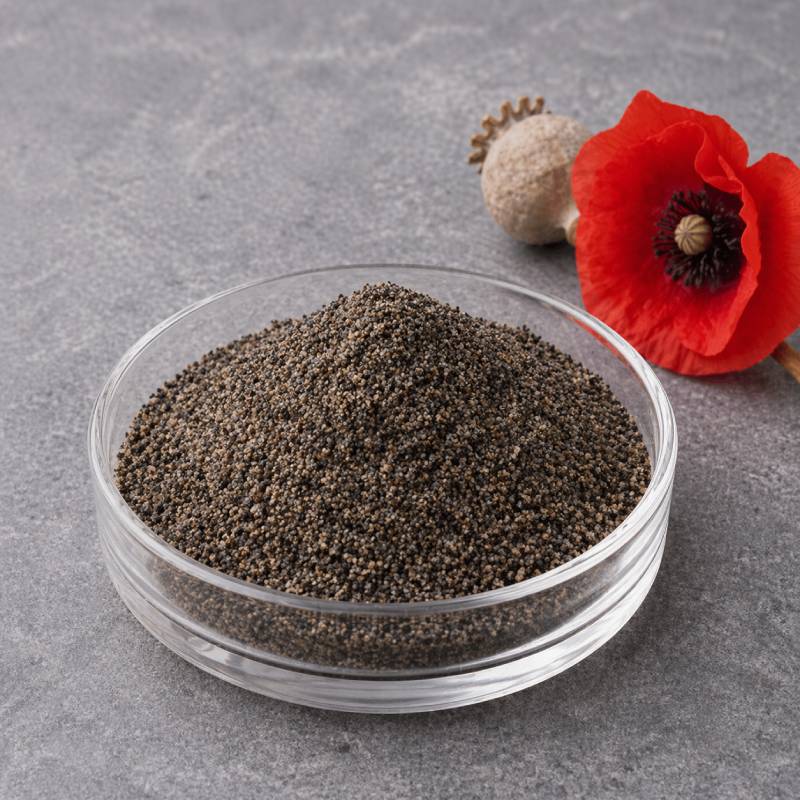
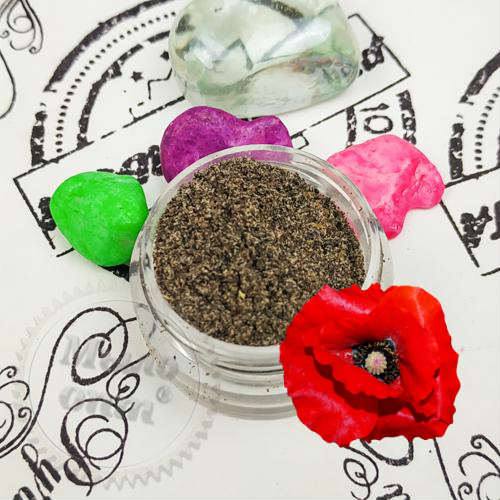
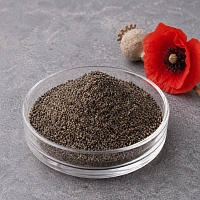
Poppy Seed Meal (Papaver spp.) is a powdered material obtained after oil extraction from poppy seeds, used in formulation systems as a functional plant-based filler, adsorbing component, and texturizing raw material. In B2B development, it is applied in dry blends, scrubs, pastes, and combined systems where controlled density, particle distribution, and storage stability are required. Due to its residual lipid content and natural particulate structure, it supports the formation of stable matrices within formulations and ensures uniform ingredient dispersion.
Functional role in formulation systems
Poppy Seed Meal acts as an oil-bearing plant filler with adsorption capacity. In formulation systems, it improves cohesion between components, enhances uniformity, and contributes to structural stability. The presence of residual lipids allows partial interaction with oil phases, making it suitable as a carrier for active substances and aromatic components.
Behavior in formulation
The ingredient is incorporated into dry phases or dispersed in aqueous and oil-based systems. Upon contact with liquids, particles swell and form a stable dispersion with moderate viscosity. Residual oil content provides partial lipophilic behavior, improving compatibility with oil phases. It remains stable under typical processing temperatures but may influence rheology depending on concentration and formulation design.
Impact on product
Poppy Seed Meal contributes to dense and stable textures, improving structural integrity and preventing separation. In dry formulations, it ensures uniform particle distribution. In scrub systems, it provides a mild mechanical effect. In paste-based formulations, it supports the formation of stable masses with controlled viscosity. It enhances sensory properties by adding a natural granular texture.
Application areas
The ingredient is used in scrubs, masks, dry blends, functional products, food formulation systems, and technical compositions. It is applied in cosmetic, food, SPA, and industrial formulations. Suitable for contract manufacturing and private label development where plant-based texturizing materials are required.
Formulation incorporation
Poppy Seed Meal is added to the dry phase or dispersed into aqueous or oil phases. Typical usage levels range from 2–30% depending on formulation goals. Uniform mixing is required to ensure even distribution. In aqueous systems, gradual incorporation is recommended to avoid clumping.
Recipe Plant-based body scrub
Ingredients:
Poppy Seed Meal — 20 g
Sugar — 30 g
Sunflower oil — 25 ml
Glycerin — 5 ml
Emulsifier — 5 g
Preservative — 1 g
Processing
Poppy Seed Meal is blended with sugar until particles are evenly distributed. The oil phase is prepared separately with emulsifier and glycerin. The dry mixture is gradually incorporated into the oil phase under continuous mixing until a uniform texture is obtained. The preservative is added at the final stage, followed by mixing to achieve stability.
Instruction
The ingredient is used as a filler or mild abrasive phase depending on formulation requirements. Particle size and distribution should be controlled to ensure consistency. In aqueous systems, gradual addition with proper mixing prevents agglomeration. Stability and texture testing under different storage conditions is recommended.
Manufacturing stability
Poppy Seed Meal demonstrates stable performance in industrial processing and scales effectively. Control of moisture content, residual oil level, and particle size ensures batch-to-batch reproducibility and consistent product quality.
The ingredient supports formation of stable textured systems with uniform particle distribution and controlled density.
In complex formulations, it improves interaction between solid and liquid phases, enhancing overall stability.
Its natural oil-bearing origin allows flexible integration into a wide range of formulation systems with predictable processing behavior.