Worldwide delivery  |  Free delivery in all Ukraine from 1899 UAH
Product catalog
Master classes, recipes, tips
AMIGEL rheology guide: Sclerotium Gum in gels emulsions and suspensions
A comprehensive technical formulation guide dedicated to managing rheology in cosmetics using the natural polysaccharide AMIGEL (Sclerotium Gum). This article explores the physical mechanisms of polymer hydration and network formation for structuring clear gels, light emulsions, and particle-suspending fluids. It covers pre-dispersion in polyols, electrolyte stability, shear rate handling, incompatibility limits, thermal limits, and precise pH controls. Features three complete DIY recipes with step-by-step compounding instructions and cold storage standards.
Natpure Film AP: natural film-forming technology for skin color cosmetics and hair
A comprehensive technical formulation guide dedicated to utilizing the bio-based film former Natpure Film AP (derived from sugar cane) in color cosmetics and hair care. This article breaks down the physical mechanics of flexible film creation, moisture resistance, and pigment adhesion enhancement. It covers aqueous dissolution protocols, compatibility with natural polymers and gums, thermal boundaries, and precise pH controls. Features three complete DIY recipes with step-by-step compounding instructions and storage standards.
ViableCare LipoCare 8: integrating a liposomal ceramide complex into barrier-care formulas
A comprehensive technical formulation guide to designing skin barrier restoration creams and liposomal fluids using ViableCare LipoCare 8. This article breaks down the physiological mechanism of ceramide integration into stratum corneum lipids to stop transepidermal water loss. It details exact processing protocols to protect liposomal structures, low-shear cooling phase entry below thirty degrees Celsius, emulsifier compatibility, and pH boundaries. Features three complete DIY recipes with step-by-step compounding instructions and cold storage standards.
Product Description

Micrococcus Lysate as an Advanced Cosmetic Bio-Active for Skin Barrier Protection

Modern formulation science continuously seeks sophisticated biological components that strengthen the skin barrier and protect cellular integrity against environmental stress. Micrococcus lysate stands at the forefront of professional biotechnology, serving as an exceptional cosmetic active derived from specialized bacterial cell lysates. This specialized functional ingredient delivers targeted enzymatic support, specifically utilizing repair-assisting components like UV-endonuclease encapsulated within liposomal or aqueous carriers. Cosmetic chemists and laboratory developers worldwide integrate this active into high-performance skincare regimens designed to support natural DNA repair mechanisms, enhance skin resilience, and mitigate the visible effects of photoaging. Its growing demand on the global market underscores a broader shift toward science-backed, preventive formulations that protect epidermal health at a microscopic level.

The versatility of this bio-active ingredient makes it a valuable addition to professional and home-scale cosmetic manufacturing. Formulators incorporate the lysate into advanced anti-aging serums, protective daytime creams, post-sun recovery treatments, and intensive barrier-repair emulsions. Because it integrates smoothly into various aqueous phases, developers can easily combine it with peptides, amino acids, protein fractions, lipid components, and moisturizing agents without destabilizing the emulsion structure. The functional contribution of this active lies in its ability to support cellular repair processes, reduce oxidative stress, and maintain optimal skin hydration and suppleness under harsh environmental conditions.

Formulation Strategies and Professional Integration

Developing effective cosmetic products with specialized biological actives requires careful attention to compatibility, pH parameters, and processing temperatures. Micrococcus lysate performs best when incorporated into the water phase of emulsions during the cool-down stage, typically below forty degrees Celsius, to preserve the delicate structure of its active proteins and functional enzymes. Formulators designing luxury protective creams and restorative serums value its stability and synergistic interactions with other humectants and antioxidants. By reinforcing the natural defense mechanisms of the epidermis, this active helps brands deliver measurable clinical benefits, satisfying the rigorous expectations of consumers seeking science-driven skincare solutions.

The global popularity of biotechnology-derived cosmetic ingredients continues to expand as brands focus on longevity, barrier reinforcement, and advanced cellular protection. Independent artisans and large-scale laboratories alike utilize this lysate to differentiate their product lines, offering targeted solutions for mature, stressed, or sun-exposed skin. Its ability to work harmoniously within complex formulations allows creators to build comprehensive anti-pollution and restorative collections that meet international quality standards and provide tangible benefits to the end user.

Intensive Cellular Repair Facial Serum

Distilled water - seventy milliliters Glycerin - five milliliters Sodium hyaluronate solution - ten milliliters Micrococcus lysate - seven milliliters Niacinamide - five milliliters Phenoxyethanol and ethylhexylglycerin - one milliliter

In a sanitized glass beaker, combine the measured distilled water and glycerin, stirring gently until fully blended. Slowly sprinkle the niacinamide into the liquid mixture, mixing continuously until completely dissolved and the solution clears. Add the sodium hyaluronate solution to the beaker, allowing the high-molecular-weight humectant to hydrate and thicken the aqueous base into a smooth, silky consistency. Measure and gently fold in the micrococcus lysate, ensuring the temperature remains below formulation limits to protect its active structural properties. Incorporate the preservative blend drop by drop while agitating the batch thoroughly to ensure microbiological safety. Transfer the finished serum into an airtight glass dropper bottle and store in a cool, dark environment.

The resulting facial serum features a lightweight, crystal-clear texture that glides effortlessly across the skin without leaving any sticky or heavy residue. Upon application, it absorbs rapidly, delivering an immediate surge of deep hydration while imparting a smooth, velvety finish to the touch. Regular use supports improved skin barrier function, enhanced resilience against environmental stressors, and a visibly calmer, more radiant complexion that reflects professional-grade formulation expertise.

Characteristics:
INCI Water, Micrococcus Lysate, Lecithin
Other
Application Facial serums, creams, emulsions, after-sun care, day care, night care, anti-aging cosmetics, products for skin with signs of photoaging, skin restoration products, eye care, sunscreen formulas as an additional active ingredient, post-cosmetic treatment products
Att brand USA
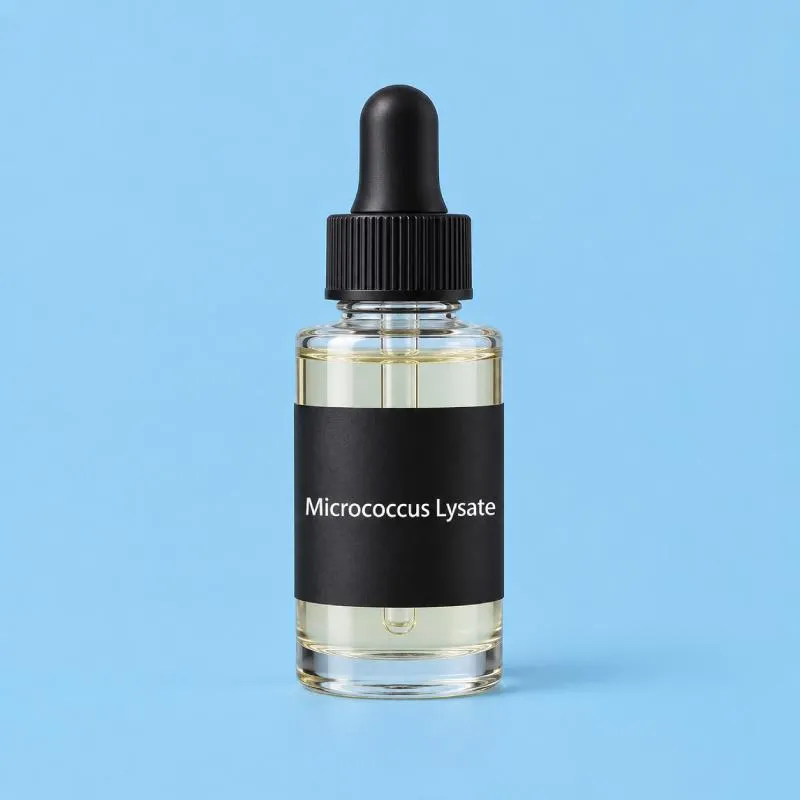
Color product colorless to light yellow
Dosage Serums 0.1-1% Creams and emulsions 0.1-1% Anti-aging products 0.1-1% After-sun products 0.1-1.5% Anti-photoaging products 0.1-1% Eye care products 0.1-0.5% Day care 0.1-1% Night care 0.1-1% SPF products as an additional active ingredient 0.1-1%
Features All information presented on the site is for reference only
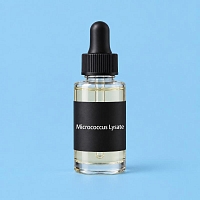
Name Micrococcus Lysate 10 ml
Other names Micrococcus Lysate, Micrococcus Lysate Extract, Micrococcus luteus Lysate, Micrococcus lysate, Micrococcus lysate, Micrococcus bacterial lysate, Micrococcus enzyme lysate
Packaging container for transportation
Properties Skin conditioning, support for skin recovery after UV exposure, enzymatic activity, support for repair processes of UV-induced damage, anti-aging action, support for skin during photoaging, skin conditioning, suitable for modern DNA repair cosmetic concepts
Purpose Anti-Age products: support skin repair mechanisms and reduce visible signs of photoaging, after-sun products: support skin after UV exposure, day care: protection from the effects of external stress, night care: support skin repair processes, eye care products: additional enzyme active for skin with signs of photoaging, SPF formulas: additional restorative active, but not a UV filter, post-cosmetic treatment products: conditioning and support for restoration of the skin barrier
Solubility water-soluble
Type biotechnological cosmetic active, bacterial lysate
View transparent or slightly opalescent liquid
Valid until 10.2028
Add a review
Your score:
Send feedback
Error

Close window
Product added to cart
Total:
Request the price of the product
Fill in the details for the price request
Request a price Request a price