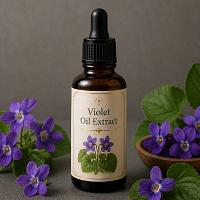
Sourcing and specification profile
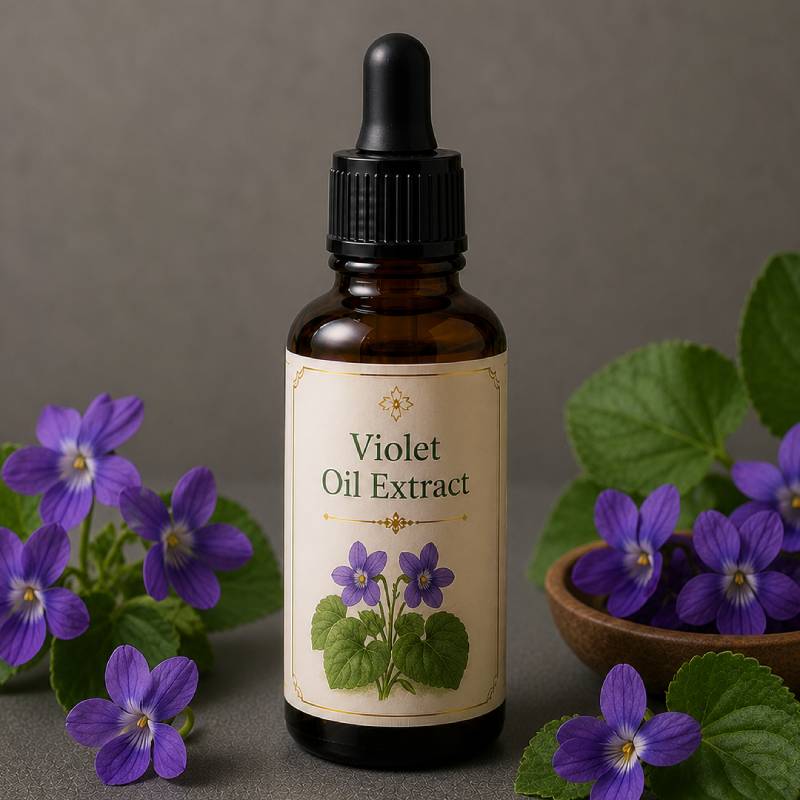
Violet oil extract is produced in France from Viola tricolor flowers by gentle oil extraction at 50-60 degrees C for 36-72 hours. The resulting oily liquid is supplied in 50 ml packs and meets the requirements of cosmetic and food-grade raw material specifications. Oil Extracts of this type are chosen for consistent performance in lipid systems and neutral floral character.
Technical parameters for manufacturers
The ingredient is fat-soluble and incorporated at 0.05-5 percent into the active phase without exceeding 40 degrees C. It remains stable in standard processing temperatures and integrates evenly with oils, waxes and emulsifiers. Shelf life extends to December 2028 when stored in a dry, cool, light-protected sealed container.
Use in supplement and functional food lines
Supplement and confectionery manufacturers worldwide source this extract as a botanical raw material for dietary supplements, functional beverages and food products. Both private formulators and industrial facilities purchase it in retail and wholesale quantities for further processing in lipid blends. Trial quantities are listed under Violet Oil Extract 5 ml.
Integration into cosmetic bases
The extract is added during the oil phase blending step. It supports uniform texture and contributes to the sensory profile of creams, serums, body balms and hair care products without altering the color of the final product. Further options appear in the Botanical Extracts catalog.
Processing recommendations
When preparing emulsions, the oil phase containing the extract is heated separately and combined with the water phase at the working temperature. No additional solubilizers are required due to full fat solubility.
Example formulation for a body balm
Violet oil extract 12 g, shea butter 25 g, fractionated coconut oil 30 g, jojoba oil 20 g, cetyl alcohol 4 g, tocopherol 1 g, oil-soluble preservative 1 g, fragrance 7 g. Combine all oil-phase ingredients, heat gently to 40 degrees C, blend until uniform and pour into containers after cooling.
Frequently asked questions
What batch sizes are available for industrial use?
While 50 ml is convenient for trials, larger volumes are offered through the main catalog for production runs.
Does the extract affect emulsion stability?
When introduced within the recommended percentage and temperature limits, the material maintains compatibility with common emulsifiers and does not compromise stability.
Is it suitable for beverage bases?
The extract serves as a botanical raw material in lipid components of functional drinks and dietary supplement formulations within regulatory limits.