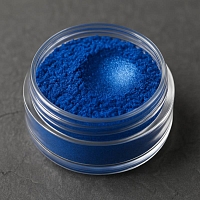
Deep blue wax dye built for large-scale candle production
The 1 kg pack is designed for manufacturers running full production cycles rather than single trial batches, which is why this dye is widely chosen by candle factories, decor workshops, and suppliers of interior craft materials. It belongs to the section candle colorants, a collection assembled specifically for consistent, repeatable coloring of paraffin, soy, palm and beeswax bases in conveyor-line conditions, where color match between batches truly matters.
The primary field of use for this pigment is candle manufacturing, though the blue wax dye also appears in decorative wax elements, wax appliques, and occasionally in craft and souvenir production where a wax-like finish is desired. The pigment is formulated to disperse evenly through fat and wax bases without streaking or spotting, which becomes critical at high pour volumes where manual color correction inside every mold simply isn't practical.
The dye should be introduced into a fully melted wax base at roughly 70-85 degrees Celsius, depending on the wax type used. Add it gradually while stirring continuously to prevent clumping and to achieve an even, uniform shade throughout the entire batch. A typical dosage for industrial runs ranges from 0.1 to 0.5 percent of the total wax weight, with the exact concentration fine-tuned by the production technologist depending on desired intensity and the base itself - paraffin and soy wax tend to produce a lighter, more translucent blue, while palm and beeswax bases usually deepen and intensify the tone.
This blue pigment blends smoothly with other wax-soluble dyes when creating gradient or multilayer candles, and it pairs well with fragrance compounds and scent stabilizers without any chemical interference. For combined color lines it helps to keep complementary shades on hand, such as green candle dye for ocean or nature-themed collections, or red candle dye for bold multicolor pieces. It's also worth pairing this pigment with the fluorescent blue wax dye, since combining the two produces striking decorative candles that react under ultraviolet light while keeping a natural blue tone in daylight.
Store the pigment in a tightly sealed container, in a dry area away from direct sunlight and at room temperature, avoiding humidity swings that could affect how evenly it dissolves later on. Under proper storage conditions the dye keeps its properties for a long period, making the 1 kg format a practical, cost-efficient choice for facilities running regular production cycles.
Ocean pebble candle batch
Paraffin wax 5000 g
Stearic acid 300 g
Blue wax dye 15 g
Sea breeze fragrance oil 100 g
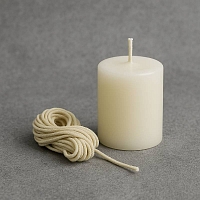
Braided wicks as needed per mold
Melt the paraffin together with the stearic acid in a double boiler until fully liquid at around 80 degrees Celsius, then add the blue dye gradually, stirring constantly until the pigment fully dissolves and the color becomes even throughout the mass. Once the desired shade is reached, mix in the fragrance oil and stir again before pouring the wax into silicone pebble-shaped molds with wicks already secured in place. Let the candles cure at room temperature away from drafts for at least six hours, then carefully remove them from the molds and trim the base if needed for a stable finish.