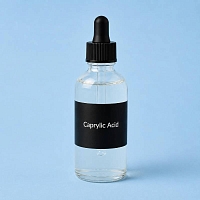
Capric Acid for the Manufacture of Emollients Esters and Functional Lipid Ingredients
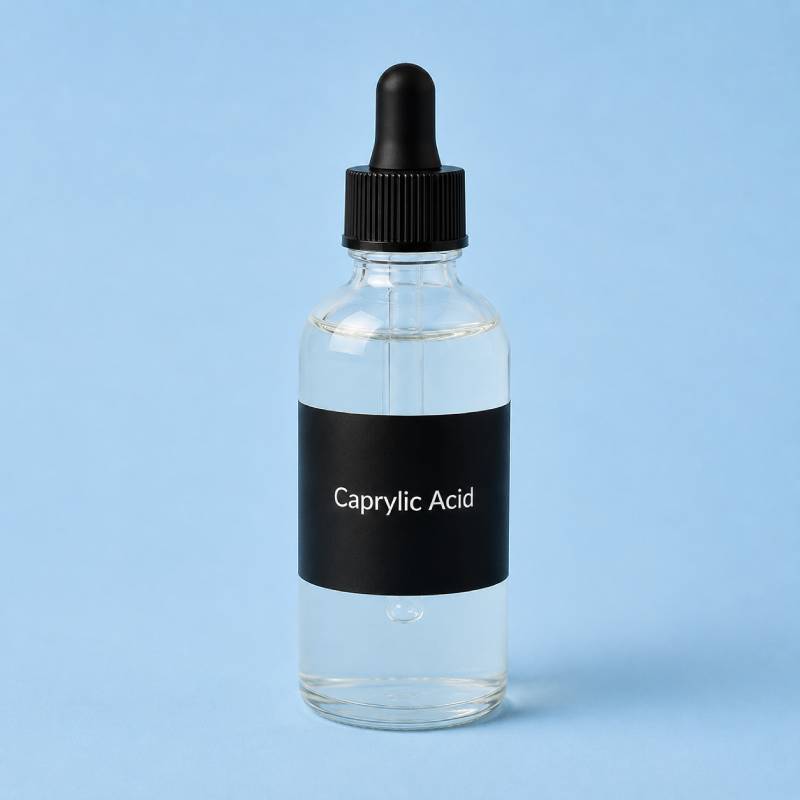
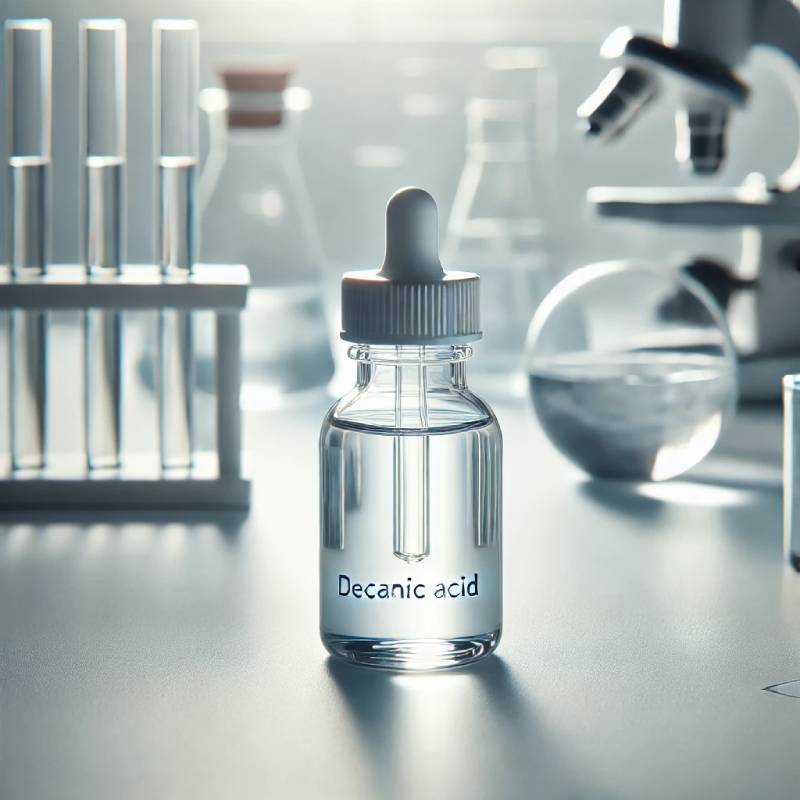
Capric Acid, also known as Decanoic Acid, is a saturated medium-chain fatty acid widely used as an industrial raw material for the production of esters, emollients, surfactants, functional lipids and specialty chemical intermediates. It serves as an important building block for cosmetic, personal care, fragrance, food and industrial manufacturing due to the wide range of derivatives produced from it. The Acids Salts Alcohols Alkalis category offers professional raw materials for cosmetic laboratories, contract manufacturers, research facilities and industrial formulation, including Capric Acid for synthesis and advanced production processes.
Capric Acid has the molecular formula C10H20O2 and belongs to the family of medium-chain fatty acids. Below its melting point it normally appears as a white crystalline or wax-like material, while gentle heating transforms it into a clear liquid suitable for processing. The ingredient has limited solubility in water but demonstrates excellent compatibility with vegetable oils, triglycerides, fatty alcohols and numerous organic solvents, making it highly valuable for industrial manufacturing and formulation development.
The largest global demand for Capric Acid comes from the production of its derivatives rather than direct incorporation into finished formulations. It is widely used as a starting material for esterification, glyceride synthesis, polyglyceryl esters, specialty surfactants and multifunctional emollients utilized throughout the cosmetic ingredient industry. These derivatives are incorporated into skin care, hair care, personal care and premium cosmetic formulations manufactured worldwide.
One of the best-known derivatives is Caprylic/Capric Triglyceride, a lightweight cosmetic emollient produced from caprylic and capric fatty acids. It is commonly formulated into facial creams, serums, body oils, sunscreens, cleansing balms, foundations, makeup products, hair care formulations and luxury skin care systems. Pure Capric Acid and Caprylic/Capric Triglyceride differ considerably in chemical structure, functionality and formulation performance and should not be considered interchangeable ingredients.
Another important derivative is Glyceryl Caprate, produced through the reaction of Capric Acid with glycerin. It is widely utilized as an emollient, multifunctional lipid ingredient and formulation support component in modern cosmetic products. Capric Acid also serves as the starting material for manufacturing polyglyceryl esters, specialty emulsifiers and functional ingredients used in lotions, creams, cleansers, shampoos and advanced personal care formulations.
The fragrance and flavor industries utilize Capric Acid for synthesizing aromatic esters with fruity, creamy, wine-like and tropical sensory profiles. Ethyl Caprate, also known as Ethyl Decanoate, is incorporated into fragrance compositions and flavor systems to create fruity, floral and fermented aroma notes. The final sensory profile depends on the alcohol selected, reaction conditions and raw material purity.
Within the food industry, Capric Acid derivatives are used in specialty lipid systems, emulsifying ingredients, flavor compounds and medium-chain lipid formulations. Only certified food-grade material manufactured according to applicable regulatory standards should be used for food applications. Cosmetic or technical grades are intended for industrial use unless specifically approved for food manufacturing.
Industrial manufacturers employ Capric Acid in the production of specialty esters, lubricants, surfactants, plasticizer intermediates, processing aids and fine chemical building blocks. Its excellent chemical reactivity makes it an important raw material for numerous synthesis routes used throughout the chemical industry.
In cosmetic manufacturing, pure Capric Acid is generally used as a processing intermediate rather than a finished cosmetic ingredient. Unlike neutral carrier oils, free fatty acids may influence formulation pH, lipid phase characteristics, emulsifier performance and long-term product stability. Appropriate compatibility and stability testing should always be completed during formulation development.
Capric Acid demonstrates excellent compatibility with glycerin, fatty alcohols, vegetable oils, triglycerides, waxes, phospholipids, cosmetic emollients, polyols and other fatty acids. During industrial esterification, manufacturers carefully control catalyst selection, reaction temperature, acid value, molar ratios and purification steps to produce high-quality finished ingredients.
Store Capric Acid in tightly sealed containers protected from moisture, excessive heat and direct sunlight. Solidification at lower temperatures is a normal physical characteristic and does not affect product quality. Gentle warming restores the material to a homogeneous liquid state before processing without altering its performance.
Example Laboratory Oil Concentrate
Capric Acid – 3 g
Caprylic/Capric Triglyceride – 41 g
Squalane – 25 g
Jojoba Oil – 20 g
Macadamia Oil – 10 g
Vitamin E – 1 g
Carefully melt the Capric Acid using moderate heat. Add Caprylic/Capric Triglyceride while stirring until a clear homogeneous phase is obtained. Incorporate Squalane, Jojoba Oil and Macadamia Oil. Cool the mixture below 40 °C before adding Vitamin E and mix thoroughly. The resulting concentrate may be used for laboratory compatibility, sensory evaluation and formulation stability testing prior to the development of finished cosmetic products.
Owing to its exceptional versatility and its importance as a precursor for numerous industrial derivatives, Capric Acid remains an essential raw material for manufacturers of cosmetic ingredients, emollients, specialty esters, surfactants, lipid systems, fragrance ingredients and advanced formulation technologies.