Worldwide delivery  |  Free delivery in all Ukraine from 1899 UAH
Product catalog
Master classes, recipes, tips
AMIGEL rheology guide: Sclerotium Gum in gels emulsions and suspensions
A comprehensive technical formulation guide dedicated to managing rheology in cosmetics using the natural polysaccharide AMIGEL (Sclerotium Gum). This article explores the physical mechanisms of polymer hydration and network formation for structuring clear gels, light emulsions, and particle-suspending fluids. It covers pre-dispersion in polyols, electrolyte stability, shear rate handling, incompatibility limits, thermal limits, and precise pH controls. Features three complete DIY recipes with step-by-step compounding instructions and cold storage standards.
Natpure Film AP: natural film-forming technology for skin color cosmetics and hair
A comprehensive technical formulation guide dedicated to utilizing the bio-based film former Natpure Film AP (derived from sugar cane) in color cosmetics and hair care. This article breaks down the physical mechanics of flexible film creation, moisture resistance, and pigment adhesion enhancement. It covers aqueous dissolution protocols, compatibility with natural polymers and gums, thermal boundaries, and precise pH controls. Features three complete DIY recipes with step-by-step compounding instructions and storage standards.
ViableCare LipoCare 8: integrating a liposomal ceramide complex into barrier-care formulas
A comprehensive technical formulation guide to designing skin barrier restoration creams and liposomal fluids using ViableCare LipoCare 8. This article breaks down the physiological mechanism of ceramide integration into stratum corneum lipids to stop transepidermal water loss. It details exact processing protocols to protect liposomal structures, low-shear cooling phase entry below thirty degrees Celsius, emulsifier compatibility, and pH boundaries. Features three complete DIY recipes with step-by-step compounding instructions and cold storage standards.
Product Description

Calcium Hydrogen Phosphate: A Gentle Yet Effective Ingredient for Oral Care

Calcium hydrogen phosphate is a versatile and safe cosmetic ingredient that offers a range of benefits, particularly for oral care products. As a member of the calcium phosphate family, it provides mild abrasive and polishing properties, making it an ideal choice for toothpastes and other dental care products.

The Benefits of Calcium Hydrogen Phosphate in Cosmetics

  • Mild Abrasion: Calcium hydrogen phosphate's gentle abrasive properties help remove surface stains and plaque without causing damage to tooth enamel.
  • Polishing Action: It can polish the tooth surface, giving it a smoother and more lustrous appearance.
  • Mineral Source: As a calcium phosphate, it provides an additional source of minerals that can contribute to the remineralization of hard dental tissues.
  • Enhanced Fluoride Effect: Calcium hydrogen phosphate can enhance the effectiveness of fluoride in preventing tooth decay.
  • Versatility: This ingredient can be used in various cosmetic formulations, including toothpastes, mouthwashes, and dental powders.

Applications of Calcium Hydrogen Phosphate in Cosmetics

  • Toothpastes: Calcium hydrogen phosphate is a common ingredient in toothpastes, where it provides a gentle cleansing and polishing action. It can be combined with other abrasive agents, such as silica or alumina, to achieve the desired level of abrasiveness.
  • Mouthwashes: Calcium hydrogen phosphate can be added to mouthwashes to help prevent plaque buildup and freshen breath. It can also be combined with fluoride for added protection against tooth decay.
  • Dental Powders: Calcium hydrogen phosphate can be used as a key ingredient in dental powders, providing a gentle abrasive and polishing action.

Cosmetic Recipe: DIY Toothpaste with Calcium Hydrogen Phosphate

Ingredients:

  • 1/4 cup glycerin
  • 1/4 cup xylitol
  • 1/4 cup calcium hydrogen phosphate
  • 1 tablespoon bentonite clay
  • 1 teaspoon peppermint essential oil
  • 1/2 teaspoon spearmint essential oil

Instructions:

  1. In a small bowl, combine the glycerin, xylitol, calcium hydrogen phosphate, and bentonite clay.
  2. Stir until well combined.
  3. Add the peppermint and spearmint essential oils and stir again.
  4. Transfer the mixture to a small jar with a lid.
  5. Store in a cool, dry place.

Note: This is a basic recipe for toothpaste. You can customize it by adding other ingredients, such as fluoride, baking soda, or essential oils of your choice.

By incorporating calcium hydrogen phosphate into your oral care products, you can enjoy the benefits of a gentle yet effective cleanser that promotes healthy teeth and gums.

Characteristics:
INCI Dicalcium Phosphate
Other
Application Cosmetics: It is used in toothpastes as a soft abrasive for cleaning teeth without damaging the enamel. In decorative cosmetics, it is used as a filler for powders and other products, improving their texture and distribution on the skin. As a stabilizer and viscosity regulator, it improves the homogeneity of cosmetic formulas. Pharmaceuticals: It is widely used as a filler for tablets due to its stability and compatibility with active substances. It ensures good binding and pressing of tablets. It can be used in vitamin and mineral supplements as a source of calcium and phosphorus. Food industry: It is used as a food additive (E341) to enrich products with calcium and phosphorus. It is found in dairy products, breakfast cereals, bread and confectionery. In animal feed, it serves as a source of minerals necessary for bone tissue.
Att brand Germany
Attention All information presented on the site is for reference only, it is recommended to test for an individual reaction before use.
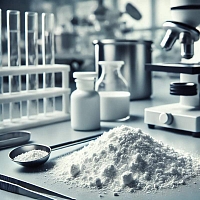
Color product White or slightly grayish powder
Dosage Cosmetics: In toothpastes and powders: from 20% to 50%. In decorative cosmetics and skin care products: from 1% to 10%. Pharmaceuticals: In tablets and capsules: from 30% to 80%, depending on the composition. Food industry: In food products and supplements: depending on the recipe, the dosage can be from 0.5% to 5%.
Features Mandatory testing for sensitivity and allergic reaction, preliminary application to the bend of the elbow
Name Calcium hydrophosphate, 1 kg
Packaging container for transportation
Packing 1 кг
Properties Abrasive properties: In the production of toothpastes and powders, dicalcium phosphate is used as a mild abrasive. It effectively removes plaque without damaging the enamel due to its fine crystalline structure. This is one of its key applications in the production of oral care products. Filler and binder: In the production of tablets and capsules, dicalcium phosphate is used as a filler and binder. It is easily pressed, which facilitates the creation of tablets with the necessary physical properties, such as strength and stability. In cosmetics and decorative products, such as powders and eyeshadows, dicalcium phosphate is used to improve the texture and distribution of the product on the skin. Mineral additive: In the food industry and in the production of animal feed, dicalcium phosphate is used as a mineral additive, enriching products with calcium and phosphorus. This is important for maintaining healthy bones and teeth in humans and animals. In animal feed, dicalcium phosphate is used to strengthen the skeletal system and improve growth. Stabilizer and viscosity regulator: In cosmetics production, dicalcium phosphate can act as a stabilizer to maintain texture and improve mixture homogeneity. It prevents caking and clumping in powder products. In the production of creams and lotions, it is used to regulate viscosity, improving the texture of the finished product. Thermal and chemical stability: Dicalcium phosphate has high thermal and chemical stability, which makes it suitable for use in products that require high resistance to heat or exposure to other chemicals. Non-hygroscopicity: Dicalcium phosphate does not absorb moisture from the environment, which is important for maintaining product stability during production and storage. This is especially important in the production of powders and dry mixtures, where it is important to avoid sticking or clumping. Safety and environmental friendliness: Dicalcium phosphate is non-toxic and safe for use in the production of cosmetics, pharmaceuticals and food products. It does not have a negative impact on the environment and is an environmentally friendly material.
Purpose Calcium hydrogen phosphate (dicalcium phosphate, Dicalcium Phosphate) is an inorganic compound, which is a salt of calcium and phosphate, which is used in cosmetics, pharmaceuticals and the food industry due to its chemical properties. Calcium hydrogen phosphate is safe for use in cosmetics, food and pharmaceuticals. It does not cause irritation and allergic reactions, which makes it a universal ingredient for many products. This ingredient is widely used due to its stability, neutrality and safety.
Solubility Poorly soluble in water, better soluble in acidic solutions
Storage conditions in a cool, dry, dark place
View powder
Valid until 08.2028
Reviews (1) Add a review
Product rating:
  • Date:
    today
    Author:
    Лариса, Цюрих
    Reviews

    Дуже вдячна за вашу роботу.

    Is the review useful? Yes (0) No (0)
Add a review
Your score:
Send feedback
Error

Close window
Product added to cart
Total:
Request the price of the product
Fill in the details for the price request
Request a price Request a price