Hydrogenated Palm Glycerides Citrate as a Professional Emulsifier and Lipid Modifier in Advanced Cosmetic Formulations
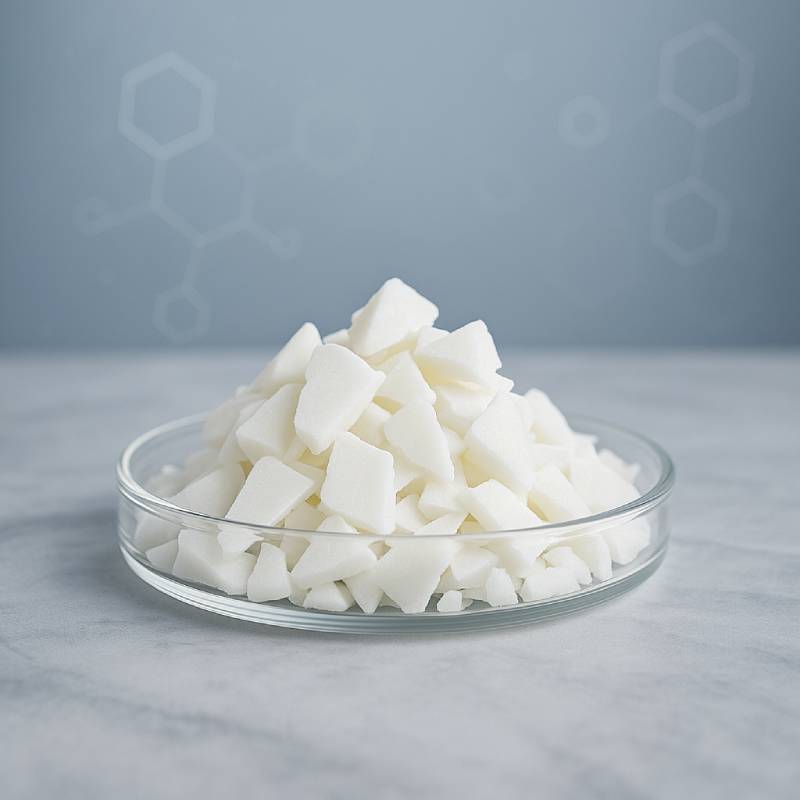
The modern cosmetic industry relies on sophisticated functional ingredients that provide both structural stability and enhanced sensory profiles. Hydrogenated Palm Glycerides Citrate stands out as a high-performance, multifunctional ester that plays a pivotal role in the creation of stable oil-in-water emulsions. Derived from sustainable palm oil through a precise process of hydrogenated glyceride modification and subsequent citric acid esterification, this ingredient serves as a versatile non-ionic emulsifier and viscosity modifier. Professional formulators and B2B manufacturers value this component for its ability to create smooth, elegant textures while ensuring that the internal phase of an emulsion remains dispersed throughout the product's shelf life. By serving as an efficient stabilizer, it prevents the separation of oily and aqueous phases, even in formulations containing difficult-to-emulsify actives or varying concentrations of botanical oils.
This ingredient integrates seamlessly into various cosmetic applications, providing a reliable foundation for both high-end luxury skincare and basic body care products. Its unique molecular structure, which combines hydrophobic lipid chains with hydrophilic citrate groups, allows it to act as a bridge between oil and water, ensuring a uniform distribution of fatty acids, triglycerides, and active additives. Beyond its technical role as a stabilization agent, it imparts a distinct soft-touch skin feel, contributing to the premium sensory experience often sought in modern skincare formulations. Its presence in a formula also assists in improving the spreadability of creams and lotions, allowing for a faster absorption rate without leaving a greasy or tacky residue.
Functional Roles and Application in Professional Cosmetic Chemistry
In the broader context of cosmetic chemistry, Hydrogenated Palm Glycerides Citrate acts as a structural foundation for complex lipid systems. It effectively coordinates the behavior of other lipid-based ingredients, such as natural waxes, plant-derived fatty alcohols, and various emollients. Because it facilitates the formation of smaller droplets during the emulsification process, it contributes to a finer particle size distribution within the cream or lotion, which directly correlates to a longer product lifespan and enhanced textural appeal. Manufacturers utilize this ingredient to maintain the stability of products that include sensitive botanical extracts, ensuring that the active profile remains consistent from the first application to the last.
Its application is particularly widespread in the formulation of delicate face creams, body milks, and soothing lotions. In these formulas, it helps to balance the lipid profile, ensuring that essential fatty acids are delivered efficiently to the skin barrier. Because it is chemically stable and non-reactive with most common cosmetic ingredients, it is frequently chosen for use in clean beauty projects that aim to minimize the number of required additives while maximizing functional performance. Furthermore, its role in modern formulation is not limited to mere stabilization; it also contributes to the barrier-repair properties of finished products, helping to mitigate transepidermal water loss and keep the skin feeling supple and deeply hydrated.
Versatile Use Across Cosmetic and B2B Manufacturing Sectors
The demand for Hydrogenated Palm Glycerides Citrate is robust across global B2B markets, largely due to its predictable behavior in large-scale production environments. Contract manufacturing facilities and private label brands prefer this emulsifier for its ease of use in both hot and cold processing methods. In industrial skincare manufacturing, it is a staple for producing large batches of moisturizing lotions where consistency and batch-to-batch reproducibility are of utmost importance. Its role in supporting the structural integrity of creams makes it a preferred choice for companies looking to develop diverse product lines, ranging from basic skincare to intensive therapeutic emulsions.
In addition to skincare, it finds application in specialized hair care products where a light, non-greasy lipid profile is necessary. By incorporating this ester, formulators can develop conditioning treatments that provide moisture and manageability without weighing down the hair strands. The ingredient's versatility extends to household care products, specifically in high-quality fabric softeners or specialized surface cleaners that require a stable lipid-based film to provide protection and a desirable sensory finish. Its broad compatibility profile makes it an essential tool for any manufacturer looking to streamline their ingredient inventory while maintaining the highest standards of formulation quality and performance.
Formulation Template for a Stable Lipid-Rich Barrier Cream
This recipe demonstrates the structural stabilization capabilities of Hydrogenated Palm Glycerides Citrate in a professional-grade moisturizing cream.
Distilled water 75 ml Hydrogenated Palm Glycerides Citrate 6 grams Cetyl alcohol 3 grams Sweet almond oil 8 ml Shea butter 5 grams Vegetable glycerin 3 ml Broad-spectrum liquid preservative 1 ml
To prepare this cream, combine the water and vegetable glycerin in one container and heat to seventy degrees Celsius. In a separate heat-resistant vessel, combine the Hydrogenated Palm Glycerides Citrate, cetyl alcohol, sweet almond oil, and shea butter, heating until fully melted. Slowly add the oil phase into the water phase while using a high-shear mixer to initiate emulsification. Continue mixing at a reduced speed until the cream begins to thicken and reaches a temperature of forty degrees Celsius. At this point, add the preservative, stirring thoroughly to ensure even distribution. Once cooled to room temperature, the result is a rich, stable, and highly emollient cream that features a sophisticated, non-greasy finish. The Hydrogenated Palm Glycerides Citrate ensures that the lipid and water phases remain perfectly integrated, while the combination of shea butter and almond oil provides deep nourishment and long-term barrier support for the skin.