Why laboratories and industrial plants rely on high purity benzene
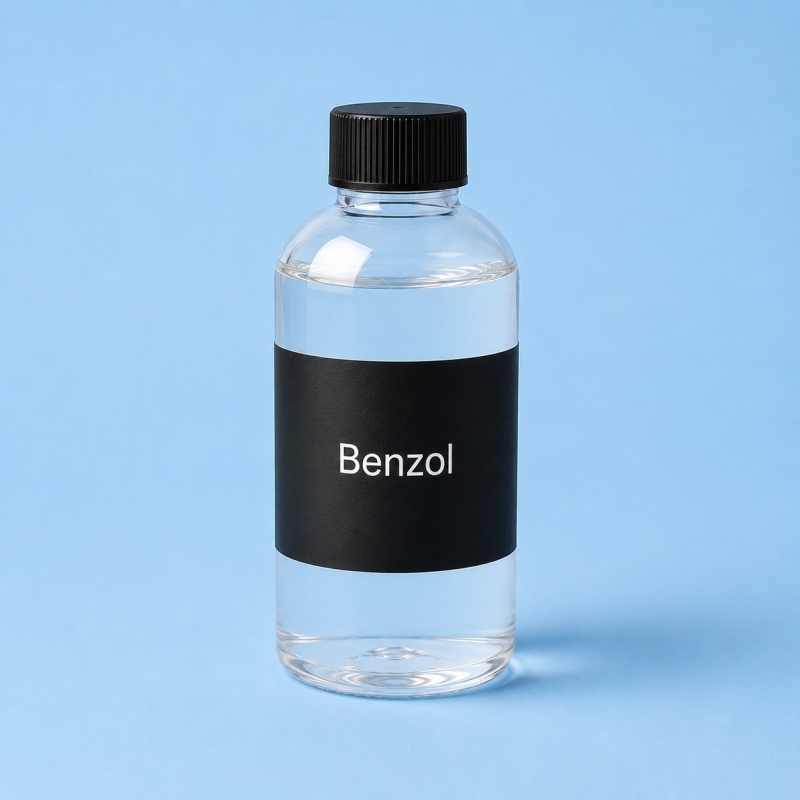
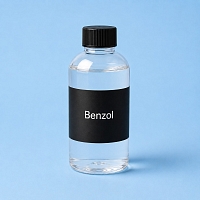
Reagent grade benzene supplied in a 1 L bottle belongs to the Chemical Raw Materials section, which brings together reagents and solvents intended for precise analytical and production tasks. The reagent grade label means a minimal level of impurities, so this benzene is chosen wherever result reproducibility matters more than convenience — in analytical laboratories, research institutes, organic synthesis facilities and manufacturing lines where the solvent acts as a reference standard or reaction medium.
Globally, benzene remains a foundational feedstock for producing styrene, phenol, cyclohexane and numerous other compounds used across the chemical and polymer industries. In analytical chemistry it serves as a comparison standard and mobile phase in chromatographic methods, and it is also applied for extracting fatty and resinous components from raw material samples during quality testing. On an industrial scale, benzene functions as a solvent for lacquers, rubbers, certain polymers and adhesive formulations, and it is used in refining processes to remove impurities from technical oils.
When handling this reagent, compatibility with other substances kept on the same shelf matters. To obtain anhydrous benzene needed for precise synthesis work, drying agents are commonly used — for instance, Calcium Chloride 25 kg effectively binds residual moisture without reacting with the solvent itself. If traces of alkali remain in a reaction mixture after washing, Citric Acid, 25kg is often used for gentle neutralization, bringing the medium to the required level without harsh acids. Benzene is also applied in laboratory work to dissolve fatty and waxy substances — for example, when studying the properties of components such as Lanolin Flakes 25 kg, which dissolves readily in nonpolar media, a property useful during fat fraction analysis.
Dosage in synthesis depends on the specific protocol: the solvent is typically introduced at a ratio of five to ten parts by volume per one part by mass of the starting reagent, during the dissolution or extraction stage at room temperature, or under reflux heating up to around eighty degrees Celsius when the reaction requires elevated temperature. Work with this reagent should always take place under a fume hood, with gloves and respiratory protection, since the vapors are volatile and toxic upon prolonged inhalation.
Store benzene in tightly sealed containers made of dark glass or metal, in a cool, well ventilated area, away from open flames, oxidizing agents and direct sunlight. The 1 L packaging is convenient for small laboratories, educational institutions, research teams and trial synthesis batches before scaling a process up to industrial volumes, allowing a protocol to be tested without purchasing a large quantity.
Preparing anhydrous benzene for precision synthesis
Reagent grade benzene 1000 ml
Anhydrous calcium chloride 30 g
Pour
the entire volume of benzene into a dry, clean flask, then add the calcium
chloride granules and seal the container tightly with an airtight cap. Let the
mixture stand for at least twenty four hours at room temperature, gently
swirling it occasionally to ensure even contact between the drying agent and
the solvent. Once the drying period is complete, decant the moisture free
benzene through a dry filter into a clean, dry container and use it for further
synthesis or extraction work where an anhydrous medium is essential.