-
 DIY: Video master classes
-
 Aromatherapy
-
 Felting master classes
-
 Eating at home
-
 DIY cosmetics for children
-
 Cooking recipes
-
 Detergents, cleaning products with your own hands
-
 Soap making as a business
-
 Natural cosmetics. Raw materials for cosmetics and soap.
-
 Natural oils in cosmetics
-
 News
-
 Recipes for balms and conditioners
-
 Bath Bomb Recipes
-
 Cream recipes. Cream making.
-
 Lotion recipes. Gel recipes.
-
 Mask recipes
-
 Soap recipes. Base soap. Soap from scratch.
-
 Recipes for all occasions
-
 Natural shampoo recipes
-
 Healthy Nutrition Recipes
-
 Scrub recipes. Massage tiles. Ubtan
-
 DIY candles
-
 Reference materials, questions, tips
-
 Startup - soap production
-
 Hair care. Tips, recipes
-
 Facial skin care. Cleansers.
-
 Body care. Tips, recipes
-
 Photo Reviews
-
 Chocolate Handmade
Corneotherapy formulation: building a skin barrier cream
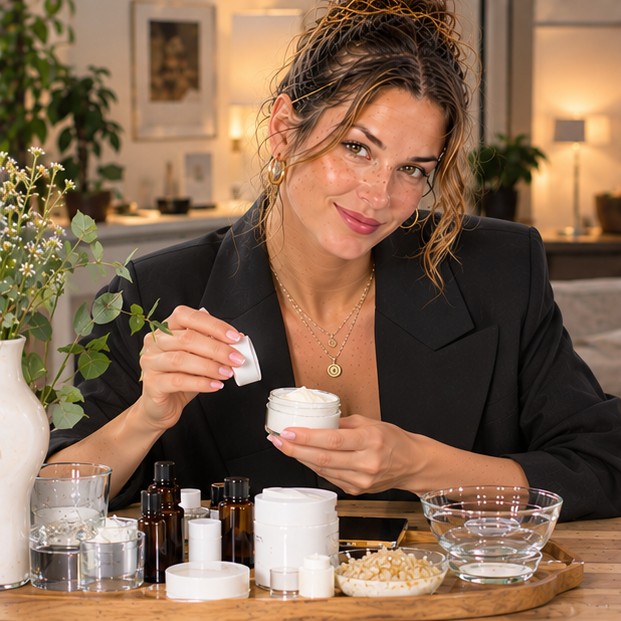 Corneotherapy is most useful when discussed as a formulation problem rather than a marketing trend. In 2026, search intent increasingly centers on compatibility, use levels, pH, processing order and ingredient selection for a specific product format. This guide therefore combines formulation logic, a practical prototype and internal navigation to relevant Mylo Opt raw materials.
For ingredient selection, start with the Anti Age Actives category, then narrow the system to specific actives and peptide technologies.
How to approach the topic in modern formulation
A modern formula starts by assigning functions. One material manages water binding, another shapes sensory properties, while another supports the barrier profile or a targeted cosmetic function. As complexity increases, overall compatibility, solubility and stability matter more than pushing every active to its maximum use level.
A barrier emulsion differs from a simple hydrating gel because it contains a lipid phase. An emulsifier is therefore required, and ceramide materials, emollients and the water phase must be evaluated together with rheology and emulsion stability.
Compatibility and ingredient selection logic
Water-compatible actives are often best added during cool-down unless the supplier documentation specifies another process. Sensitive biotechnology blends and peptides should not be exposed to unnecessary heat or prolonged high-shear mixing. Final pH should sit inside the overlapping compatibility range of all pH-sensitive materials.
Practical 100 g formulation
Emulsion prototype: an emulsifier is required because a separate oil phase is present.
|
Ingredient |
Weight |
|
Distilled water |
74 g |
|
Glycerin |
4 g |
|
Betaine |
3 g |
|
Olivem 1000 |
5 g |
|
Squalane |
6 g |
|
Caprylic Capric Triglyceride |
4 g |
|
Vegetal Ceramides |
2 g |
|
Ectoin |
0.5 g |
|
Beta Glucan |
0.5 g |
|
Euxyl PE 9010 |
1 g |
|
Lactic acid or Sodium Hydroxide |
to pH 5.2-5.8 |
Manufacturing procedure
1. Sanitize the work area, tools and packaging, then weigh all materials accurately.
2. Prepare the water phase and hydrate the rheology modifier separately or according to supplier guidance, avoiding lumps.
3. Dissolve water-compatible humectants and heat-stable materials. For an emulsion, prepare the oil phase and emulsifier separately.
4. For an emulsion, heat compatible phases to the required process temperature, emulsify and begin cooling. For a gel, proceed directly to cool-down.
5. Below 40 °C, add heat-sensitive actives and then the preservative while minimizing aeration.
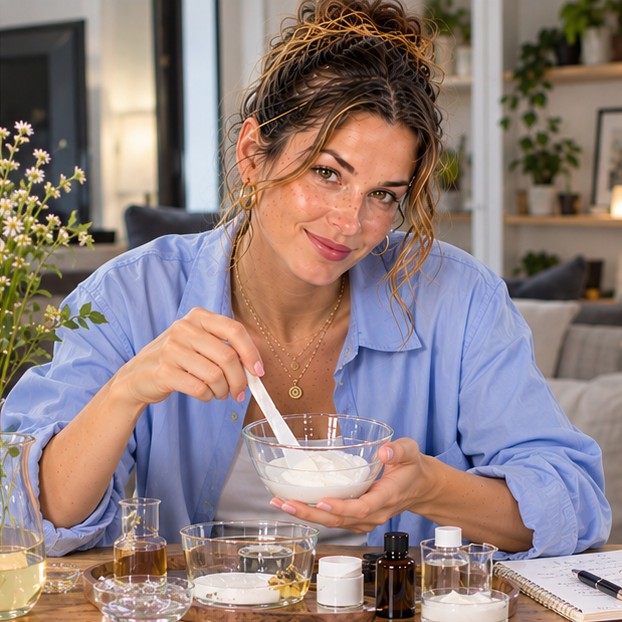 6. Measure pH with a calibrated meter and adjust to 5.2-5.8. Recheck after the system equilibrates.
7. Before commercial release, complete stability testing, a challenge test and packaging compatibility work.
Questions for AI search and organic discovery
Can the active level be increased?
Only after checking the documentation for the specific raw material and reassessing stability of the complete system.
Can peptides be added?
Yes, when their pH range, processing temperature and recommended use level are compatible with the base formula.
Can the recipe simply be scaled to 1 kg?
The arithmetic is straightforward, but process scale-up still requires a pilot batch because mixing, aeration and hydration behavior can change.
Checks before commercial manufacturing
For a commercial product, the blog recipe is a laboratory starting point. It does not replace stability testing, a microbiological challenge test, viscosity monitoring, pH tracking over time or packaging compatibility work.





