-
 Absolutes
-
 Active Complexes
-
 Actives & Peptides
-
 Amino Acids & Proteins
-
 Food Flavors
-
 Ayurvedic Ingredients & Herbs
-
 Vitamins & Coenzymes
-
 Chocolate Making Supplies
-
 Thickeners & Gelling Agents
-
 Hydrosols & Floral Waters
-
 Hydrolyzed Proteins
-
 Fragrance Ingredients
-
 Nutraceutical Ingredients
-
 Acids, Salts, Alcohols & Alkalis
-
 Preservatives & Antioxidants
-
 Cosmetic Ingredients
-
 Colorants, Micas & Glitters
-
 Masks, Scrubs & Botanicals
-
 Oils & Butters
-
 Candle Making Supplies
-
 Melt and Pour Soap Bases
-
 Cream, Lotion & Hair Care Bases
-
 Fragrance Oils & Industrial Aromatics
-
 Cleansing Agents & Surfactants
-
 Peeling Actives & Acids
-
 Cosmetic Powders
-
 Solvents & Humectants
-
 Silicones & Conditioning Agents
-
 Bottles, Jars & Vials
-
 Silicone & Plastic Molds, Tools
-
 Botanical Extracts
-
 Cosmetic Emollients
-
 Emulsifiers
-
 Essential Oils
- Silicone geometric molds 11
- Wooden molds for soap 9
- Fondant Tools 9
- Compound for molds 35
- Metal baking molds 27
- World of Forms 286
- Silicone Molds 72
- Plastic chocolate molds 128
- Plungers and Cutters 40
- Silicone Portion Molds 20
- Silicone 3D Molds 712
- Silicone Baking Molds 36
- Silicone soap loaf molds 6
- Bath bomb molds 13
- Candy Molds 118
- Plastic soap molds 274
- Candle Molds 51
- Silicone 3D Luxury Molds 711
- Silicone forms 241
- Silicone mold trays for baking 218
- Soap stamps 38
- Plastic soap molds wholesale 9
- Paper baking molds 22
- Cookie cutters and gingerbread molds 61
- Mousse cake and dessert molds 8
- Cheese molds 5


Wooden molds for soap

 Add to cart

 Subscribe


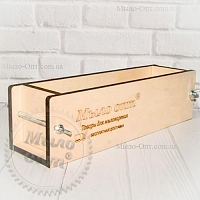


Reusable wooden frames for cold process and craft bars
This section covers wooden molds used to shape loaf style bars during production, giving craftspeople a sturdy frame that holds its form through curing and cooling. The wood insulates the mixture as it sets, which many makers value for slower, more even cooling compared to metal or plastic frames. Sizes and depths vary, so batches can be scaled from a single test loaf to a larger run cut into multiple bars afterward.
These frames work well for makers who prefer straight edged, log style bars that get sliced into uniform pieces once firm. Alongside wooden molds, the catalog includes plastic soap molds for makers who want flexible, quick release shapes instead of the loaf format. For shaped novelty pieces rather than sliced bars, bath bomb molds offer a different structure entirely, built for compressed rather than poured mixtures.
Wood grain and depth variations
Not every wooden frame is built the same way. Some are simple open ended boxes meant to sit on a flat surface, while others come with a removable base or divider inserts that let one frame produce several narrower loaves at once. Panel thickness and joinery quality affect how well a frame resists bowing once filled, which matters most on longer runs.
Depth is another variable worth checking before ordering. A shallower frame suits thinner bars or layered pours, while a deeper box is better suited to taller loaves that get sliced into thicker portions. Compared with rigid silicone forms, wood offers less flexibility for release but more structural stability for heavier pours that need to hold their shape while still soft.
Matching the frame to the mixture and workflow
Choosing between a wooden frame and other mold types usually comes down to volume and finish. Makers running small test batches often prefer a compact wooden box, while larger production lines lean toward multi cavity trays. For anyone wanting shaped rather than sliced output, silicone molds and silicone baking molds can be a better fit than a loaf frame.
Once a loaf has firmed up, cutting it into even bars is its own step, and tools like a soap beveler help clean up the edges after slicing. For detailing individual pieces rather than shaping the whole loaf, plungers and cutters add stamped patterns or trim uniform shapes from softer material. Makers working across several product lines sometimes keep wooden loaf frames alongside candle molds for pillar style pours, since both rely on a rigid outer wall during setting.
Sourcing and care
Frames in this section are sourced from Poland, and the wood is typically left untreated on the inside so it can be lined with paper or a liner rather than releasing product directly against bare wood.
Between uses, frames should be kept dry and away from direct heat to prevent warping or splitting along the seams. For projects that call for finer surface detail or a glossy finish, silicone 3D luxury molds or silicone portion molds handle intricate shapes that a flat panel frame cannot reproduce, making the two mold families complementary rather than interchangeable in a working studio.
FAQ
What size wooden mold works best for a first batch of loaf bars
A smaller frame, sized for a single narrow loaf, is a practical starting point for testing a new formula or cutting technique. Once pouring volume and cooling time are familiar, a larger multi bar frame or a divided insert can scale the same layout up without changing the basic process.
How do wooden molds compare to plastic or silicone options for bar production
Wood insulates better, so a poured mixture in a wooden frame tends to cool and firm more slowly and evenly than in a thin plastic or metal frame. Plastic and silicone molds release shaped pieces faster and are easier to wipe clean, while wood suits makers who prioritize a controlled, gradual set over quick turnaround.
Can the same wooden frame be used for candles, chocolate, or other poured mixtures
Yes, a rectangular wooden frame is a general purpose shaping tool and works for any pourable mixture that needs to firm into a loaf before slicing, including wax blends, chocolate, or bar shaped bath and body products. The wood itself does not react with the poured material during setting.
How should a wooden loaf mold be cared for between uses
Keep the frame dry and away from prolonged moisture exposure, since untreated wood can warp or crack over repeated wet cycles. Lining the interior before each pour protects both the finished piece and the wood surface, and storing frames flat in a low humidity space helps the joinery hold up over many batches.
Recommendations
Match the frame size to your actual batch volume rather than buying the largest option available, since an oversized mold makes thin, uneven loaves harder to slice cleanly. Check panel thickness and joinery on any wooden frame, as thin walls or loose corners tend to bow once filled with a heavier poured mixture. For details on available sizes, depths, or divided insert options, reach out by email and we will help match a frame to your production scale.



