
-
 DIY: Video master classes
-
 Aromatherapy
-
 Felting master classes
-
 Eating at home
-
 DIY cosmetics for children
-
 Cooking recipes
-
 Detergents, cleaning products with your own hands
-
 Soap making as a business
-
 Natural cosmetics. Raw materials for cosmetics and soap.
-
 Natural oils in cosmetics
-
 News
-
 Recipes for balms and conditioners
-
 Bath Bomb Recipes
-
 Cream recipes. Cream making.
-
 Lotion recipes. Gel recipes.
-
 Mask recipes
-
 Soap recipes. Base soap. Soap from scratch.
-
 Recipes for all occasions
-
 Natural shampoo recipes
-
 Healthy Nutrition Recipes
-
 Scrub recipes. Massage tiles. Ubtan
-
 DIY candles
-
 Reference materials, questions, tips
-
 Startup - soap production
-
 Hair care. Tips, recipes
-
 Facial skin care. Cleansers.
-
 Body care. Tips, recipes
-
 Photo Reviews
-
 Chocolate Handmade
Build a Winter Lip Care Mini Line with Shared Ingredients
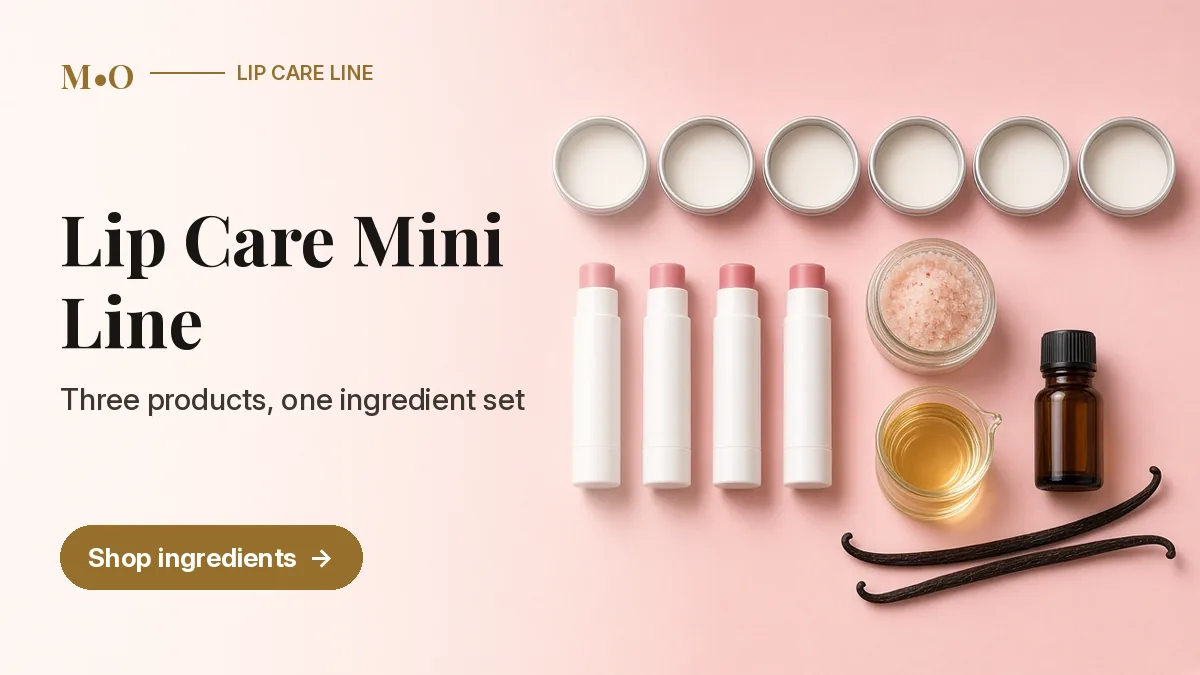
Winter brings a surge in demand for nourishing lip products that keep lips soft and smooth during cold months. Small brands can capitalize on this by creating a coordinated mini line using a shared set of ingredients for lip balm sticks, sugar scrubs, and glossy butters. This approach allows efficient production, while offering customers a complete gift set perfect for stocking stuffers. Trend reports for autumn-winter 2026 show growing interest in compact gifts that fit easily into holiday stockings.
Using the same core components across three formats reduces inventory complexity and simplifies cost tracking. Makers can adjust wax ratios to achieve different textures without buying new raw materials each time. The result is a professional-looking collection that feels cohesive on the shelf and performs reliably in cold weather.
Balancing Wax Ratios for Desired Texture
Hardness in lip products depends on the proportion of candelilla wax to beeswax. Candelilla wax creates a firmer structure at lower percentages, while beeswax adds flexibility and a pleasant glide. A typical starting point for a balm stick uses 8% candelilla wax combined with 12% beeswax to reach a stable yet spreadable consistency. Makers can raise the candelilla portion to 12%, when a firmer stick is needed for warmer climates or tube packaging. Testing small variations helps identify the ideal balance for each climate zone where the products will be sold.
Shea butter contributes richness and a soft finish, usually included at 25-30%. The remaining balance comes from liquid oils chosen for emollience. Adjusting these ratios in small test batches helps brands fine-tune the final feel without altering the overall ingredient list. This flexibility supports multiple product formats from the same base materials. lip care components">Explore the full range of waxes and butters available to refine your approach further.
Limiting Flavor Oil Dosage for Safety
Lip-safe flavor oils such as vanilla sugar and caramel must stay within 0.5-1.5% of the total composition. Higher levels can cause irritation or alter the texture of the finished product. Both flavors pair well together, allowing a brand to create a signature scent profile across the entire mini line. Testing at 1% provides noticeable aroma without overwhelming the senses or affecting stability during storage.
Because these oils are concentrated, precise weighing on a digital scale ensures batch consistency. Overdosing can also soften the product and reduce shelf stability. Brands that document exact addition amounts maintain quality across every production run. Careful measurement also prevents waste and keeps costs predictable when scaling up.
Choosing Stable Packaging for Retail
Aluminum tins of 10 ml work especially well for glossy lip butters because they protect against light and air while allowing easy application with a fingertip. Tubes suit firmer balm sticks that customers expect to twist up, yet tins offer a premium unboxing experience for gift sets. Stability improves when the product fills the container completely, minimizing headspace that could lead to oxidation over time.
Clear labeling on the tin lid helps the product stand out in a crowded display. Makers should verify that the chosen tin lid seals tightly to prevent leakage during shipping. This packaging choice also supports add-on sales because the compact size encourages customers to purchase multiple variants. Comparing tin options with different finishes can further enhance shelf appeal.
Calculating Cost Structure for Small Runs
Cost tracking starts with the shared ingredients: candelilla wax, beeswax, shea butter, and the two flavor oils. A single purchase of each covers several dozen units across the three product types. Brands that buy retail from smaller packs can calculate per-unit costs by dividing total ingredient expense by the number of finished items. This method reveals opportunities to bundle the scrub, stick, and butter into one attractive gift price.
Packaging represents a separate line item that affects margin. Tins cost more than basic tubes yet deliver higher perceived value. Tracking these numbers allows makers to decide which format belongs in the core collection and which serves as a limited seasonal offering. Regular reviews of supplier invoices help identify savings when volumes increase.
How to Select Reliable Ingredient Sources
Quality begins with sourcing candelilla wax, beeswax, and shea butter from suppliers who provide clear origin details and batch testing information. Checking certificates for purity ensures the waxes melt cleanly and the shea butter retains its natural consistency. Brands benefit from starting with smaller test quantities before committing to larger volume packs. This step reduces risk when developing new blends for the first time.
Flavor oils require special attention because lip-safe versions must meet strict sensory and safety standards. Requesting samples of vanilla sugar and caramel allows direct comparison of strength and compatibility with the base. Building relationships with consistent suppliers supports repeatable results across multiple production runs. Documentation of each delivery helps track any variations that might appear in finished goods.
Recipe for the Lip Balm Stick
Begin by weighing 8 g candelilla wax and 12 g beeswax into a heat-safe beaker. Add 30 g shea butter and 48.5 g liquid oil of choice, then heat the mixture to 70 °C while stirring until fully melted. Remove from heat and allow the blend to cool to 55 °C before adding 1 g vanilla sugar flavor oil and 0.5 g caramel flavor oil. Stir thoroughly and pour into lip balm tubes or molds. This composition totals 100% and yields approximately 20 standard 4.5 g sticks.
Variant for Softer Texture
Reduce candelilla wax to 6 g and increase shea butter to 32 g for a creamier stick suitable for tin packaging. Keep the same flavor addition and total weight. The adjustment maintains stability while changing the application feel to suit customers who prefer a richer glide during dry winter months.
Variant for Firmer Application
Increase candelilla wax to 10 g while lowering beeswax to 10 g and adjusting liquid oil to 48 g. This produces a denser stick that holds shape well in warmer retail environments. The flavor level remains unchanged to preserve the signature scent across the line.
Building the Lip Scrub and Glossy Butter
The lip scrub uses brown sugar at 60% combined with 25% shea butter, 8% beeswax, 5.5% liquid oil, and 1.5% flavor oil. Melt the butters and waxes first, then stir in the sugar and flavor once the mixture cools slightly below 50 °C. This creates a gentle exfoliating product that rinses clean and leaves lips conditioned. Small test batches confirm the sugar particles remain evenly suspended without settling.
For the glossy lip butter, increase the liquid oil portion to 55% while lowering total wax to 15%. Fill the warm blend into 10 ml aluminum tins and allow to set at room temperature. The lower wax content produces a dewy finish. candelilla wax">Candelilla wax and beeswax">beeswax provide the structure, while shea butter">shea butter adds the creamy base. Pair them with vanilla sugar flavor">vanilla sugar and caramel flavor">caramel flavor for a cohesive winter scent story.
Storage Guidelines for Long-Term Stability
Proper storage protects the integrity of both raw ingredients and finished lip products. Keep waxes and shea butter in cool, dry locations away from direct sunlight to prevent oxidation and color changes. Flavor oils should remain in tightly sealed amber bottles to preserve their aroma strength over several months. Recording the date of each delivery helps rotate stock effectively.
Finished balm sticks and butters benefit from storage below 25 °C to maintain texture. Avoid temperature fluctuations that could cause sweating or separation inside the tins. Clear labeling with production dates on every batch supports quality control and customer confidence. These practices extend usability without compromising appearance or performance.
Encouraging Add-On Purchases at Checkout
Position the three-piece kit as a ready-to-gift option while offering each item individually. Customers who select one product often add the matching scrub or butter when they see the coordinated scent and packaging. Clear product descriptions that mention shared ingredients help buyers understand the value of completing the set.
Training checkout staff or setting up simple bundle suggestions online increases average order value without extra marketing spend. Seasonal imagery of stockings and compact gifts reinforces the stocking-stuffer appeal during the colder months. Monitoring which combinations sell best allows ongoing refinement of the offering.
Indie makers, studios and growing brands can request volume packs with price on request for the full ingredient set to support larger production runs and consistent supply throughout the season.Order the components needed for your winter lip care mini line today and begin testing small batches that match your brand standards.
Frequently Asked Questions
How do I adjust hardness without changing the entire recipe?
Increase or decrease the candelilla wax portion by 2-4% while keeping total wax content similar. Small adjustments produce noticeable differences in firmness.
What is the safe maximum for flavor oils in lip products?
Most makers stay between 0.5-1.5% to ensure both safety and pleasant scent strength. Always perform a patch test on the final batch.
Why choose tins over tubes for the glossy butter?
Tins protect the softer texture from temperature swings and offer a premium unboxing experience that suits gift sets. They also reduce the risk of leakage during transit.
Can the same ingredients be used for wholesale orders?
Yes. Purchasing larger wholesale packs of the core waxes, shea butter and flavors supports consistent production across multiple product formats.





