
-
 DIY: Video master classes
-
 Aromatherapy
-
 Felting master classes
-
 Eating at home
-
 DIY cosmetics for children
-
 Cooking recipes
-
 Detergents, cleaning products with your own hands
-
 Soap making as a business
-
 Natural cosmetics. Raw materials for cosmetics and soap.
-
 Natural oils in cosmetics
-
 News
-
 Recipes for balms and conditioners
-
 Bath Bomb Recipes
-
 Cream recipes. Cream making.
-
 Lotion recipes. Gel recipes.
-
 Mask recipes
-
 Soap recipes. Base soap. Soap from scratch.
-
 Recipes for all occasions
-
 Natural shampoo recipes
-
 Healthy Nutrition Recipes
-
 Scrub recipes. Massage tiles. Ubtan
-
 DIY candles
-
 Reference materials, questions, tips
-
 Startup - soap production
-
 Hair care. Tips, recipes
-
 Facial skin care. Cleansers.
-
 Body care. Tips, recipes
-
 Photo Reviews
-
 Chocolate Handmade
How Many Drops of Essential Oil to Add to Cream, Body Oil or Balm?
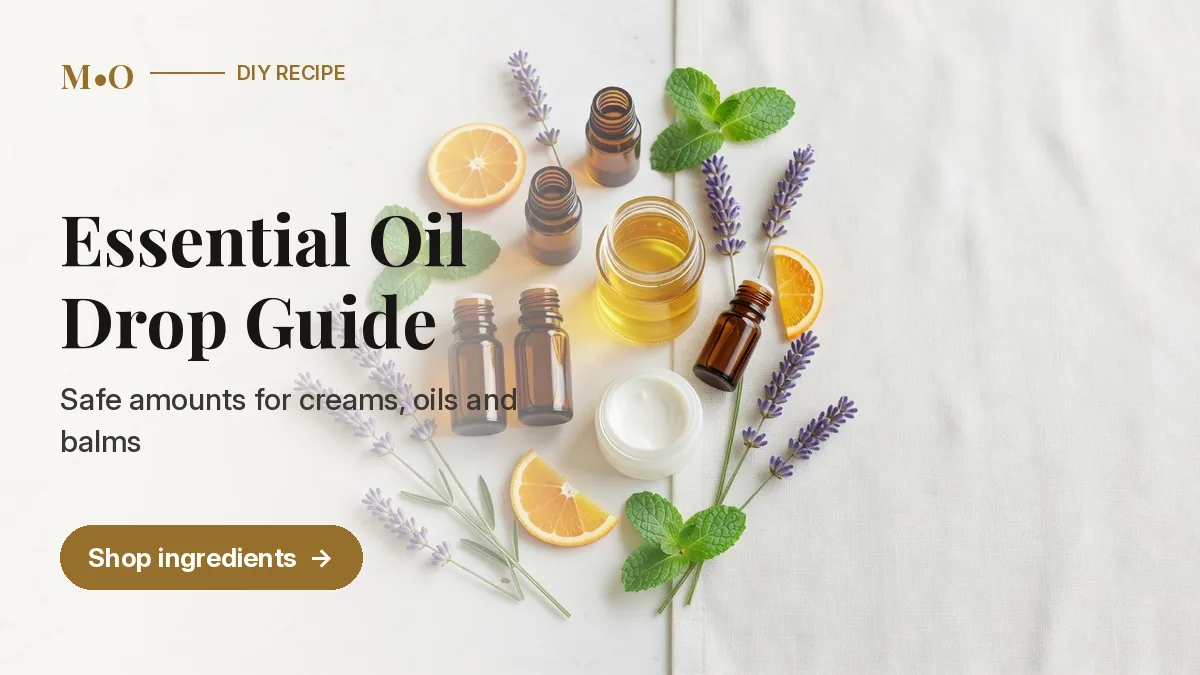
The short answer is to use 0.5 percent essential oil for facial and sensitive products and 1 to 2 percent for body oils and balms in most adult recipes. This keeps the blend comfortable while delivering the desired scent and care qualities. Always measure by weight rather than relying only on drops because drop size varies with temperature and bottle opening.
Why Dilution Percentages Matter
Percentages give a clear and repeatable way to control strength across different batch sizes. Beginners often start with the lowest effective amount and adjust only after testing the finished product on their own skin. This approach supports comfort and reduces the chance of unwanted reactions during daily use. When you follow established ranges you create products that feel pleasant on the skin and maintain their intended qualities over time.
Essential oils are highly concentrated, so even small amounts go a long way when properly dispersed in a carrier. Using percentages also makes it easier to scale a recipe from a small test batch to a larger one without guesswork. Many makers keep a simple notebook where they record the exact weight of each addition so future batches stay consistent.
Building confidence with small tests
Make a 10 ml test batch first and apply it to a small area for several days. Note how the skin feels and how the aroma develops over time. This simple habit helps you understand your personal tolerance before committing to a full-size batch. You can also observe how the product behaves in different temperatures or after a few weeks of storage.
Common starting points for adults
Face and neck products usually stay at 0.5 to 1 percent. Body leave-on products work well at 1 to 2 percent. Short-term massage blends may reach 3 percent when used on healthy adult skin and rinsed or limited in duration. These ranges come from long-standing safety data and allow room for individual variation.
Why Drop Counts Are Only Approximate
One millilitre of essential oil contains roughly 20 drops, yet the exact number changes with the oil’s viscosity and the dropper tip. Temperature also affects drop size, so a cold bottle may release smaller drops than one kept at room temperature. Weighing on a small digital scale removes this uncertainty and gives consistent results every time.
Many makers still count drops for quick small batches, but they verify the final weight whenever possible. Keeping a record of both methods helps refine future work and reduces waste from over-strong mixtures. Over time you learn which oils run thinner or thicker and can adjust your counting habits accordingly.
Practical measurement tips
Use a clean pipette or the bottle’s own dropper and count slowly. After adding the essential oil, weigh the container again to confirm the percentage. This extra step takes only seconds and improves accuracy. Always work on a stable surface and use containers that are easy to tare on your scale.
Facial Oil Recipe at 0.5 Percent
A simple 30 ml facial oil shows how light the essential oil portion remains at this strength. Combine 29.7 g jojoba oil with 0.15 g lavender essential oil and 0.15 g sweet almond oil. Stir gently until uniform and transfer to a clean bottle. The blend offers light fragrance while staying well within safe limits for daily facial care.
Step-by-step mixing
Weigh the carrier oils first into a small beaker. Add the essential oil drop by drop while watching the scale. Cap and shake lightly to distribute. Label with the date and percentage for future reference. Work in a well-ventilated area and keep all tools clean to avoid contamination.
Storage and use
Keep the finished oil in a cool, dark place. Use within three months for best freshness. Apply a few drops to clean skin and massage lightly until absorbed. If the weather is warm, consider storing the bottle in a small box to protect it from light.
Body Oil Recipe at 2 Percent
A 100 ml body oil can comfortably hold more essential oil for broader application. Weigh 98 g sweet almond oil and add 2 g lavender essential oil. Mix thoroughly and pour into a pump bottle. This strength suits arms, legs and torso while remaining suitable for regular use.
Adjusting for personal preference
If the aroma feels light after the first use, the next batch can be increased slightly within the 2 percent limit. Never exceed recommended percentages without additional safety knowledge. You can also split the essential oil portion between two different oils to create a more complex scent profile.
Texture and absorption
Sweet almond oil absorbs reasonably well and leaves a soft finish. For a lighter feel, replace up to half the amount with fractionated coconut oil if desired, keeping the essential oil percentage unchanged. Always test the final texture on your skin before making a larger batch.
Working with Phototoxic Citrus Oils
Cold-pressed citrus oils such as sweet orange essential oil can increase skin sensitivity to sunlight. Keep these oils at or below 1 percent in any leave-on product and avoid them on areas that will be exposed to sun shortly after application. Many makers choose steam-distilled citrus oils instead when higher percentages are needed. Essential oils from the catalog give you clear options for both cold-pressed and distilled varieties so you can select the safest form for each recipe.
Safe placement in recipes
Use citrus oils mainly in body oils that will be covered by clothing or apply them in the evening. Always note the percentage on the label so future batches remain consistent. If you plan to sell the product, include a short note about sun exposure on the packaging.
Storage and Shelf Life
Proper storage protects both the carrier oils and the essential oils from oxidation and light damage. Keep finished products in amber or cobalt glass bottles with tight-fitting caps. Store them away from direct sunlight, heat sources and humidity. Most body oils made with sweet almond oil remain fresh for three to six months when kept in cool conditions.
Label every batch with the date it was made and the exact percentages used. This habit helps you track which recipes last longest and which need to be used sooner. If you notice any change in smell or colour, discard the product and make a fresh batch.
Extending freshness
Adding a small amount of vitamin E at 0.5 percent can slow oxidation in oils that contain no water. Always choose vitamin E that is suitable for topical use and measure it accurately. For water-based creams or lotions you must include a broad-spectrum preservative at the recommended level to prevent spoilage.
Common Mistakes to Avoid
One frequent error is adding essential oils by the drop without checking the final weight. Another is placing phototoxic citrus oils in high percentages in daytime facial products. Beginners sometimes forget that strong oils like peppermint need lower amounts and can feel overwhelming if overused.
Always perform a patch test even when you have used an oil before, because skin can change with seasons or health. Keep records of every batch so you can reproduce successful recipes and avoid repeating any that felt too strong. These small habits lead to safer and more enjoyable results over time.
Our catalog offers a wide selection of single oils and helpful carrier options for building your own blends. Retail packs suit home experimentation while wholesale quantities support small brands scaling up production.
FAQ
How do I convert millilitres to grams for essential oils?
Most essential oils have a density close to 0.9 g per ml. Weighing on a scale remains the most accurate method regardless of the starting unit.
Can I use the same percentage for every essential oil?
No. Strong oils like peppermint require lower percentages while milder oils tolerate the upper end of the recommended range. Always check specific guidance for each oil.
What if my dropper gives larger drops than average?
Larger drops mean fewer drops reach the target percentage. Weigh the addition to stay precise and avoid an overly strong batch.
How long should I wait before using a new blend?
Perform a patch test and wait at least 24 hours. If no discomfort appears, the blend is ready for normal use on the intended area.





