
-
 DIY: Video master classes
-
 Aromatherapy
-
 Felting master classes
-
 Eating at home
-
 DIY cosmetics for children
-
 Cooking recipes
-
 Detergents, cleaning products with your own hands
-
 Soap making as a business
-
 Natural cosmetics. Raw materials for cosmetics and soap.
-
 Natural oils in cosmetics
-
 News
-
 Recipes for balms and conditioners
-
 Bath Bomb Recipes
-
 Cream recipes. Cream making.
-
 Lotion recipes. Gel recipes.
-
 Mask recipes
-
 Soap recipes. Base soap. Soap from scratch.
-
 Recipes for all occasions
-
 Natural shampoo recipes
-
 Healthy Nutrition Recipes
-
 Scrub recipes. Massage tiles. Ubtan
-
 DIY candles
-
 Reference materials, questions, tips
-
 Startup - soap production
-
 Hair care. Tips, recipes
-
 Facial skin care. Cleansers.
-
 Body care. Tips, recipes
-
 Photo Reviews
-
 Chocolate Handmade
Which Essential Oils Repel Moths and How to Make Wardrobe Sachets
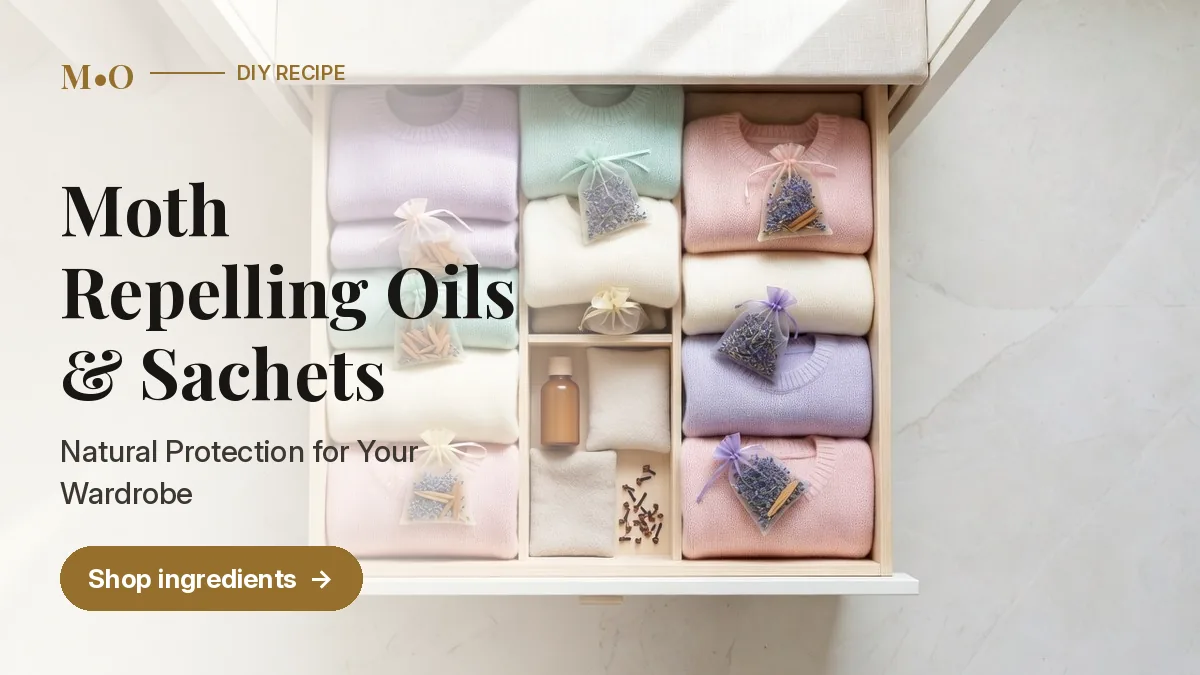
Cedarwood, lavender and clove essential oils are traditionally chosen to help keep adult moths away from stored clothing. Clean the wardrobe thoroughly first, wash or freeze wool items, then place sachets as a preventive measure. The scent discourages moths but does not affect eggs or larvae.
Choosing Scents for Wardrobe Care
Small home fragrance brands often start with cedar and lavender because these notes blend well and suit everyday storage. essential oils collection offers reliable options that makers can test in small batches before scaling. cedar essential oil pairs naturally with soft floral tones while offering a woody base that many find comforting in closed spaces.
lavender essential oil adds a gentle freshness that complements cedar without overpowering delicate fabrics. Clove can be introduced in smaller amounts for a warmer profile when creating seasonal blends. These choices focus on pleasant aroma rather than any guaranteed effect, allowing makers to market honest care products that support tidy, fresh-smelling storage. Many brands begin by sampling single oils to understand how each note behaves over time in different wardrobe conditions.
Preparing Storage Spaces
Begin by removing everything from the wardrobe and vacuuming all surfaces to clear dust and stray fibres. Wash or air garments that can be cleaned and consider freezing woollens for a few days to address any hidden stages. Once the space feels clean and dry, introduce sachets to maintain a light fragrance that supports ongoing freshness. Pay special attention to corners and drawer bottoms where fibres tend to collect unnoticed.
Place sachets on shelves or hang them from rods using cotton ties. Avoid direct contact with silk or very light fabrics to prevent any risk of marks. Regular airing of the wardrobe helps the overall environment stay comfortable for stored items. Checking the space every few weeks allows early detection of any changes in scent strength or fabric condition.
Selecting Quality Ingredients for Sachets
Choosing dried botanicals with consistent colour and aroma ensures the finished sachets perform reliably. Look for cedar shavings that feel dry and free of dust, as overly moist material can shorten shelf life. Lavender buds should retain a clear scent profile without signs of fading or clumping. Makers benefit from sourcing small test quantities first to verify how each batch interacts with chosen oils.
Felt or wood bases absorb oils evenly when they come from suppliers who specialise in craft materials. Testing absorption on a single pad before preparing a full batch helps avoid uneven scent distribution. This careful selection supports consistent results across different production runs and customer expectations for natural wardrobe care.
Creating a Cedar Lavender Sachet Line
Small brands can develop a simple product line around these two oils by offering ready-to-use pads or refill kits. Customers appreciate clear guidance on how much oil to apply so the scent stays balanced and does not stain clothing. Experimenting with different pouch sizes allows brands to match products to various wardrobe dimensions.
Basic Sachet Composition
For a batch of ten sachets combine 160 g dried lavender flowers at 80 percent with 40 g cedar shavings at 20 percent. Add one felt pad to each pouch and apply 15 drops of a 50/50 blend of cedar and lavender essential oil to the pad before sealing. This amount keeps the aroma noticeable for two to three weeks before a light refresh is needed. Stir the botanicals gently to distribute the oils without crushing delicate buds.
Variant with Added Clove Note
Adjust the oil portion to include a small clove component for a deeper profile: use 70 percent lavender, 20 percent cedar and 10 percent clove in the drop blend. Apply the same 15 drops total per felt pad. The result offers a slightly spicier freshness while remaining suitable for most wool and cotton storage. Record each batch composition so adjustments can be repeated accurately in future production.
Measuring Oil Amounts on Pads
Ten to twenty drops per standard felt pad or wood bead provides enough scent for a typical sachet without excess liquid. Start with 12 drops for lighter storage areas and increase gradually after testing. Always let the pad absorb fully before placing it near garments. Over-application can lead to stronger initial scent that fades faster than expected.
felt pads absorb evenly and release aroma slowly, making them practical for consistent results. Makers can pre-scent pads in small batches and package them with instructions so end users know exactly how to maintain the fragrance over time. Tracking drop counts per pad type helps refine future recommendations for different climates or storage conditions.
Common Mistakes to Avoid
One frequent error is placing too many sachets in a single wardrobe section, which can create an overwhelming aroma rather than a subtle background note. Another is neglecting to refresh the scent on schedule, allowing the preventive effect to diminish unnoticed. Always test a new blend on a spare fabric swatch before committing an entire collection of garments.
Using oils directly on wood surfaces inside the wardrobe may cause discolouration over months of contact. Instead, keep all scented elements contained within the chosen pouch. Makers who document these details in product guidance help customers achieve better long-term results and reduce returns due to improper use.
Refreshing and Long-Term Use
The aroma fades naturally after two to three weeks, so add a few drops of the same oil blend directly to the existing pad. This simple step keeps the wardrobe environment pleasant without replacing the entire sachet. Store extra pads in a sealed jar to preserve the oils until needed. Rotating positions within the wardrobe prevents any single area from losing fragrance too quickly.
Rotate sachets between different sections of the wardrobe every month to distribute the scent evenly. This practice supports a consistently fresh feel throughout the storage space and encourages regular checking of clothing condition. With proper care the same set of sachets can serve through multiple seasons when refreshed on schedule.
Retail customers and small brands can source the required materials in convenient pack sizes suitable for both testing and larger production runs. Organza pouches work well for visible, breathable presentation while allowing easy scent refresh. Combining these with the essential oils creates complete kits that support natural wardrobe routines focused on care and pleasant aroma.
FAQ
How often should the scent be refreshed?
Add a few drops every two to three weeks once the aroma becomes faint. This keeps the sachet effective for ongoing prevention.
Can essential oil be placed directly on clothes?
No, always apply oil to a pad or sachet first to avoid marks on fabric. Direct contact may leave stains.
Are these sachets safe near pets?
Keep sachets out of reach of pets and children. Store essential oils in closed containers when not in use.
What base works best inside the pouch?
Dried lavender with cedar shavings or a felt pad both perform well. Rice or wood beads can also be scented for variety.





