-
 DIY: Video master classes
-
 Aromatherapy
-
 Felting master classes
-
 Eating at home
-
 DIY cosmetics for children
-
 Cooking recipes
-
 Detergents, cleaning products with your own hands
-
 Soap making as a business
-
 Natural cosmetics. Raw materials for cosmetics and soap.
-
 Natural oils in cosmetics
-
 News
-
 Recipes for balms and conditioners
-
 Bath Bomb Recipes
-
 Cream recipes. Cream making.
-
 Lotion recipes. Gel recipes.
-
 Mask recipes
-
 Soap recipes. Base soap. Soap from scratch.
-
 Recipes for all occasions
-
 Natural shampoo recipes
-
 Healthy Nutrition Recipes
-
 Scrub recipes. Massage tiles. Ubtan
-
 DIY candles
-
 Reference materials, questions, tips
-
 Startup - soap production
-
 Hair care. Tips, recipes
-
 Facial skin care. Cleansers.
-
 Body care. Tips, recipes
-
 Photo Reviews
-
 Chocolate Handmade


Anti-wrinkle serums: Which peptides really work? A homemade recipe for a luxury alternative
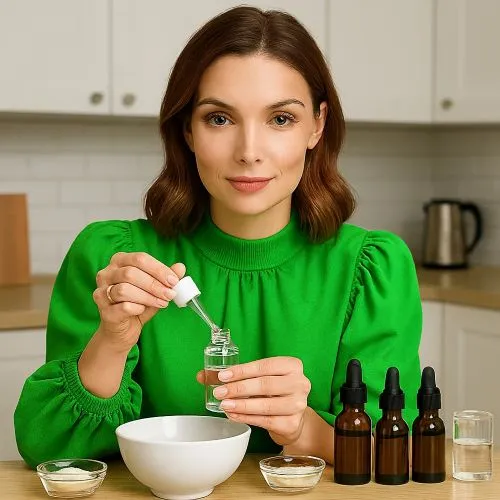 Welcome to the definitive guide on effective anti-aging skincare. We will deeply explore the world of peptides—the true powerhouses against wrinkles—and share exclusive, detailed recipes for homemade serums that rival their expensive luxury counterparts. Optimize your beauty routine with science-backed knowledge and cost-effective solutions.
The Science of Peptides: What Are They and Why Do They Matter?
Peptides are short chains of amino acids, the building blocks of proteins like collagen and elastin. When applied topically, they act as signaling molecules, instructing skin cells to perform specific functions, most notably repairing damage and increasing the production of vital structural proteins lost through aging.
Unlike large collagen molecules that cannot penetrate the skin barrier, peptides are small enough to reach the deeper dermal layers, making them incredibly effective in combating fine lines and deep wrinkles.
The A-List of Anti-Wrinkle Peptides That Truly Work
Not all peptides are created equal. Focus your attention on these three categories with clinically proven anti-aging benefits:
1. Signal Peptides (Collagen Boosters)
These peptides send messages to the skin to initiate repair mechanisms and stimulate collagen and elastin synthesis.
-
Palmitoyl Tripeptide-1 (Matrixyl): Works synergistically with Palmitoyl Tetrapeptide-7 to form the renowned Matrixyl 3000 complex. It stimulates fibroblast activity, significantly boosting collagen production and repairing the dermal matrix.
-
Palmitoyl Pentapeptide-4 (Matrixyl®): One of the first and most widely studied peptides. It specifically targets the building blocks of the dermal layer, leading to visible reduction in wrinkle depth and length.
2. Neurotransmitter Peptides (Botox-like Effect)
These peptides work by temporarily interfering with the nerve signals that cause muscle contractions, thus relaxing facial muscles and smoothing expression lines.
-
Acetyl Hexapeptide-8 (Argireline®): Often referred to as "Botox in a jar." It inhibits the release of neurotransmitters that control facial muscle contraction, effectively reducing the appearance of dynamic wrinkles (forehead lines, crow's feet).
3. Carrier Peptides (Healing and Repair)
These peptides deliver trace elements (like copper) essential for wound healing, enzymatic activity, and collagen production.
-
Copper Tripeptide-1 (GHK-Cu): A potent peptide known for its exceptional wound-healing and anti-inflammatory properties. It promotes collagen, elastin, and glycosaminoglycan synthesis while exhibiting strong antioxidant benefits, leading to firmer skin.
🧪 Homemade Luxury Serum Recipes (DIY Analogs)
The main advantage of preparing a homemade serum is complete control over concentration and ingredient quality, allowing you to create a fresh, high-potency product without the fillers, unnecessary preservatives, and high costs of industrial analogs.
Recipe 1: Ultimate Collagen-Boosting Serum (Focus: Matrixyl)
This serum targets deep wrinkles and overall skin firmness by maximizing collagen synthesis.
Necessary Ingredients
-
Base: 60% Distilled Water or Rose Hydrosol
-
Humectant: 20% Glycerin or Propanediol
-
Thickener/Stabilizer: 5% Xanthan Gum (or another compatible natural gum)
-
Active Peptide 1: 5% Matrixyl 3000 (Palmitoyl Tripeptide-1 & Palmitoyl Tetrapeptide-7)
-
Active Peptide 2: 5% Copper Tripeptide-1 (GHK-Cu Solution)
-
Preservative: 5% Geogard Ultra or another broad-spectrum cosmetic preservative
Preparation Instructions
Step 1 Sanitize all equipment including beakers stirring rods and storage bottles using isopropyl alcohol. Cleanliness is crucial for product stability and safety. Step 2 In a sanitized beaker combine the Distilled Water or Hydrosol with the Xanthan Gum Mix thoroughly until the gum is completely hydrated and a smooth gel forms This may take several minutes. Step 3 Separately combine the Glycerin and the Preservative. Stir well. Step 4 Slowly pour the Glycerin-Preservative mix into the gel base from Step 2 stirring constantly until uniform. Step 5 Add the active peptides Matrixyl 3000 and GHK-Cu Solution. Peptides are sensitive to heat so they must be added to a cool base. Mix gently but thoroughly avoiding the introduction of excess air bubbles. Step 6 Check the pH of the final product with a pH meter or strips The ideal range for peptides is 50 to 65 Adjust with Lactic Acid or Sodium Bicarbonate solution if necessary. Step 7 Pour the finished serum into an opaque airless pump bottle to protect the light-sensitive peptides.
Recipe 2: Expression Line Smoother Serum (Focus: Argireline)
This formulation is designed specifically to relax facial tension and minimize dynamic (expression) lines.
Necessary Ingredients
-
Base: 75% Aloe Vera Juice (or Distilled Water)
-
Hydrator: 10% Hyaluronic Acid Solution (1% stock solution)
-
Active Peptide: 10% Argireline (Acetyl Hexapeptide-8 Solution)
-
Stabilizer/Vitamin: 3% Niacinamide (Vitamin B3)
-
Preservative: 2% Liquid Germall Plus or compatible preservative
Preparation Instructions
Step 1 As always start by meticulously sanitizing all tools and containers. Step 2 In your main beaker combine the Aloe Vera Juice and the Hyaluronic Acid Solution Mix slowly until fully homogenous. Step 3 Add the Niacinamide powder to the base and stir until it is fully dissolved. Step 4 Carefully measure and add the Argireline peptide solution Stir gently. Argireline should be mixed at room temperature. Step 5 Add the Preservative and mix thoroughly for two full minutes to ensure even distribution. Step 6 Verify the pH aiming for the Argireline optimal range of 50 to 70 Adjust if required. Step 7 Bottle the serum in a glass dropper bottle or pump dispenser suitable for long-term storage.
Recipe 3: Intensive Repair and Firming Serum (Combined Actives)
A powerful formula combining the best of both worlds for comprehensive anti-aging action.
Necessary Ingredients
-
Base: 65% Floral Water (e.g., Lavender or Chamomile)
-
Humectant: 10% Panthenol (Pro-Vitamin B5)
-
Active Peptide 1: 10% Matrixyl 3000
-
Active Peptide 2: 5% Argireline
-
Lipid Phase (Emulsifier/Oil): 5% Squalane Oil and 1% Olivem 1000 (natural emulsifier)
-
Preservative: 4% Cosgard or compatible preservative
Preparation Instructions
Step 1 Ensure all utensils are fully sterile. Step 2 In Beaker A combine the Floral Water and Panthenol. Gently heat Beaker A to approximately 70 degrees Celsius. Step 3 In Beaker B combine the Squalane Oil and Olivem 1000 Gently heat Beaker B to the same temperature (70 degrees Celsius). Step 4 Pour the heated contents of Beaker B (oil phase) into Beaker A (water phase) while mixing constantly with a mini-mixer or frother. Mix until a creamy emulsion is formed. Step 5 Allow the emulsion to cool down to room temperature (below 40 degrees Celsius) This step is critical. Step 6 Once completely cool add the sensitive active ingredients Matrixyl 3000 Argireline and the Preservative Mix well. Step 7 Check and adjust the final pH (optimal range 50–65). Step 8 Transfer the creamy serum into an airless pump container as this formulation contains an oil phase and is prone to oxidation.
🧴 Usage Recommendations and Storage
Detailed compliance with these rules ensures the longevity and effectiveness of your homemade serums.
Application Guide
-
Frequency: Apply the serum twice daily, morning and evening, after cleansing and toning the skin.
-
Layering: Apply peptides directly to slightly damp skin (after a hydrosol or toner) to enhance absorption. Follow with a light, occlusive moisturizer to "seal in" the active ingredients.
-
Amount: Use 2–4 drops (a pea-sized amount) for the entire face and neck. A small amount is sufficient due to the high concentration of actives.
-
Specifics: Argireline-focused serums (Recipe 2) should be concentrated on areas with dynamic wrinkles (forehead, eye contours). Collagen-boosting serums (Recipe 1) can be applied all over for general firming.
Storage Recommendations
-
Containers: Always use dark, opaque glass or airless pump bottles. Light and air degrade sensitive peptides and antioxidants rapidly. Never use clear containers.
-
Temperature: Store the finished serum in a cool, dark place, ideally below 20°C (68°F). The refrigerator is the best choice to maintain peptide stability and extend shelf life.
-
Shelf Life: Homemade serums generally have a shorter shelf life than commercial products due to the use of lower-impact preservatives.
-
Typical Shelf Life: 3–6 months when stored correctly in the refrigerator.
-
-
Signs of Spoilage: Discard the product immediately if you notice changes in color, texture, separation, or an unusual odor.

Key Advantages Over Industrial Analogs
-
Purity and Concentration: You can use the maximum effective concentration of proven peptides, whereas commercial products often use minimal amounts to save costs.
-
No Unnecessary Fillers: Homemade serums contain no artificial fragrances, colorants, or cheap fillers that can irritate sensitive skin.
-
Cost-Effectiveness: The cost of raw active ingredients is significantly lower than the final price of luxury brand serums, which heavily factors in marketing and packaging.
-
Freshness: Preparing small batches ensures you are always using a fresh product, maximizing the potency of the sensitive peptides.
By following these guidelines, you create a powerful, customized, and high-quality anti-wrinkle treatment perfectly optimized for your skin.


Cosmetic ingredients and professional formulation blog
This section features expert materials on modern cosmetic actives. We cover peptides, polynucleotides PDRN, different forms of hyaluronic acid, retinoids, ceramides and other key components.
Special focus is given to active stability, ingredient compatibility and correct incorporation into formulas. You will find practical guides on working with anti-age actives, moisturizing complexes and barrier repair ingredients.
We examine how to properly combine myorelaxants with peptides, common mistakes when using unstable vitamin C forms and ways to improve the performance of moisturizing actives.
Separate materials are dedicated to base oils, extracts, emulsifiers and supporting ingredients. This helps create stable and effective formulas for both professional and home cosmetics.
The blog regularly publishes reviews of trending actives, comparisons of similar ingredients and step-by-step formulation recommendations. The content is aimed at formulators, technologists and anyone seriously involved in creating cosmetic products.
Why this blog is useful
Here you will find practical data on eye area care actives, lifting systems and ingredients that improve skin firmness and tone. We rely on real formulation experience and address the actual challenges that arise during product development.
You can also explore materials on skin protection and repair, depigmentation and anti-inflammatory actives. This approach supports a more systematic selection of ingredients.
FAQ
What topics are covered most often
The blog focuses on peptides, PDRN, hyaluronic acid of different molecular weights, retinoids, ceramides and their compatibility rules.
Are there practical recommendations on how to incorporate actives
Yes, most articles include practical notes on pH stability, incorporation temperature and common formulation mistakes.
Is the content only for professionals
The materials are useful both for formulators and technologists and for those who create cosmetics for personal use and want to understand how modern ingredients work.
Where can I go directly to the ingredients
All key actives are collected in the Actives section, while base components are available in base oils and related categories.