-
 DIY: Video master classes
-
 Aromatherapy
-
 Felting master classes
-
 Eating at home
-
 DIY cosmetics for children
-
 Cooking recipes
-
 Detergents, cleaning products with your own hands
-
 Soap making as a business
-
 Natural cosmetics. Raw materials for cosmetics and soap.
-
 Natural oils in cosmetics
-
 News
-
 Recipes for balms and conditioners
-
 Bath Bomb Recipes
-
 Cream recipes. Cream making.
-
 Lotion recipes. Gel recipes.
-
 Mask recipes
-
 Soap recipes. Base soap. Soap from scratch.
-
 Recipes for all occasions
-
 Natural shampoo recipes
-
 Healthy Nutrition Recipes
-
 Scrub recipes. Massage tiles. Ubtan
-
 DIY candles
-
 Reference materials, questions, tips
-
 Startup - soap production
-
 Hair care. Tips, recipes
-
 Facial skin care. Cleansers.
-
 Body care. Tips, recipes
-
 Photo Reviews
-
 Chocolate Handmade


Enzyme powder with papain and bromelain
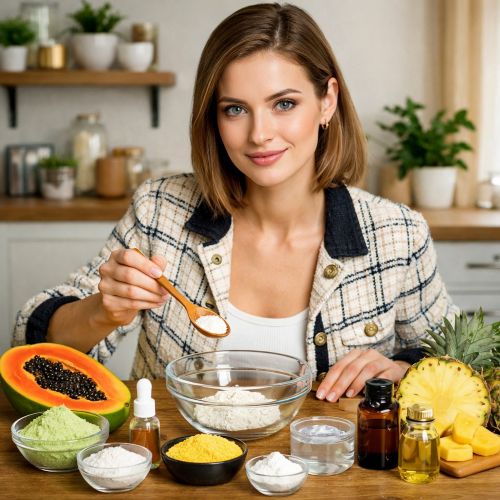 Enzyme powder with papain and bromelain has revolutionized the concept of deep cleansing in modern cosmetology. Unlike traditional mechanical scrubs that use abrasive particles to tear at the skin surface or chemical peels that rely on aggressive acids enzyme powders utilize proteolytic enzymes. These enzymes specifically target and break down the protein bonds that hold dead skin cells together allowing them to be rinsed away without disrupting the living tissue or the acid mantle.
In this comprehensive guide we will explore the molecular benefits of fruit ferments and provide three professional grade recipes for creating stable effective dry cleansers at home.
Beneficial Properties of Papain and Bromelain in Enzyme Cleansing
The effectiveness of an enzyme powder is rooted in the quality of its primary actives. Papain is an enzyme extracted from the fruit and leaves of the papaya plant. It is highly valued for its ability to digest cellular debris and clear clogged pores making it an excellent treatment for comedones and post inflammatory hyperpigmentation.
Bromelain is derived from the stems and fruit of the pineapple. It complements papain by providing significant anti inflammatory and soothing properties. Bromelain is particularly effective at reducing redness and accelerating the healing of minor skin imperfections. Together these enzymes create a synergistic effect that polishes the skin texture reduces the appearance of enlarged pores and leaves the complexion with a healthy radiance that mechanical exfoliation simply cannot match.
Advantages of Custom Enzyme Powders Over Industrial Products
Industrial enzyme powders often contain a high percentage of cheap fillers such as talc or sodium bicarbonate which can be overly alkaline and damaging to the skin barrier. Furthermore mass market products frequently include synthetic fragrances and flowing agents like silicones that prevent the powder from clumping but may also clog pores or cause allergic reactions.
By formulating your own enzyme powder you can control the potency by using a higher concentration of pure papain and bromelain. You also have the freedom to select high quality botanical bases such as ultra fine rice silk or oat flour which provide additional vitamins and minerals to the skin. Custom powders allow for the exclusion of harsh surfactants ensuring that the cleansing process remains gentle even for those with rosacea or hypersensitive skin.
Technical Nuances of Preparation for Dry Enzyme Cosmetics
The most critical technical challenge when working with papain and bromelain is maintaining their biological activity. Enzymes are proteins that become active only when they come into contact with water. Therefore the preparation environment must be strictly dry. Any humidity introduced during the mixing process can trigger the enzymes prematurely leading to a loss of potency before the product even reaches the skin.
Another nuance is the particle size of the ingredients. To ensure a professional feel and effective cleansing all dry components must be sifted through a fine mesh sieve. This ensures that the powder transforms into a smooth luxurious foam rather than a gritty paste when mixed with water in the palm of your hand. Precision in weighing ingredients is also vital as even a small excess of pure enzymes can lead to over exfoliation if the concentrations are not balanced with soothing fillers.
Recipe One Soothing Rice Silk Enzyme Powder for Sensitive Skin
This formula focuses on gentle renewal and brightening using a base of rice flour which has been used for centuries in Eastern beauty rituals.
Composition Sixty grams ultra fine rice flour Ten grams white kaolin clay five grams pure papain powder five grams pure bromelain powder Ten grams sodium cocoyl isethionate powder Ten grams allantoin
Preparation Step one Ensure your workspace is completely dry and sanitize all mixing bowls and sifting tools with high grade alcohol. Step two Combine the rice flour and kaolin clay in a large glass bowl and stir gently with a dry whisk. Step three Sift the papain and bromelain powders into the base to ensure there are no clumps of active enzymes. Step four Add the sodium cocoyl isethionate which is a mild surfactant that will create a soft foam upon contact with water. Step five Incorporate the allantoin to provide additional soothing and anti inflammatory benefits during the exfoliation process. Step six Sift the entire mixture through a fine mesh sieve at least twice to achieve a professional uniform texture. Step seven Transfer the powder into a dry airtight bottle with a small dispensing hole to minimize air exposure.
Recipe Two Balancing Charcoal and Clay Powder for Oily Skin
A powerful formula designed to detoxify pores and regulate sebum production using the adsorptive properties of activated charcoal.
Composition Fifty grams corn starch or arrowroot powder Fifteen grams green illite clay five grams activated charcoal powder seven grams papain powder seven grams bromelain powder Ten grams sodium lauryl sulfoacetate Six grams calamine powder
Preparation Step one Clean and dry all equipment thoroughly before beginning the formulation. Step two Mix the corn starch and green illite clay which will act as the primary oil absorbers. Step three Carefully add the activated charcoal powder being mindful that it is very light and can easily become airborne. Step four Blend in the papain and bromelain enzymes ensuring a homogenous distribution through the dark base. Step five Add the sodium lauryl sulfoacetate for a more robust cleansing action suitable for oilier skin types. Step six Incorporate the calamine powder to prevent any potential irritation and to soothe the skin during deep cleaning. Step seven Sift the final product and store in a moisture proof container to prevent clumping.
Recipe Three Vitamin C and Fruit Enzyme Brightening Peel
An intensive treatment powder aimed at correcting dullness and evening out the skin tone through the combination of enzymes and antioxidants.
Composition Fifty grams oat silk or colloidal oatmeal Ten grams pink clay five grams papain five grams bromelain Ten grams ascorbic acid ultra fine powder Ten grams coconut milk powder Ten grams maltodextrin
Preparation Step one Sanitize your laboratory environment and ensure no moisture is present on any surfaces. Step two Combine the oat silk and pink clay in a mixing vessel. Step three Add the ultra fine ascorbic acid which provides a brightening vitamin C boost to the enzymatic action. Step four Sift in the papain and bromelain ensuring the enzymes are perfectly integrated into the powder. Step five Add the coconut milk powder which contains natural fats to nourish the skin during the exfoliation process. Step six Use maltodextrin as a stabilizer to keep the enzymes and vitamin C from reacting with any trace atmospheric moisture. Step seven Perform a final sift through a fine mesh and package the powder in a dark airtight glass jar.
Professional Recommendations for Application and Exfoliation
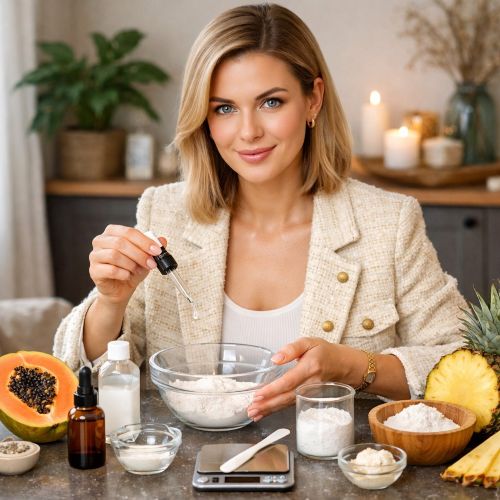
To use the enzyme powder correctly dispense about half a teaspoon into the palm of your hand. Add a few drops of warm water and rub your hands together until a creamy foam or light paste forms. Apply this to your face using gentle circular motions. Unlike physical scrubs there is no need to press hard; let the enzymes do the work. Leave the product on the skin for one to two minutes for a deeper effect or rinse immediately for a light daily cleanse.
For a professional treatment effect you can leave the enzyme paste on your skin for up to five minutes while in a steamy bathroom. The warmth and moisture increase the activity of the papain and bromelain. Rinse thoroughly with lukewarm water. Use the powder two to three times a week depending on your skin sensitivity. Always follow up with a hydrating toner and a moisturizer to seal in the smooth results.
Detailed Guidelines for Storage and Maintaining Enzyme Stability
The longevity of your enzyme powder depends entirely on keeping it dry. The bathroom cabinet is often the worst place to store this product due to high humidity. It is recommended to store the bottle in a cool dry drawer or a cupboard outside of the bathroom. Always ensure the lid is snapped shut or the cap is screwed on tightly immediately after use.
If the powder begins to form hard clumps it is a sign that moisture has entered the container. While it may still be usable the activity of the enzymes will be significantly reduced. The shelf life of a properly stored dry enzyme powder is approximately six to twelve months. By avoiding the introduction of water into the main container you ensure that every application is as potent and effective as the first.


Cosmetic ingredients and professional formulation blog
This section features expert materials on modern cosmetic actives. We cover peptides, polynucleotides PDRN, different forms of hyaluronic acid, retinoids, ceramides and other key components.
Special focus is given to active stability, ingredient compatibility and correct incorporation into formulas. You will find practical guides on working with anti-age actives, moisturizing complexes and barrier repair ingredients.
We examine how to properly combine myorelaxants with peptides, common mistakes when using unstable vitamin C forms and ways to improve the performance of moisturizing actives.
Separate materials are dedicated to base oils, extracts, emulsifiers and supporting ingredients. This helps create stable and effective formulas for both professional and home cosmetics.
The blog regularly publishes reviews of trending actives, comparisons of similar ingredients and step-by-step formulation recommendations. The content is aimed at formulators, technologists and anyone seriously involved in creating cosmetic products.
Why this blog is useful
Here you will find practical data on eye area care actives, lifting systems and ingredients that improve skin firmness and tone. We rely on real formulation experience and address the actual challenges that arise during product development.
You can also explore materials on skin protection and repair, depigmentation and anti-inflammatory actives. This approach supports a more systematic selection of ingredients.
FAQ
What topics are covered most often
The blog focuses on peptides, PDRN, hyaluronic acid of different molecular weights, retinoids, ceramides and their compatibility rules.
Are there practical recommendations on how to incorporate actives
Yes, most articles include practical notes on pH stability, incorporation temperature and common formulation mistakes.
Is the content only for professionals
The materials are useful both for formulators and technologists and for those who create cosmetics for personal use and want to understand how modern ingredients work.
Where can I go directly to the ingredients
All key actives are collected in the Actives section, while base components are available in base oils and related categories.



